Benefits administration has a way of becoming more complicated every year, as plan options multiply and compliance requirements shift. Modern employee benefits administration software has become a practical response to that growing complexity, taking work that used to require constant manual attention and making it far more manageable.
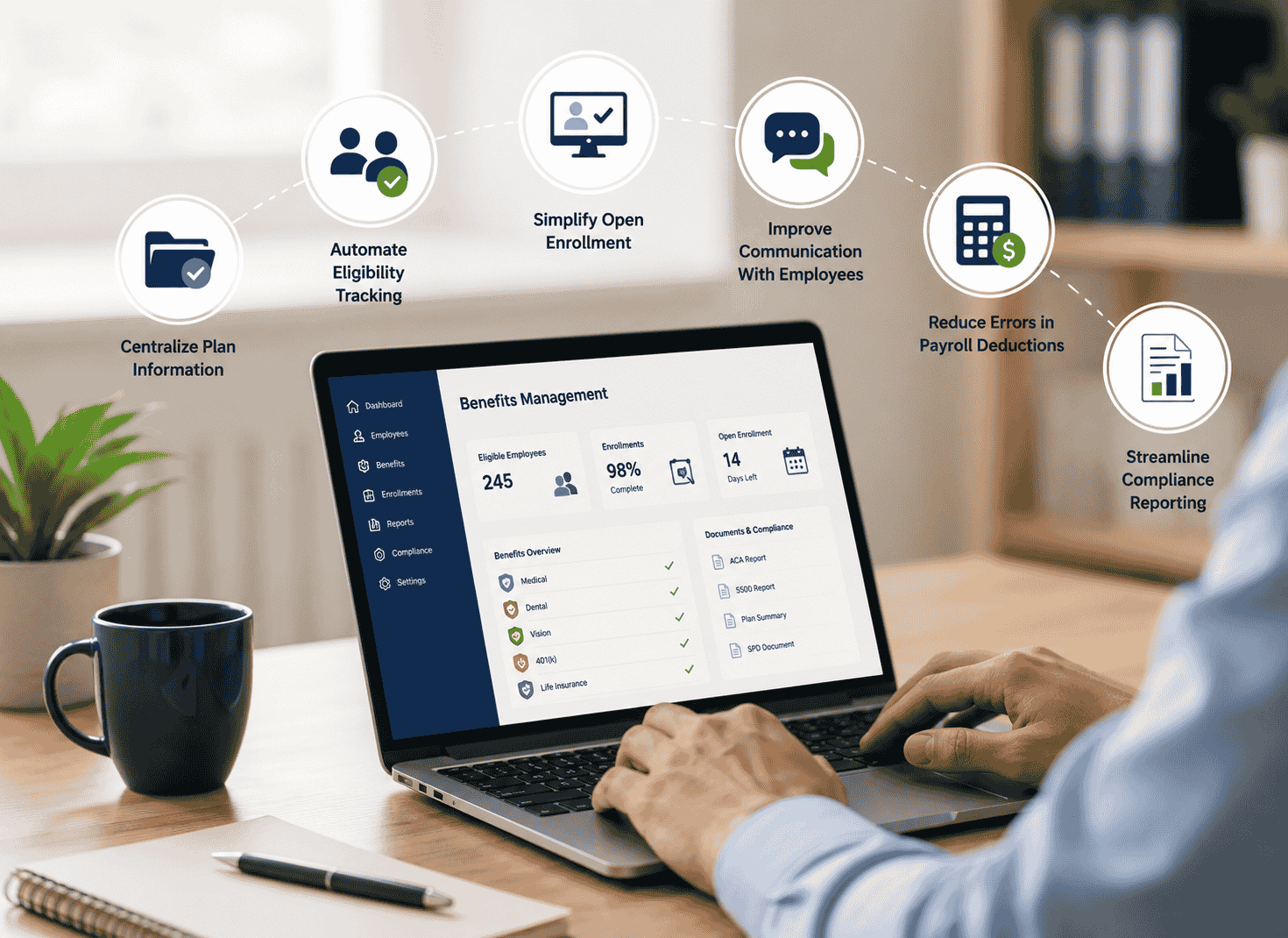
Centralize Plan Information in One Place
Keeping plan details, eligibility rules, and enrollment periods scattered across documents and emails makes benefits administration harder than it needs to be. A centralized system gives both HR and employees one clear source of truth. That single source also reduces the odds of employees receiving conflicting information from different places.
Automate Eligibility Tracking
Manually tracking which employees are eligible for which benefits, especially as employment status changes, is a common source of errors. Automated eligibility tracking updates in real time as employee data changes. That real-time accuracy matters most during busy periods like open enrollment, when manual tracking is most likely to fall behind. This type of digital-first automation is where platforms like Dayforce can save valuable time and energy.
Simplify Open Enrollment
Paper-based or spreadsheet-driven open enrollment tends to generate a flood of questions and errors during an already busy period. Digital enrollment tools guide employees through their options and reduce the volume of manual follow-up needed. A guided process also helps ensure employees don’t miss a step or submit incomplete elections.
Improve Communication With Employees
Employees often don’t fully understand their benefits options, which leads to under-utilization or poor plan fit. Built-in decision support tools help employees make more informed choices without requiring one-on-one guidance from HR. Better-informed choices also tend to reduce employee complaints about coverage later in the year.
Reduce Errors in Payroll Deductions
Manually calculating benefits deductions increases the risk of payroll errors, particularly when plan costs or employee elections change. Integrated systems calculate deductions automatically based on current elections. That automation removes a recurring source of payroll errors that manual calculation tends to introduce.
Streamline Compliance Reporting
Benefits compliance reporting requirements can be extensive, and pulling together the necessary data manually is time-consuming. Automated reporting tools generate much of this documentation with far less manual effort. That time savings becomes especially valuable during audit season, when documentation needs to be produced quickly.
Simplifying benefits administration isn’t just about reducing HR’s workload, though that matters. It also tends to improve the employee experience, since clearer information and fewer errors make benefits feel like less of a hassle to manage on both sides. A smoother benefits experience often has a quiet but real effect on how employees feel about their employer overall.