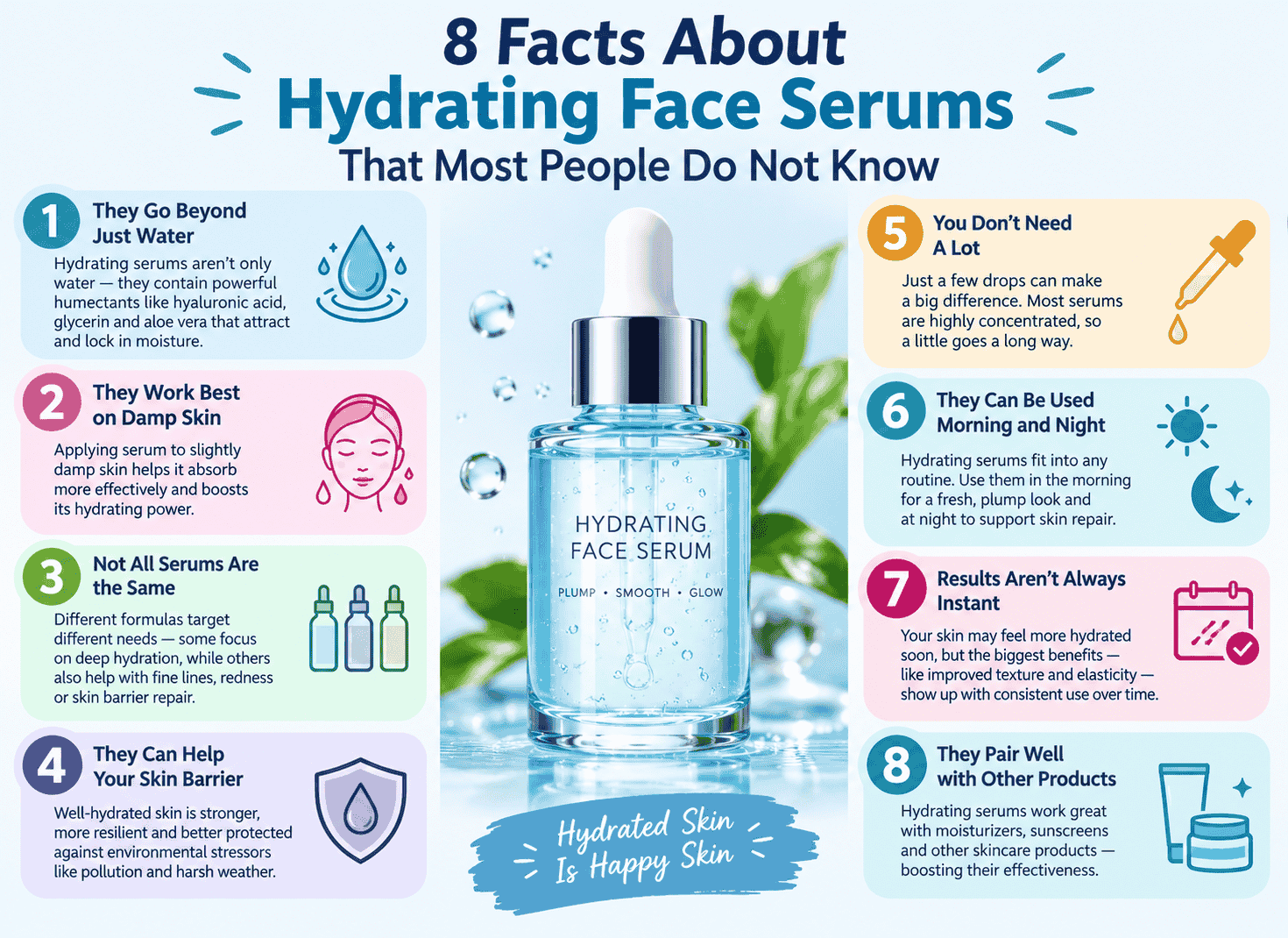
Hydration is the skincare concern that affects more people than almost any other, and it is also the one most commonly addressed with the wrong products or the wrong approach. A hydrating face serum is one of the most effective tools available for improving skin moisture levels, but understanding how hydration actually works in skin, which ingredients produce genuine results, and how to use a hydrating serum correctly determines whether it delivers visible improvement or sits unused after a few disappointing weeks.
Here is what most people do not know before choosing a hydrating face serum.
1. Dehydrated Skin and Dry Skin Are Not the Same Condition
This distinction matters more than most people realize because it determines which products and ingredients will actually address the problem. Dry skin is a skin type characterized by insufficient sebum production, which affects the skin’s ability to maintain its natural lipid barrier. Dehydrated skin is a condition that affects all skin types, including oily skin, and reflects a lack of water content in the skin rather than a lack of oil.
A hydrating face serum addresses dehydration by delivering water-binding ingredients that increase the skin’s water content. It does not replace the oils that dry skin needs. People with both dry skin and dehydration benefit from a hydrating serum alongside a richer moisturizer, while people with oily but dehydrated skin often find that a hydrating serum alone provides the moisture balance their skin needs without adding the oil that would worsen congestion.
2. What Are the Best Ingredients to Look for in Hydrating Skincare
The ingredients that produce the most reliable and most visible hydration results fall into two categories: humectants that draw water into the skin and barrier-supporting ingredients that prevent that water from evaporating after it has been delivered.
Hyaluronic acid is the most widely used and most extensively researched hydrating ingredient available. It can hold up to one thousand times its weight in water, making it exceptionally effective at drawing moisture into the skin and holding it there. Multiple molecular weights of hyaluronic acid in a single formulation address hydration at different skin depths simultaneously, which produces more comprehensive results than a single molecular weight alone.
Glycerin is another highly effective humectant that draws moisture from the environment into the skin and is well tolerated across all skin types including sensitive skin. Ceramides support the skin barrier that retains the moisture humectants deliver, preventing transepidermal water loss that would otherwise undo the hydration benefit. Niacinamide strengthens the barrier function while also addressing related concerns including uneven tone and texture that frequently accompany dehydrated skin.
Clarins formulates its hydrating face serum range around botanical ingredients alongside these proven hydrating actives, combining plant-based extracts with established humectants and barrier-supporting ingredients to address hydration comprehensively rather than relying on a single active to carry the full formulation.
3. Application to Damp Skin Significantly Improves Hydrating Serum Performance
Hyaluronic acid and other humectants work by drawing water from the surrounding environment into the skin. When the surrounding environment is very dry, as it often is in air-conditioned or heated indoor spaces, humectants can draw water from the deeper layers of the skin toward the surface rather than from the environment, which can temporarily worsen surface dehydration.
Applying a hydrating serum to slightly damp skin immediately after cleansing, before the skin has fully dried, provides the water source that humectants need to function correctly. The moisture already present on the skin surface is drawn into the skin along with the serum’s active ingredients, producing better immediate hydration results than application to completely dry skin. Following the serum immediately with a moisturizer seals in the delivered hydration before evaporation can occur.
4. Drinking Water Alone Does Not Hydrate Skin Effectively
The relationship between water intake and skin hydration is more indirect than most people assume. While severe dehydration can affect skin appearance, drinking water beyond normal hydration levels does not directly translate to improved skin moisture in people who are already adequately hydrated. Topical hydrating ingredients deliver water directly to the skin layers where it makes a visible difference in a way that systemic hydration cannot replicate with the same specificity.
This does not mean hydration from the inside is irrelevant. A diet rich in water-containing foods, omega fatty acids that support the skin barrier, and antioxidants that reduce oxidative stress all contribute to overall skin health. But for people who are already drinking adequate water and want to address visible skin dehydration, topical hydrating serums produce more targeted and more visible results than increasing water intake.
5. Hydrating Serums Work for Every Skin Type Including Oily Skin
The misconception that hydrating products are only for dry skin prevents many people with oily or combination skin from using products that would genuinely benefit their skin. Oily skin can be simultaneously dehydrated, a condition where the skin produces excess oil as a compensatory response to water loss at the surface.
Lightweight hydrating serums with water-based formulations provide the moisture that oily dehydrated skin needs without adding the occlusive ingredients that would worsen congestion. Many people with oily skin who begin using a hydrating serum report that their oil production moderates over time as the skin no longer needs to compensate for surface dehydration.
6. Layering Multiple Hydrating Products Amplifies Rather Than Duplicates the Benefit
Applying a hydrating serum followed by a hydrating moisturizer does not produce redundant hydration. Each layer serves a different function in the hydration system. The serum delivers concentrated active ingredients to the deeper skin layers. The moisturizer seals in that delivered hydration while also addressing the surface barrier that prevents water loss.
Skipping either layer reduces the total hydration benefit because the serum without a moisturizer on top allows evaporation to undo the delivered hydration, while the moisturizer without a serum beneath it primarily addresses surface hydration without the concentrated active delivery that a serum provides at greater depth.
7. Environmental Factors Affect How Much Hydration Your Skin Needs
Air conditioning, central heating, low-humidity climates, and air travel all accelerate transepidermal water loss in ways that increase the skin’s hydration requirements. People who live or work in these environments may need more frequent serum application, richer moisturizers over the serum, or both to maintain adequate skin hydration compared to those in more humid conditions.
Seasonal changes also affect hydration needs significantly. Skin that is adequately hydrated through summer may show visible dehydration signs in winter as indoor heating reduces ambient humidity. Adjusting the hydration routine seasonally rather than maintaining the same approach year-round produces more consistent skin condition across changing environmental conditions.
8. Visible Results From Hydrating Serums Appear Faster Than Anti Aging Results
Unlike anti aging serums whose benefits require weeks of consistent use to produce measurable structural change, hydrating serums produce visible results quickly because they address a surface condition rather than driving biological processes that take time to produce observable change. Most people notice improved skin plumpness, reduced appearance of fine lines caused by dehydration, and improved skin texture within days of consistent hydrating serum use.
This quick visible response makes it easier to evaluate whether a hydrating serum is working for your specific skin than it is to evaluate anti aging products, where the timeline for meaningful assessment is much longer. If a hydrating serum is not producing noticeable improvement within one to two weeks of consistent use, the formulation, the application method, or the diagnosis of the underlying skin concern is worth revisiting before continuing with the same approach.