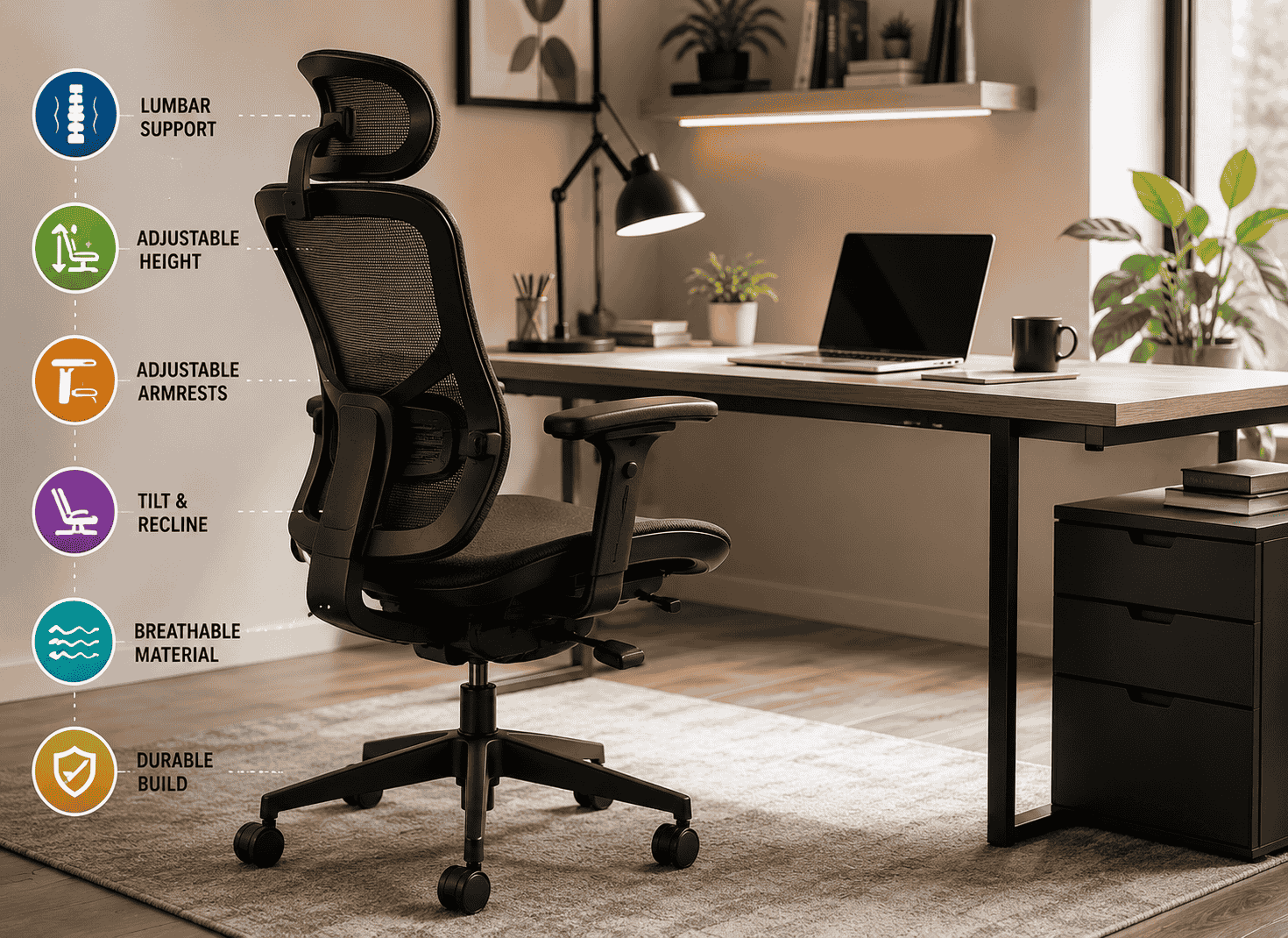
Working from home often requires long hours seated at a desk, which can place significant strain on the back, neck, and shoulders. An ergonomic chair should provide comfort and proper support to minimize fatigue and prevent musculoskeletal problems over time. Adjustable features such as seat height, lumbar support, armrest position, and recline tension allow the chair to fit the body’s natural contours, promoting healthy posture and reducing pressure on key areas. Materials also play a role in comfort; breathable fabrics or mesh can prevent overheating during extended sitting, while cushioned seating distributes weight evenly. Selecting a chair that encourages proper alignment and offers consistent support contributes to productivity, reduces discomfort, and promotes overall physical well-being while working at a home office desk.
Comfort and Support Are Key
1. Adjustability for Personalized Fit
Every individual’s body shape and work habits differ, making adjustability a crucial aspect of an ergonomic chair. Adjustable seat height ensures feet can rest flat on the floor, reducing stress on the knees and lower back. Lumbar support should be positioned to follow the natural curve of the spine, preventing slouching and fatigue. Armrests that can move up, down, forward, and backward relieve tension in the shoulders and neck. The tilt or recline mechanism allows users to shift positions throughout the day, promoting blood circulation and reducing stiffness. Many office furniture providers now offer innovative designs that allow multiple adjustment points to accommodate various body types. When considering long-term home office solutions, look inAG’s models like Tradingzone AG new office chairs that provide flexible adjustments to maintain comfort and ergonomic alignment across prolonged work periods.
2. Material Quality and Durability
The construction materials of an ergonomic chair impact both comfort and longevity. Durable frames, often made from high-grade metals or reinforced plastics, ensure the chair maintains structural integrity under daily use. Seat and backrest padding must be resilient enough to provide cushioning without flattening over time, while breathable materials like mesh can prevent heat buildup during extended periods of sitting. Upholstery quality also affects maintenance and appearance; tightly woven fabrics or high-quality leather alternatives resist wear, stains, and sagging. The combination of solid construction and high-quality materials ensures that the chair continues to provide ergonomic benefits over the long term, maintaining both functional performance and aesthetic appeal in a home office environment.
3. Promoting Proper Posture
One of the primary functions of an ergonomic chair is to encourage correct posture during prolonged sitting. An adjustable backrest that follows the natural S-curve of the spine reduces strain on the lower back and helps prevent slouching. Seat depth should support the thighs comfortably while leaving a few inches of space between the edge of the seat and the backs of the knees. Armrests positioned correctly allow elbows to bend at approximately 90 degrees, reducing shoulder tension. Headrests, when available, provide additional support for the neck and upper spine. Together, these features create a seating environment that encourages upright posture, minimizes discomfort, and allows users to maintain focus on work tasks without experiencing fatigue or muscular strain over time.
4. Mobility and Maneuverability
For home office setups that require moving around the workspace or reaching different areas of a desk, a chair’s mobility is essential. Smooth-rolling casters, swivel capability, and stable base construction enable users to move efficiently without compromising balance or safety. High-quality wheels designed for various floor types, whether carpet, hardwood, or tile, reduce resistance and protect flooring surfaces from scratches. A stable, five-point base enhances security while allowing easy rotation, reducing repetitive twisting of the spine. Mobility also supports flexible work postures, enabling users to reach for supplies, switch between screens, or adjust their seating position naturally. Chairs that combine mobility with ergonomic support contribute to both comfort and functionality in home office environments.
5. Supporting Health and Well-Being
Extended sitting can contribute to back pain, poor circulation, and fatigue, making health-oriented design features of an ergonomic chair crucial. Lumbar and seat support reduce pressure on the spine and buttocks, while armrest adjustments prevent shoulder tension. Materials that allow airflow, combined with cushioning that distributes weight evenly, reduce heat buildup and localized discomfort. Ergonomic chairs encourage regular posture shifts, decreasing the risk of stiffness or repetitive strain injuries. A properly designed chair can also improve focus and productivity by reducing physical distractions, allowing users to maintain attention on tasks without constant readjustment or discomfort. Choosing a chair that prioritizes health and well-being ensures a more sustainable and comfortable work-from-home experience.
6. Style, Size, and Aesthetic Considerations
While functionality is primary, the chair’s appearance and size also matter for home office integration. A chair should complement the overall décor while fitting comfortably within the space, allowing for movement and proximity to the desk. Seat width and height must accommodate the user’s body type without feeling cramped or oversized. Aesthetically pleasing designs can also create a more inviting workspace, encouraging consistent use and a positive work environment. Color, finish, and material choice can align with other furniture and personal preferences, blending ergonomic benefits with a professional or home-friendly look. Properly sized and visually integrated chairs enhance both physical comfort and the overall atmosphere of the home office.
Ergonomic Choices Matter
Choosing the right ergonomic chair for a home office involves careful consideration of comfort, adjustability, material quality, posture support, mobility, and overall fit within the space. A properly designed chair promotes healthy posture, reduces strain on the back, shoulders, and neck, and supports long-term physical well-being. Features that encourage movement, airflow, and proper alignment contribute to sustained comfort and productivity. While aesthetics and size influence usability and workspace integration, structural integrity and adjustability are critical for maximizing ergonomic benefits. Selecting a chair that addresses these factors ensures a supportive, safe, and efficient home office environment for daily work activities.