Remote and hybrid work can give people more control over their schedules, but it can also blur the line between home and work. Many workers struggle with distractions, isolation, unreliable setups, or the feeling that every day blends into the next. Coworking spaces help solve these problems by offering a clear place to focus, meet others, and handle work with fewer interruptions. They create a professional setting without requiring a full office lease. For remote employees, freelancers, startup teams, and hybrid workers, these spaces can bring structure, flexibility, and connection into the workweek.
What Coworking Adds
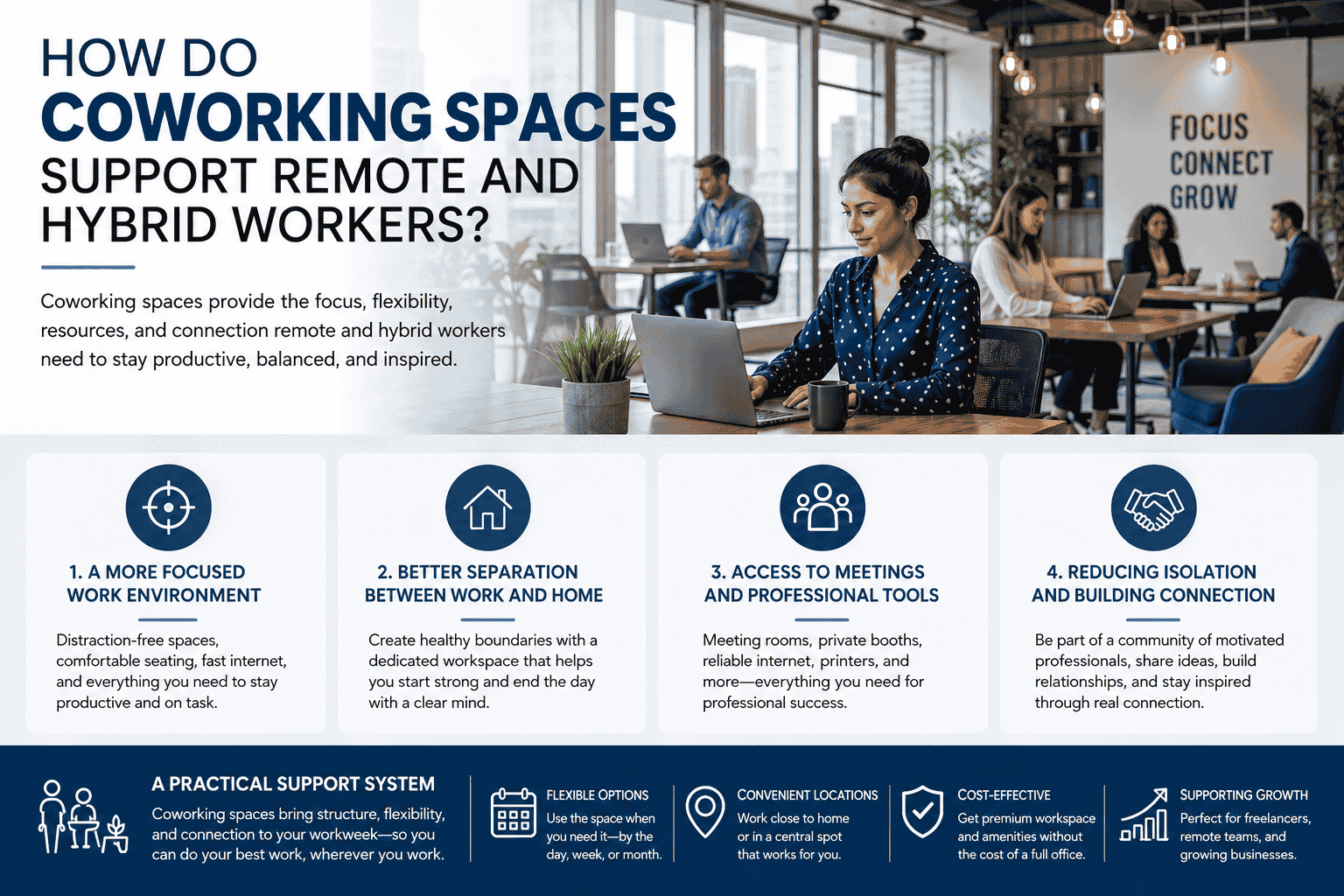
1. A More Focused Work Environment
One of the main ways coworking spaces support remote and hybrid workers is by providing a space designed for productivity. Working from home can be convenient, but it often comes with noise, chores, family interruptions, and limited separation between personal time and work time. A coworking space gives workers a clear destination where they can sit down, organize tasks, and focus without the distractions of home. This change in environment can make the workday feel more intentional. Many people also find it easier to maintain a routine when they leave home for part of the week. A space such as CMPND | Private Offices & Coworking Space near Jersey City can appeal to workers who need a more professional setting while still keeping flexibility in their schedule. Having access to desks, private rooms, power outlets, internet, and meeting areas helps remote workers stay prepared for daily tasks.
2. Better Separation Between Work and Home
Remote work can become tiring when the home turns into the office every day. It may become harder to relax after work because the laptop, calls, and deadlines remain in the same space where a person eats, rests, or spends time with family. Coworking spaces help create healthier boundaries by giving workers a separate location for work. This separation can make it easier to begin the day with focus and end the day with a clearer mental shift. Hybrid workers can also use coworking spaces on days when commuting to a company office is not practical, but working from home feels too distracting. This middle ground supports flexibility without removing structure. It also helps workers avoid feeling trapped in one environment all week. When work has its own place, even for a few days, people may feel more balanced, organized, and able to protect personal time.
3. Access to Meetings and Professional Tools
Coworking spaces are useful because they often provide resources that remote workers may not have at home. A kitchen table or bedroom desk may work for basic tasks, but video calls, client meetings, team sessions, and presentations can require a more polished setting. Coworking spaces usually offer meeting rooms, quiet areas, reliable internet, printers, mail services, phone booths, and shared work areas that support different parts of the workday.
This can be helpful for people who need to switch between focused work, collaboration, and private calls. Hybrid teams may also use coworking spaces as neutral meeting points when employees live in different areas. Instead of renting a traditional office, a team can gather when needed and work the rest of the time separately. This arrangement gives workers access to professional tools without locking them into a rigid setup. It also helps small businesses and independent workers appear more organized when meeting clients or partners.
4. Reducing Isolation and Building Connection
Working remotely can sometimes feel lonely, especially for people who spend long hours without in-person interaction. Coworking spaces support remote and hybrid workers by placing them around other motivated people, even when they are working on different projects. Simple daily interactions, such as greeting someone nearby, joining a community event, or having a brief conversation in a shared space, can reduce the isolation that often accompanies home-based work. These spaces can also lead to useful business relationships, referrals, and new ideas because people from different fields often share the same environment. The value is not only social. Being around others who are also working can create a sense of momentum and accountability. Workers may feel more engaged when they are part of a larger professional setting. For freelancers, founders, and remote employees, this connection can make the workweek feel less disconnected and more energizing.
A Practical Support System
Coworking spaces support remote and hybrid workers by combining focus, flexibility, resources, and connection in one place. Thea sense of y help create separation from home, provide useful tools, reduce isolation, and make workdays feel more structured. For people who do not need a full-time office but still want a professional environment, coworking can be a practical solution. It allows workers to choose when and how they use the space based on their schedule. As remote and hybrid work continue to shape daily routines, coworking spaces can make flexible work feel more organized, productive, and sustainable.