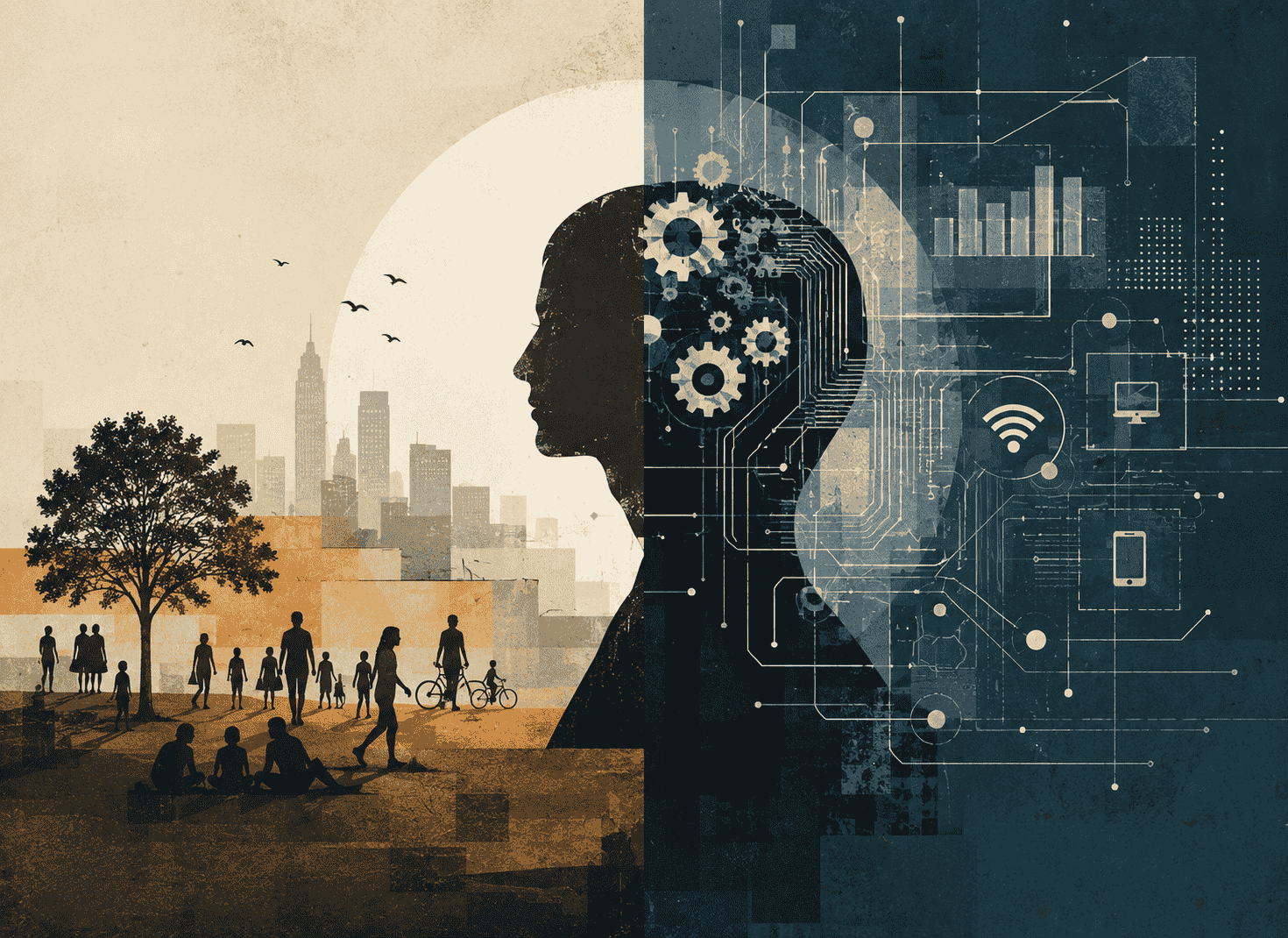
Technology does far more than make life convenient. It changes how people communicate, work, learn, form relationships, consume information, organize governments, and even understand themselves. From the invention of the printing press to the rise of artificial intelligence, major technological innovations have repeatedly transformed human societies in ways few people could have predicted.
This observation lies at the heart of technological determinism — the theory that technological development is the primary force driving social, cultural, economic, and political change.
But does technology really determine the direction of history? Or do people, institutions, and cultures ultimately decide how technologies are used?
The answer is more complicated than either extreme suggests.
What Is Technological Determinism?
Technological determinism is the idea that technological innovations shape society’s development and influence the way individuals think, behave, and organize their lives.
According to this perspective, new technologies are not merely tools that people use. Instead, they become powerful forces that alter social structures, cultural values, economic systems, and political institutions.
In its strongest form, technological determinism argues that technology drives historical change almost independently of human intentions.
In simpler terms:
New technologies arrive, and society adapts around them.
For example:
- The printing press transformed education, religion, and literacy.
- The automobile reshaped cities, transportation systems, and daily life.
- The internet revolutionized communication, commerce, and information access.
- Smartphones changed how people interact, consume media, and spend their attention.
Each innovation created ripple effects that extended far beyond its original purpose.
The Origins of Technological Determinism
The term is often associated with American economist and sociologist Thorstein Veblen, who argued that technological developments play a central role in shaping social institutions.
However, the theory gained wider attention through the work of media scholar Marshall McLuhan, who famously stated:
“The medium is the message.”
McLuhan argued that the form of communication technology matters more than the content it delivers.
For example:
- Television changed society differently than books.
- The internet changed society differently than television.
- Social media affects people differently than traditional websites.
According to McLuhan, technologies alter patterns of perception, interaction, and social organization regardless of the information they carry.
This idea became one of the most influential expressions of technological determinism in the twentieth century.
How Technological Determinism Works
Technological determinists generally view social change as following a sequence:
Step 1: A New Technology Emerges
An innovation is introduced.
Examples include:
- Printing presses
- Steam engines
- Railroads
- Electricity
- Computers
- Smartphones
- Artificial intelligence
Step 2: Society Adapts
Institutions begin adjusting to the technology.
Businesses change operations.
Governments create regulations.
Schools adopt new methods.
People develop new habits.
Step 3: Social Structures Transform
Over time, entire systems evolve around the technology.
The result is widespread cultural and economic change.
What began as a tool eventually becomes part of the environment in which people live.
Real-World Examples of Technological Determinism
1. The Printing Press and the Transformation of Europe
When Johannes Gutenberg introduced movable-type printing in the fifteenth century, books became dramatically cheaper and more accessible.
The consequences extended far beyond publishing.
The printing press contributed to:
- Rising literacy rates
- Scientific advancement
- The Protestant Reformation
- Greater access to education
- The spread of political ideas
Knowledge was no longer controlled exclusively by religious and political elites.
In this sense, a technological innovation helped reshape European society.
2. The Industrial Revolution
The steam engine transformed production and transportation.
Factories replaced many forms of manual labor.
Cities expanded rapidly.
New economic classes emerged.
Traditional agricultural lifestyles gave way to industrial economies.
Technological determinists often point to the Industrial Revolution as a powerful example of technology driving historical change.
3. The Internet
The internet is perhaps the clearest modern example.
It has changed:
- Communication
- News consumption
- Entertainment
- Education
- Shopping
- Political campaigning
- Social relationships
Entire industries have been created, disrupted, or eliminated because of digital technologies.
Few aspects of modern life remain untouched.
4. Smartphones and Attention
Smartphones did more than combine a phone and a computer.
They transformed daily behavior.
Many people now:
- Navigate with GPS rather than paper maps
- Communicate through messaging apps
- Consume news through social media feeds
- Capture experiences through cameras
- Work remotely from nearly anywhere
The device changed not only what people do but how they organize their time and attention.
5. Artificial Intelligence
Artificial intelligence is generating a new wave of technological determinist debates.
Supporters argue AI will transform:
- Employment
- Education
- Healthcare
- Scientific research
- Creativity
- Decision-making
Critics question whether these outcomes are inevitable or whether social choices will determine AI’s long-term impact.
This disagreement reflects the broader debate surrounding technological determinism itself.
Hard vs. Soft Technological Determinism
Not all versions of the theory are equally extreme.
Hard Technological Determinism
Hard determinists argue that technology is the dominant force shaping society.
According to this view:
- Technological progress follows its own path.
- Social change inevitably follows technological change.
- Human choice plays a relatively minor role.
For example, a hard determinist might argue that social media inevitably produces political polarization because its technological structure encourages it.
Soft Technological Determinism
Soft determinists take a more moderate position.
They believe technology creates opportunities, constraints, and pressures, but human decisions still matter.
In this view:
- Technology influences society.
- Society also influences technology.
- Multiple outcomes remain possible.
For example, nuclear technology can be used for electricity generation or weapons development.
The technology creates possibilities, but societies choose how to implement them.
Most contemporary scholars favor this softer interpretation.
Why Technological Determinism Is Appealing
The theory remains popular because it often seems true.
When people look at history, major technological breakthroughs frequently appear to trigger massive social changes.
Technology can feel unstoppable.
Consider:
- The rise of the internet
- The spread of smartphones
- The growth of automation
- The expansion of social media
These developments often move faster than laws, institutions, and cultural norms can adapt.
As a result, it can appear as though technology is steering society rather than the other way around.
Criticisms of Technological Determinism
Although influential, technological determinism faces significant criticism.
1. It Underestimates Human Agency
One of the most common criticisms is that people are not passive victims of technology.
Humans invent technologies.
They regulate technologies.
They decide how technologies are used.
The same innovation can produce very different outcomes in different societies.
For example, internet regulations vary dramatically across countries.
If technology alone determined outcomes, these differences would be difficult to explain.
2. It Ignores Cultural Factors
Culture often shapes how technologies are adopted.
Consider social media.
Different countries use the same platforms in different ways.
Cultural norms influence:
- Online behavior
- Privacy expectations
- Communication styles
- Political engagement
Technology does not operate in a cultural vacuum.
3. It Oversimplifies History
Historical change rarely has a single cause.
Economic forces, political decisions, social movements, geography, and cultural values all contribute.
Critics argue that technological determinism sometimes attributes too much power to technology while neglecting other influences.
4. Technologies Do Not Have Fixed Meanings
A tool can be used differently depending on context.
For example:
- Television can educate or entertain.
- Social media can connect people or divide them.
- Artificial intelligence can assist workers or replace them.
The effects are not always built into the technology itself.
They emerge through human choices and social systems.
Technological Determinism vs. Social Determinism
A useful comparison is between technological determinism and social determinism.
Technological Determinism
Technology drives social change.
Example: Smartphones transformed communication patterns.
Social Determinism
Social needs and cultural forces drive technological development.
Example: The demand for instant communication encouraged the development of smartphones.
Many modern scholars argue that both processes occur simultaneously.
Technology shapes society.
Society shapes technology.
The relationship is reciprocal rather than one-directional.
Modern Perspectives
Today, few researchers embrace pure technological determinism.
Instead, most support more nuanced frameworks.
Popular alternatives include:
Social Construction of Technology (SCOT)
This theory argues that technologies gain meaning through social interaction.
Different groups can interpret and use the same technology differently.
Actor-Network Theory
This approach views technologies, institutions, organizations, and people as interconnected actors influencing one another.
Sociotechnical Systems Theory
This framework emphasizes the interaction between technology and social structures rather than treating either as the sole driver of change.
These perspectives generally reject the idea that technology alone determines society’s future.
Does Technology Really Shape Human Behavior?
The evidence suggests that technology undeniably influences behavior.
Research has shown that technologies can affect:
- Attention
- Communication habits
- Learning patterns
- Information consumption
- Social interactions
However, influence is not the same as determination.
Technology creates possibilities and constraints.
People still make choices within those environments.
A smartphone can facilitate learning, distraction, creativity, or addiction depending on how it is used.
The device influences behavior, but it does not completely control it.
The Modern AI Debate
Artificial intelligence has revived many technological determinist arguments.
Some predict that AI will inevitably:
- Replace millions of jobs
- Transform education
- Reshape economies
- Redefine creativity
Others argue these outcomes depend heavily on:
- Government policy
- Corporate decisions
- Ethical frameworks
- Public acceptance
- Economic incentives
The future of AI may ultimately become a real-world test of how much power technology truly has over society.
Conclusion
Technological determinism offers a powerful lens for understanding historical change.
Few people would deny that technologies such as the printing press, steam engine, internet, and smartphone have transformed human civilization.
Yet the strongest versions of the theory go too far.
Technology influences society, but it does not operate independently of culture, politics, economics, and human decision-making.
The most convincing modern view is somewhere between complete technological control and complete human freedom.
Technology creates new possibilities, pressures, and constraints.
Societies then respond, adapt, regulate, and innovate in return.
In other words, technology helps shape the future—but it does not write the entire script.
Frequently Asked Questions
What is technological determinism in simple terms?
Technological determinism is the theory that technological innovations are the primary force driving social, cultural, economic, and political change.
Who created the theory of technological determinism?
The concept is often linked to Thorstein Veblen, although media theorist Marshall McLuhan played a major role in popularizing deterministic ideas about communication technologies.
What is an example of technological determinism?
The printing press is a classic example. It increased access to information, promoted literacy, and contributed to major social and religious changes throughout Europe.
Is technological determinism still accepted today?
Most scholars reject strong technological determinism. However, many accept that technology significantly influences society while recognizing that human choices and social factors also matter.
What is the difference between hard and soft technological determinism?
Hard technological determinism argues that technology largely determines social outcomes. Soft technological determinism argues that technology influences society but does not eliminate human agency and choice.
Does artificial intelligence support technological determinism?
AI is often used as a modern example in determinist debates. While AI may reshape society, many experts argue that its ultimate effects will depend on policy, regulation, culture, and human decisions rather than technology alone.
This article is part of our series on the 6 Types of Determinism. Previously: Biological Determinism: Nature, Genes, and the Free Will Debate