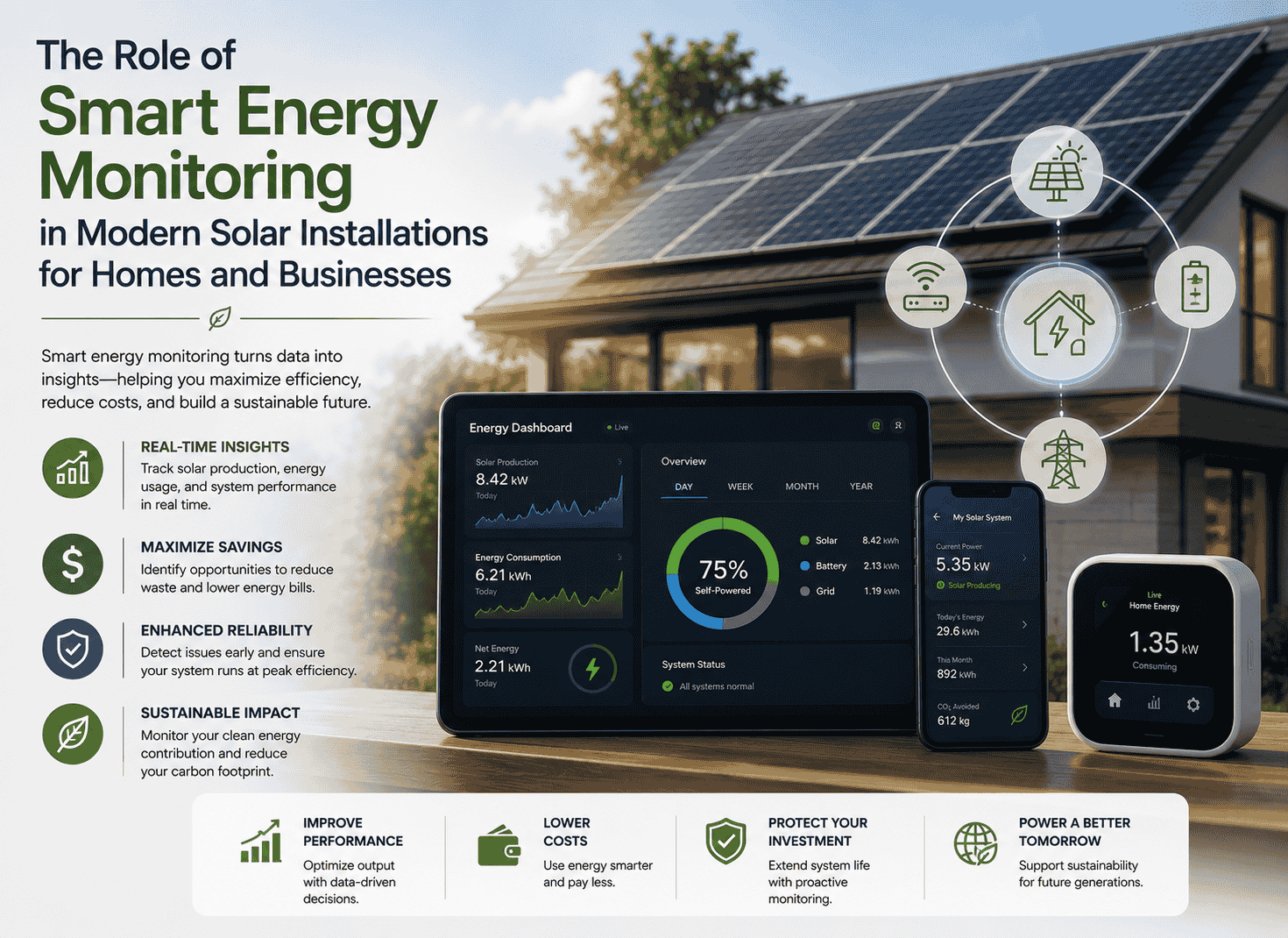
Smart energy monitoring has become an important component in the evolution of solar installations for homes and businesses. As solar power adoption continues to grow, users are seeking more visibility into how energy is produced, consumed, and stored. Monitoring systems provide real-time data that helps property owners understand performance patterns and identify areas of improvement. These systems connect hardware and software to deliver insights that were previously unavailable in traditional solar setups.
With increasing energy costs and sustainability goals, smart monitoring is reshaping how solar systems are managed. Making them more responsive, efficient, and aligned with modern energy demands across residential and commercial environments.
Smart monitoring reshapes solar systems
1. Data Visibility in Solar Systems
Data visibility in solar energy systems has transformed how users interact with their installations. Modern monitoring platforms collect continuous information from inverters, batteries, and consumption meters, translating it into readable dashboards. This visibility allows homeowners and businesses to observe how much energy is being generated. At different times of the day and how consumption patterns shift based on operational behavior. Instead of relying on monthly utility bills, users can now track performance in real time and make immediate adjustments when inefficiencies appear.
This level of insight also supports long-term planning. Such as expanding solar capacity or adjusting usage habits to match production cycles. For commercial facilities, it enables facility managers to balance loads across departments, reducing waste and improving operational stability. Over time, accumulated data creates a clearer picture of system health and energy trends, supporting more informed decisions without requiring technical intervention from external providers and optimization efforts.
2. Real-Time Control and Automation
Real-time control and automation have become central features of advanced solar monitoring platforms. These systems enable users to adjust energy flows between solar panels, batteries, and grid connections based on live data. Instead of manually checking system performance, automation tools can trigger responses such as battery charging during peak production or reducing non-essential loads during low generation periods. This reduces dependency on manual oversight and helps maintain consistent efficiency throughout the day. Integration with smart home and building systems further enhances control, allowing energy use to align with occupancy patterns and operational schedules. As solar adoption expands across different sectors, coordination between installers, technology providers, and users becomes more important for maintaining system stability.
Solar companies such as https://aws-solar.com/ contribute to this ecosystem by integrating monitoring solutions into installation projects, ensuring users have access to live performance insights from the start. Over time, such automation reduces energy waste and improves overall system responsiveness across varied conditions.
3. Energy Storage Optimization
Energy storage optimization plays a crucial role in maximizing the value of solar installations for both residential and commercial users. Smart monitoring systems track battery charge levels, discharge rates, and overall efficiency, helping users understand how stored energy is being utilized throughout different periods. By analyzing this data, it becomes possible to adjust consumption habits and prioritize energy use during peak cost hours or low production periods. In residential settings, this often translates into better management of household appliances and improved independence from grid reliance.
In commercial environments, storage optimization supports continuity of operations during peak demand times or unexpected grid interruptions. The combination of solar generation and intelligent storage management creates a more stable energy environment that adapts to changing conditions. Over time, these insights help reduce operational strain on batteries, extending their usability and improving overall system reliability without requiring frequent manual intervention and planning insights efforts.
4. Grid Interaction and Stability
Grid interaction has become an essential component of modern solar installations, particularly as distributed energy systems continue to expand. Smart monitoring tools allow users to track how much electricity is being exported to or imported from the grid at any given time. This visibility helps in managing energy costs and ensuring that systems operate within regulatory or utility guidelines. In many cases, solar installations are designed to feed excess energy back into the grid, and monitoring systems help quantify these contributions accurately. For businesses, this can translate into financial credits or reduced operational expenses depending on local energy policies. Stability in grid interaction also ensures that energy supply remains balanced during fluctuations in production or demand.
By maintaining consistent communication between solar systems and the grid, users can avoid disruptions and optimize energy flow throughout different operational cycles. These monitoring insights strengthen long-term energy coordination across connected systems networks.
5. Predictive Performance Analysis
Predictive performance analysis allows solar energy systems to anticipate changes in production and consumption based on historical and real-time data. By evaluating patterns over time, monitoring platforms can forecast potential drops in energy generation due to weather variations or seasonal shifts. This helps users prepare for fluctuations and adjust their energy usage strategies accordingly. In residential environments, predictive insights can guide decisions such as when to run high-energy appliances or when to rely more on stored energy. In commercial settings, forecasting supports operational planning and helps reduce unexpected energy shortages.
These analytical tools also assist in identifying long-term system degradation, such as declining panel efficiency or battery performance issues. With continuous data collection, the system becomes more capable of delivering accurate predictions that improve decision-making processes. Over time, predictive capabilities contribute to more stable energy usage patterns and reduce reliance on external power sources and resilience gains.
6. Cost Management Through Insights
Cost management in solar-powered environments has become more precise due to the integration of smart monitoring systems. These tools provide detailed breakdowns of energy production, consumption, and storage efficiency, allowing users to identify areas where financial savings can be achieved. By analyzing usage patterns, homeowners and businesses can shift energy-intensive activities to periods of high solar generation, reducing dependence on grid electricity. This directly impacts monthly utility expenses and improves return on investment for solar installations. In commercial settings, detailed reporting supports budgeting and operational forecasting, ensuring that energy costs remain predictable over time.
The ability to correlate energy data with financial outcomes also helps decision-makers evaluate system performance and plan future upgrades. With continuous monitoring, inefficiencies can be detected early and corrected before they lead to significant cost increases. Over time, this level of financial visibility supports more sustainable energy use and improved resource allocation and planning benefits.
7. System Maintenance Awareness
System maintenance awareness is significantly improved through smart energy monitoring technologies used in solar installations. These systems continuously track performance indicators such as voltage levels, energy output consistency, and equipment temperature. By analyzing these metrics, users can detect early signs of wear or malfunction before they develop into serious problems. This proactive approach reduces downtime and extends the operational lifespan of solar components. Maintenance teams can also use historical performance data to schedule inspections more effectively, ensuring that interventions occur only when necessary rather than on fixed timelines.
In both residential and commercial environments, this reduces unnecessary maintenance costs and improves system reliability. Monitoring tools also provide alerts when anomalies are detected, allowing for quick responses that prevent further complications. Over time, this continuous feedback loop strengthens the overall resilience of solar installations and supports more stable energy production across varying environmental conditions and operational assurance levels.
8. User Engagement and Accessibility
User engagement in solar energy systems has increased significantly due to the accessibility of smart monitoring platforms. These platforms are designed with user-friendly interfaces that present complex energy data in simplified formats such as charts and visual summaries. This makes it easier for both homeowners and business operators to understand system performance without needing technical knowledge. Mobile applications and web dashboards allow users to access real-time information from anywhere, improving responsiveness to changes in energy production or consumption. Notifications and alerts further enhance engagement by providing timely updates on system status or unusual activity.
This constant connection between users and their energy systems encourages more conscious energy usage and better decision-making. In addition, accessibility features ensure that a wider range of users can interact with solar systems effectively, regardless of their technical background. Over time, this improved engagement contributes to more efficient energy behavior and stronger alignment with sustainability goals.
Smart energy monitoring has reshaped how solar installations are managed across residential and commercial environments. By offering continuous visibility into production, consumption, and storage, these systems enable users to make informed decisions that improve efficiency and stability. The integration of automation, predictive analytics, and real-time data access ensures that energy systems respond effectively to changing conditions.
Over time, this leads to reduced operational costs, improved system reliability, and better alignment with sustainability goals. As solar technology continues to evolve, monitoring platforms will remain central to optimizing performance and supporting wider adoption of renewable energy solutions in diverse settings.