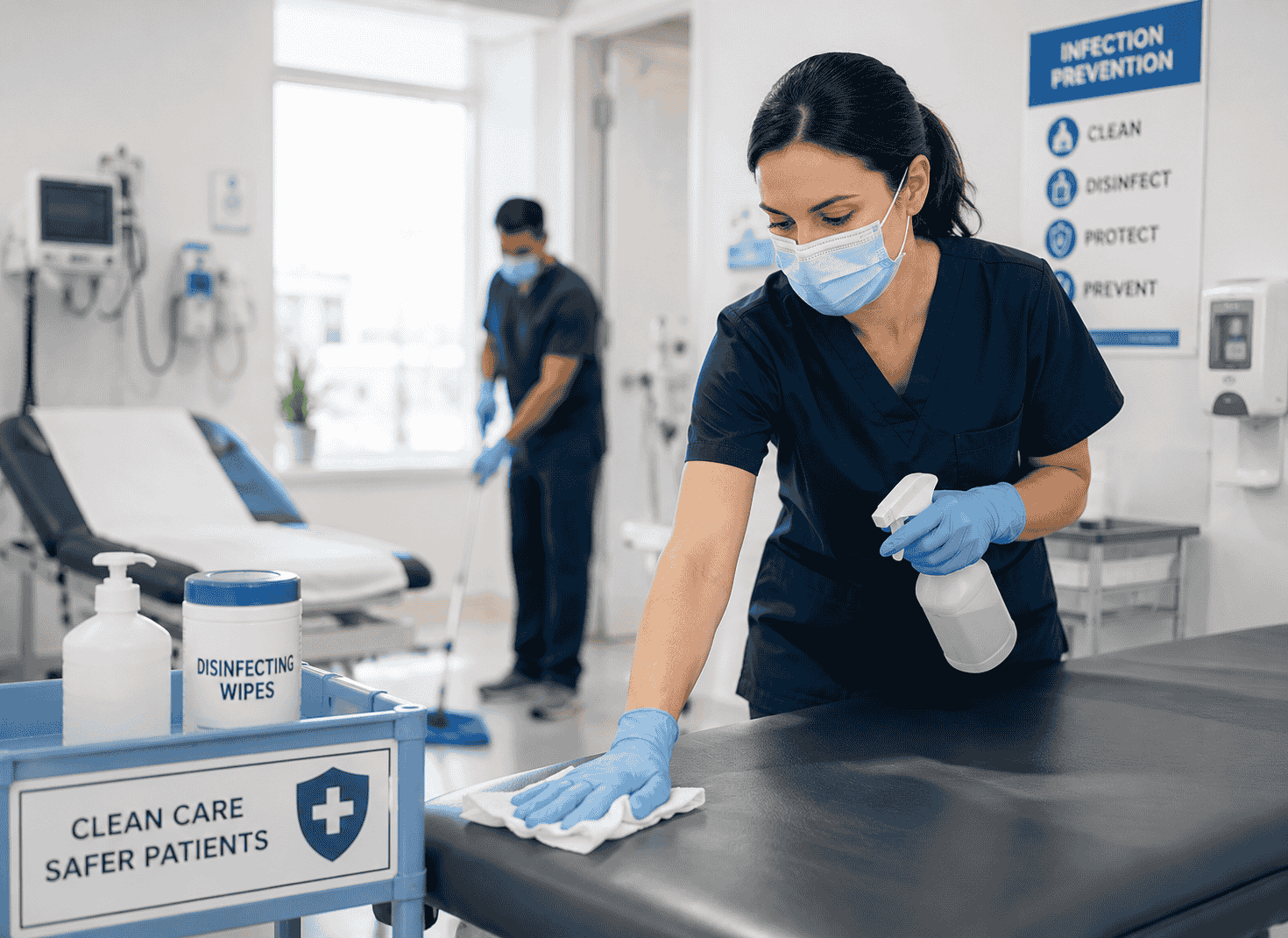
In healthcare settings, cleaning is not simply about making rooms look orderly or presentable. It plays a direct role in supporting safer care, reducing contamination risks, and helping staff carry out their work in spaces that must stay dependable from hour to hour. When infection prevention depends on daily routines, even small lapses can affect how well those routines hold together. Medical cleaning matters because healthcare environments experience constant touchpoints, repeated movement, and ongoing exposure to germs that can spread quickly if standards slip. Consistency is what helps these spaces remain reliable, not just occasionally clean.
Why Consistency Matters
1. Infection Prevention Relies on Repetition, Not Occasional Attention
Medical environments depend on routines that happen the same way every day because infection prevention is built on repetition. Surfaces are touched by staff, patients, visitors, and equipment from morning to night, and those contact points do not pause simply because a room still looks clean at a glance. Waiting areas, exam rooms, treatment spaces, restrooms, door handles, counters, and shared equipment all need dependable attention because risk can build quietly between visible signs of dirt. Facilities that prioritize Medical Cleaning in Sydney often do so because they understand that prevention depends on reliable daily action rather than reacting only when a problem becomes obvious. This matters because infection control is not strengthened by occasional deep effort alone. It is strengthened when cleaning routines remain consistent enough to reduce the chance that contamination settles into the ordinary flow of care, movement, and repeated use across the facility.
2. Daily Cleaning Supports Safer Contact Between People and Surfaces
One of the main reasons medical cleaning matters is that healthcare spaces involve repeated contact between people and the surfaces around them. A patient may move from the reception area to an exam room, touch armrests, counters, doors, and chairs, while staff members move between workstations, treatment areas, and shared equipment throughout the day. In these settings, surfaces become part of the care environment, not just the background. If they are not cleaned consistently, they can quietly contribute to the spread of contamination from one part of the facility to another. Daily medical cleaning helps interrupt that process by making surface care part of the routine rather than an occasional response. This is important because infection prevention depends on reducing risk before it becomes visible or disruptive. A healthcare space should not have to wait for clutter, stains, or obvious buildup to signal the need for attention. The role of cleaning is to keep those points of contact under better control every day so the facility remains safer to move through for everyone inside.
3. Consistent Cleaning Helps Staff Work Within More Reliable Conditions
Medical cleaning also matters because staff performance is shaped by the environment in which they work. Nurses, clinicians, administrative teams, support workers, and other personnel need workspaces that remain orderly, hygienic, and dependable across long hours of repeated use. When cleaning routines are steady, staff can move through their day with greater confidence in shared areas, treatment surfaces, and common-use spaces. That does not remove the need for hand hygiene, protective procedures, and clinical protocols, but it does create a workplace that better supports those efforts. This matters because infection prevention is rarely the result of one action alone. It depends on many small routines working together without unnecessary gaps. If environmental cleaning becomes inconsistent, staff may have to spend more time addressing preventable issues or worrying about whether shared spaces have been properly maintained. A dependable cleaning routine reduces that uncertainty. It helps the workplace feel more controlled, which supports stronger habits throughout the facility. In that sense, medical cleaning protects workflow and hygiene by helping the environment remain aligned with the standards healthcare teams aim to maintain.
4. Patients and Visitors Judge Safety Through What They Experience
Another reason medical cleaning matters is that patients and visitors often form their understanding of safety through the physical environment they can see and feel. They may not know the details of every infection control protocol in place. Still, they notice whether seating areas feel fresh, restrooms are maintained, bins are handled properly, and treatment rooms appear ready for care. These impressions matter because trust in a healthcare setting is shaped by visible consistency. A clean and well-kept facility signals that routines are being followed and that attention is being paid to the daily details that support safer care.
On the other hand, visible neglect can quickly create doubt, even if good work is happening behind the scenes. Medical cleaning helps protect that trust by ensuring the environment reflects the level of care people hope to receive. This is especially important in settings where people may already feel anxious, unwell, or uncertain. When the facility appears consistently maintained, it can reinforce the message that infection prevention is being treated as an everyday responsibility rather than a background task that only matters when conditions worsen.
5. Routine Cleaning Helps Prevent Small Lapses From Becoming Bigger Risks
Healthcare environments are busy by nature, and that busyness is exactly why consistent cleaning matters so much. In a space with appointments, treatments, staff movement, deliveries, and frequent turnover of people through rooms and waiting areas, even small lapses can multiply quickly. A missed touchpoint, an overlooked shared surface, or a disruption in daily cleaning flow may not seem major in isolation, but healthcare settings rarely remain still long enough for those lapses to remain small. Medical cleaning helps prevent that escalation by creating a routine that keeps risk from building quietly across the day. This matters because infection prevention often fails not through one dramatic breakdown, but through repeated small inconsistencies that weaken the environment over time. Daily cleaning helps close those gaps before they become part of a larger problem. It keeps hygiene from being reactive and instead makes it part of the facility’s structure. That structure is valuable because healthcare spaces work under pressure, and the more dependable the cleaning routine becomes, the less likely it is that preventable environmental issues will undermine the wider effort to keep patients and staff safer.
Daily Reliability Supports Safer Care
Medical cleaning matters when infection prevention depends on consistent daily routines; healthcare spaces require more than occasional attention. They need consistent, reliable environmental care that supports safer surfaces, steadier workflows, and greater confidence for both staff and patients. In settings where people move constantly and touchpoints change all day, consistency is what keeps risk from growing between visible problems. A reliable cleaning routine helps maintain the conditions that infection prevention depends on. When that routine stays strong, the whole facility is better positioned to support care, trust, and daily safety in a meaningful way.