Your home’s heating, ventilation, and air conditioning (HVAC) system is the unsung hero of your daily comfort. It works silently behind the scenes through summer heatwaves and winter freezes to keep your indoor air safe, clean, and perfectly tempered. Because modern heating and cooling systems are engineered for durability, it can be easy to take them for granted—until something goes wrong.
HVAC systems rarely fail without warning. Long before a complete breakdown leaves you without heat on a sub-zero night or sweltering in July, your system sends out subtle distress signals. Learning to recognize these red flags can save you thousands of dollars in emergency repairs, extend your equipment’s lifespan, and prevent hazardous conditions in your home.
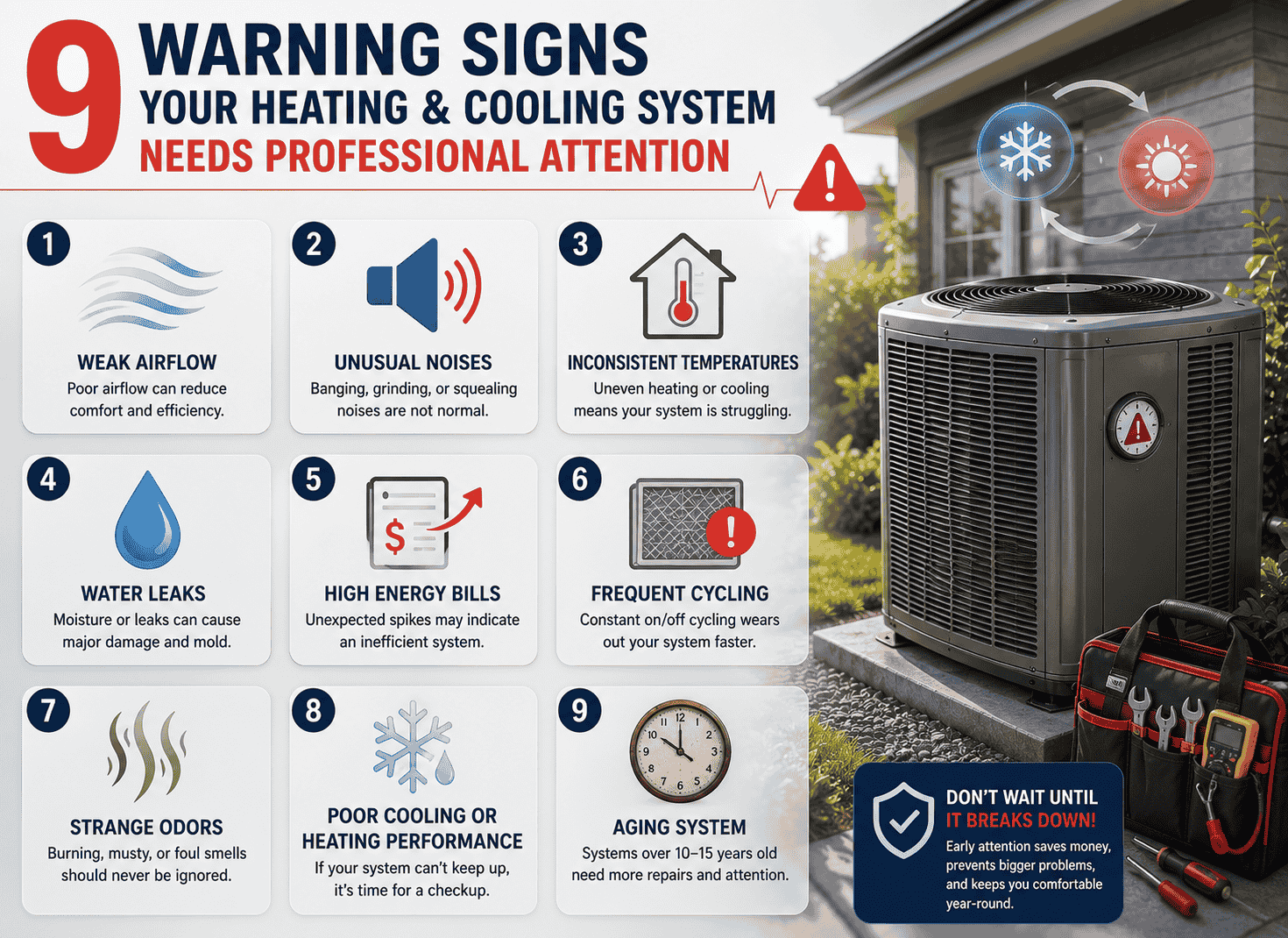
Here are nine critical warning signs that your heating and cooling system needs professional attention right away.
1. Strange or Unusually Loud Noises
While no heating or cooling unit is completely silent, a well-maintained system produces a consistent, low hum when running. If your equipment suddenly starts making loud, unusual noises, it is signaling mechanical distress.
- Squealing or Screeching: Often points to a worn-out fan belt or failing motor bearings.
- Banging or Clanking: Usually indicates a loose or broken internal component, such as a connecting rod, piston, or blower wheel.
- Grinding: A metal-on-metal grinding sound typically means the motor bearings have completely worn out and require immediate replacement.
- Clicking at Startup: Continuous clicking without the system turning on signals an electrical fault, such as a failing capacitor or control board relay.
Ignoring these sounds almost guarantees that a minor, inexpensive component replacement will turn into major mechanical damage.
2. Sudden, Unexplained Spikes in Utility Bills
It is natural for monthly energy costs to fluctuate slightly based on seasonal weather changes. However, if your utility bill surges unexpectedly without a corresponding shift in outdoor temperatures or household usage habits, your HVAC system is struggling with severe efficiency loss.
Common Causes of Sudden Efficiency Drop:
1. Clogged Air Filters ──► Blower motor overworks to pull air
2. Refrigerant Leaks ──► System runs continuously without cooling
3. Dirty Condenser Coils ──► Heat exchange capacity drops sharply
4. Leaky Ductwork ──► 20-30% of conditioned air escapes into attic/walls
When internal components wear down or airflow becomes restricted, your system must run much longer cycles to reach the temperature set on your thermostat. A professional evaluation can pinpoint the exact cause of heat loss or power drain.
3. Persistent Short-Cycling
Short-cycling occurs when your heating or cooling system turns on, runs for just a few minutes, shuts off abruptly, and then restarts shortly after. This rapid start-and-stop sequence prevents your home from reaching a stable temperature and places immense electrical and mechanical stress on the compressor and motor.
Short-cycling can be triggered by several issues, ranging from simple thermostat calibration errors and clogged air filters to oversized equipment or overheating heat exchangers. Because repeated short-cycling can permanently burn out your compressor, it requires prompt professional diagnosis.
4. Weak or Inconsistent Airflow
If you notice that air is barely trickling out of your supply vents—or that certain rooms in your house remain uncomfortable while others feel fine—your system has an airflow bottleneck.
What Causes Poor Airflow?
- Clogged Air Filters: Dust buildup chokes off supply air to the blower motor.
- Ductwork Obstructions or Leaks: Disconnected ducts or crushed flex-ducts stop air from reaching distant rooms.
- Failing Blower Fan: A declining fan motor cannot produce sufficient static pressure.
- Frozen Evaporator Coils: Ice buildup physically blocks air from passing through the air handler.
Restricted airflow not only degrades your comfort; it can cause your furnace’s heat exchanger to overheat or your air conditioner’s compressor to freeze solid.
5. Unusual or Foul Odors
Your heating and cooling system distributes air throughout your entire living space. When unpleasant smells originate from your vents, it poses a direct risk to your indoor air quality and health.
Warning: If you smell a strong “rotten egg” odor (sulfur), evacuate your home immediately and contact your gas utility company. This indicates a natural gas leak, which poses an immediate fire and explosion hazard.
Other noticeable odors warranting a professional call include:
- Musty, Moldy Smells (“Dirty Sock Syndrome”): Indicates bacterial or mold growth on the evaporator coils or inside standing drain pans.
- Burning Plastic or Electrical Smells: Signals overheating wires, melting insulation, or a failing motor.
- Persistent Dust or Burning Smells: A burning smell is common for 20 minutes when turning on your furnace for the first time in autumn. If it persists past an hour, turn off the unit immediately.
6. Ice Accumulation on Coils or Lines
It might seem counterintuitive, but seeing ice or frost on your outdoor unit or indoor evaporator coils during hot summer days is a major red flag.
Ice Formation Cycle
Airflow Restriction OR Refrigerant Leak ──► Coil Temperature Plummets ──► Moisture Freezes on Contact ──► Ice Blocks Air Flow Entirely
Ice usually forms when refrigerant levels are low due to a leak, or when airflow is severely restricted by dirty filters or clogged coils. Never attempt to scrape ice off the coils manually, as delicate aluminum fins can tear easily. Turn the unit off and call a certified technician to resolve the underlying leak or pressure issue.
7. High Humidity and Moisture Imbalance
A properly functioning air conditioner naturally dehumidifies your home during summer months by condensing water vapor out of the air as it passes over the cold evaporator coils.
If indoor air feels sticky, clammy, or humid even while the cooling system runs, your AC unit is either underperforming or improperly sized for your floor plan. Conversely, if winter indoor air becomes excessively dry, causing static shocks and dry skin, your system’s integrated moisture management needs recalibration.
If you suspect your climate control setup isn’t managing temperature or humidity effectively, consulting trusted specialists like Nespolo HVAC in Albuquerque ensures you receive accurate diagnostic testing, professional repairs, and tailored system solutions.
8. Blowing the Wrong Temperature Air
When your furnace is set to heat, warm air should come from your vents within a minute. When your AC is set to cool, crisp cold air should follow swiftly.
If your system blows warm air in the middle of summer or cold drafts in the dead of winter, the root cause could be:
- A tripped safety switch or blown fuse.
- A malfunctioning reversing valve in a heat pump system.
- A failed pilot light, igniter, or burner in a gas furnace.
- Complete loss of system refrigerant.
Rather than continuously lowering or raising your thermostat in frustration—which forces the system fan to run needlessly—have a technician trace the component failure.
9. Water Leaks or Moisture Pooling Around the Unit
It is normal for your central air conditioner or high-efficiency condensing furnace to produce condensation during operation. However, that moisture is supposed to drain safely out of your home via a dedicated condensate line.
If you notice standing water pooling around your furnace or indoor air handler, you likely have a clogged drain line, a rusted condensate pan, or a broken condensate pump. Left unaddressed, pooling water quickly damages flooring, subflooring, and drywall, creating an ideal breeding ground for toxic mold.
HVAC Trouble Sign Quick Reference Guide
| Warning Sign | Primary Suspect | Potential Consequences | Urgency Level |
| Grinding/Squealing Noises | Worn motor bearings or loose belts | Motor destruction, fan seizure | High |
| Rotten Egg Odor | Natural gas leak | Fire or explosion hazard | Immediate / Emergency |
| Ice on Coils | Low refrigerant or blocked airflow | Compressor failure | High |
| Short-Cycling | Electrical fault or oversized unit | Premature system death | High |
| Water Pooling | Clogged condensate drain line | Mold growth, structural damage | Medium |
| Unexplained Bill Spikes | Dirty coils, duct leaks, old age | Unnecessary operating costs | Medium |
Don’t Wait for a Complete Breakdown
Modern heating and cooling systems are complex networks of electrical, mechanical, and chemical components. Small defects in one part of the system put extra strain on every other component, turning minor issues into costly overhauls.
By acting promptly when you observe any of these nine warning signs, you protect your investment, maintain healthy indoor air quality, and ensure your home remains a safe, comfortable sanctuary all year round.