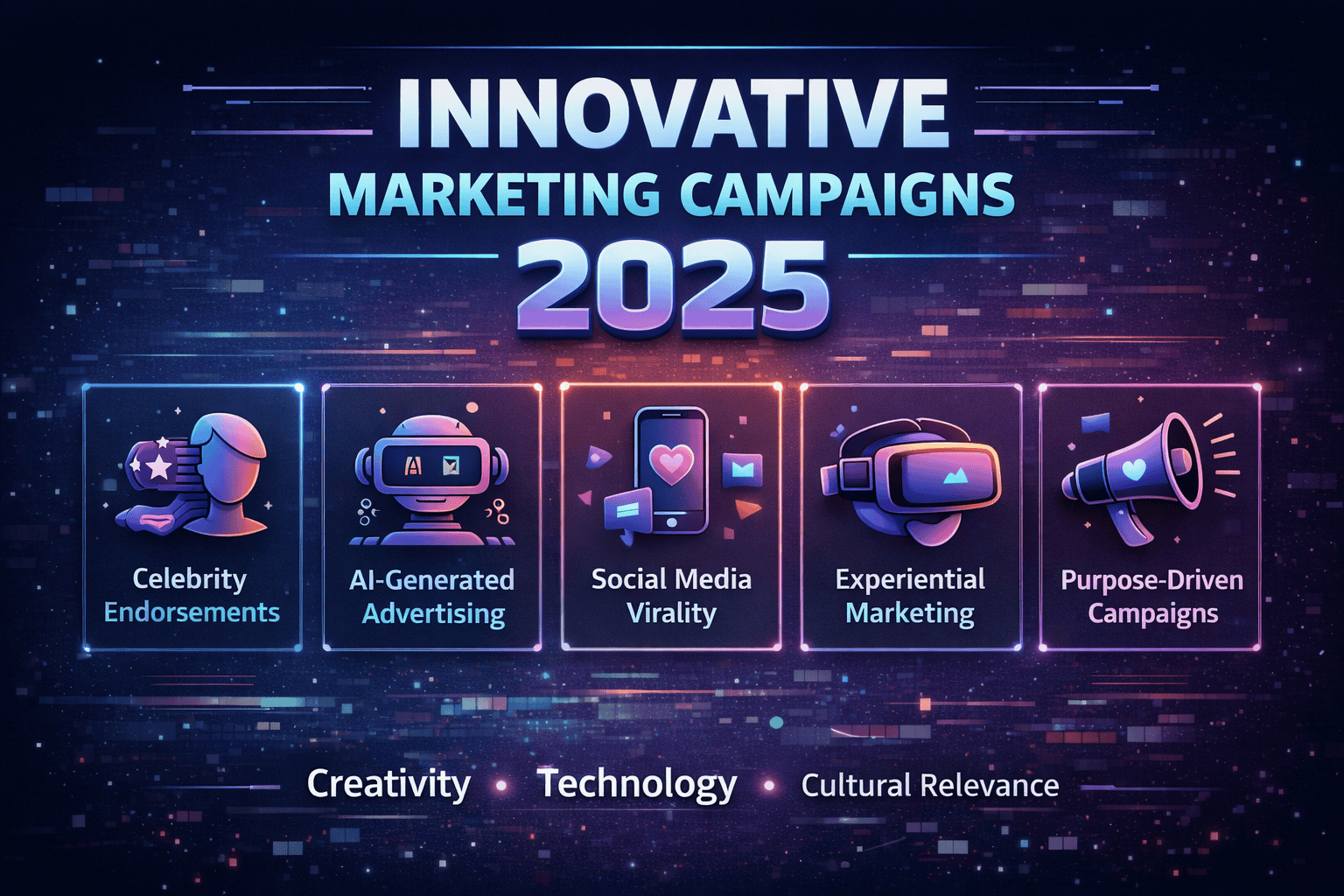
Marketing nowadays became more, experimental, data-driven, and culturally connected than ever before. Brands moved beyond traditional advertisements and began creating interactive experiences, viral social media moments, and technology-driven storytelling.
Modern companies are focusing on building conversations and emotional engagement Instead of simply promoting products. Campaigns that combined creativity, technology, and cultural relevance often achieved significantly higher engagement than traditional advertising formats. In fact, marketing initiatives built around storytelling and platform-native content generated up to three times higher engagement than conventional ads.
This article explores recent innovative marketing campaigns of 2025, highlighting the strategies, creativity, and lessons marketers can learn from them.
The Evolution of Marketing in 2025
The marketing landscape changed rapidly in recent years. Several factors shaped the campaigns launched in 2025:
- Short-form video dominance
- AI-powered creativity
- Influencer and celebrity collaborations
- Experiential marketing
- Community-driven storytelling
Brands no longer relied only on TV or display advertising. Instead, they designed campaigns specifically for social platforms, digital culture, and real-time conversations.
Companies like Nike, Spotify, and Airbnb adopted this approach by blending storytelling, personalization, and immersive experiences into their marketing strategies.
The following case studies demonstrate how recent innovative marketing campaigns successfully captured attention in 2025.
1. American Eagle’s “Sydney Sweeney Has Great Jeans”
One of the most talked-about campaigns of 2025 came from American Eagle.
The campaign featured actress Sydney Sweeney promoting the brand’s signature denim products across social media and outdoor advertising. It also included an AI-powered Snapchat experience that allowed users to interact with the campaign digitally.
Why the campaign worked
Several factors helped this campaign go viral:
- Celebrity influence boosted visibility.
- Controversy sparked online discussion.
- Interactive technology increased engagement.
The campaign dominated conversations online because it generated strong reactions and debate. In today’s digital environment, controversy often drives massive exposure.
Key marketing lesson
Bold and emotionally charged campaigns can create organic social media buzz that traditional ads rarely achieve.
2. Gap’s “Better in Denim” Campaign
Fashion brand Gap launched a successful campaign titled “Better in Denim.” The campaign featured pop group KATSEYE and combined music, fashion, and dance-driven visuals.
The advertisement quickly went viral across digital platforms. Within weeks, the campaign accumulated hundreds of millions of views and massive social engagement.
Why it stood out
The campaign succeeded for several reasons:
- It revived nostalgic Y2K fashion trends.
- It featured a diverse and multicultural cast.
- The dance-based format made the content highly shareable.
The strategy helped Gap connect with Gen Z audiences while also reminding older consumers of the brand’s heritage.
Key marketing lesson
Combining nostalgia with modern culture can help legacy brands remain relevant.
3. Dove’s “The Cost of Beauty”
Dove continued its long-standing mission of promoting body positivity with its campaign “The Cost of Beauty.”
The campaign highlighted the negative impact of unrealistic beauty standards on young women and emphasized inclusivity and diversity.
Why it resonated
The campaign focused on social awareness rather than product promotion. This approach created deeper emotional connections with audiences.
Key factors included:
- Authentic storytelling
- Inclusive representation
- A powerful social message
Instead of pushing products, Dove encouraged meaningful conversations about self-esteem and beauty standards.
Key marketing lesson
Purpose-driven campaigns can strengthen brand trust and loyalty.
4. Celebrity-Driven Stunts: The Doja Cat Lipstick Moment
Celebrity marketing continued to evolve in 2025 with bold and unexpected publicity stunts.
At the MTV Video Music Awards, singer Doja Cat created headlines when she appeared to eat a lipstick on the red carpet. The moment was later revealed to be a marketing stunt promoting MAC Cosmetics.
Why it went viral
The stunt quickly spread across social media and news outlets because it was shocking and unexpected.
This strategy worked because:
- It created curiosity and surprise.
- It encouraged social media discussion.
- It blurred the line between entertainment and advertising.
Marketing experts often describe such campaigns as “cultural moments” rather than traditional ads.
Key marketing lesson
Unexpected and entertaining marketing can capture attention in crowded digital spaces.
5. The Rise of AI-Generated Advertising
Artificial intelligence became one of the biggest marketing innovations in 2025.
Brands began using AI tools to create personalized advertisements, automate content production, and generate creative ideas. Some campaigns even experimented with fully AI-generated commercials.
For example, an upcoming Super Bowl advertisement used AI to generate most of its visual content and characters.
Why AI marketing is growing
AI provides several advantages:
- Faster content production
- Lower marketing costs
- Highly personalized messaging
- Scalable creative experimentation
Industry leaders increasingly view AI as a collaborative tool for marketers, helping them design campaigns based on audience data and engagement patterns.
Key marketing lesson
AI will continue transforming marketing by enabling personalization at scale.
6. Social-First Brand Marketing
Many brands in 2025 prioritized social media-first strategies rather than traditional advertising channels.
Instead of producing one large commercial, companies created multiple pieces of content optimized for platforms like:
- TikTok
- YouTube Shorts
These campaigns encouraged users to participate through challenges, memes, and interactive experiences.
Brands discovered that user-generated content and community participation often generate more reach than expensive advertisements.
Key marketing lesson
Successful marketing now depends on community participation and shareable content.
Key Trends Behind Innovative Marketing Campaigns in 2025
Analyzing successful campaigns reveals several consistent trends.
1. Entertainment-Driven Marketing
Modern campaigns often resemble entertainment rather than advertisements. Brands create content that people want to watch and share.
2. Cultural Relevance
Campaigns that reference trending topics, internet culture, or social movements often generate stronger engagement.
3. Experiential Marketing
Interactive experiences—both online and offline—help audiences feel connected to the brand.
4. Data-Driven Personalization
AI and analytics allow marketers to tailor content for specific audiences, increasing conversion rates.
5. Authentic Storytelling
Consumers increasingly prefer brands that communicate genuine values and social responsibility.
These strategies reflect a broader shift toward customer-centric marketing, where engagement matters more than exposure.
Lessons Marketers Can Learn from 2025 Campaigns
The most innovative campaigns share several common principles.
1. Creativity beats budget
Even smaller campaigns can go viral if they deliver a unique idea or emotional story.
2. Social media is the primary battleground
Most successful campaigns now originate on social platforms before spreading to traditional media.
3. Authenticity builds trust
Consumers prefer brands that communicate real values rather than scripted marketing messages.
4. Technology amplifies creativity
Tools like AI, augmented reality, and interactive media expand what marketers can create.
5. Cultural timing matters
Campaigns that connect with current trends often gain massive organic reach.
The Future of Marketing Beyond 2025
The marketing innovations seen in 2025 are only the beginning. Emerging technologies such as:
- generative AI
- immersive AR and VR experiences
- hyper-personalized advertising
will continue shaping how brands communicate with consumers.
The biggest shift, however, is conceptual. Marketing is evolving from advertising products to creating cultural experiences.
Brands that understand this transformation will have a significant advantage in the coming years.
Conclusion
The most innovative marketing campaigns of 2025 demonstrate how creativity, technology, and cultural relevance can transform advertising.
From Gap’s viral denim campaign to bold celebrity stunts and AI-generated advertisements, brands are redefining how they engage audiences. These campaigns prove that modern marketing success depends on storytelling, interaction, and authenticity.
For businesses and marketers, the lesson is clear:
The future of marketing belongs to brands that create experiences people want to talk about, share, and remember.