High ticket sales refer to selling high-value offers or high-priced products that often range from $1,000 to $10,000 and sometimes even more. These offers typically deliver substantial value, transformation, or results for the customer. Instead of relying on hundreds or thousands of small purchases, companies can generate significant revenue by selling premium products or services to a smaller number of clients.
Mastering how to close high ticket deals can transform the entire business model. It allows companies to work with fewer clients while maintaining higher profitability and deeper relationships.
In this guide, you will learn what high ticket sales are, why they matter, how the high ticket sales process works, and the best strategies to consistently close premium deals.
What Are High Ticket Sales?
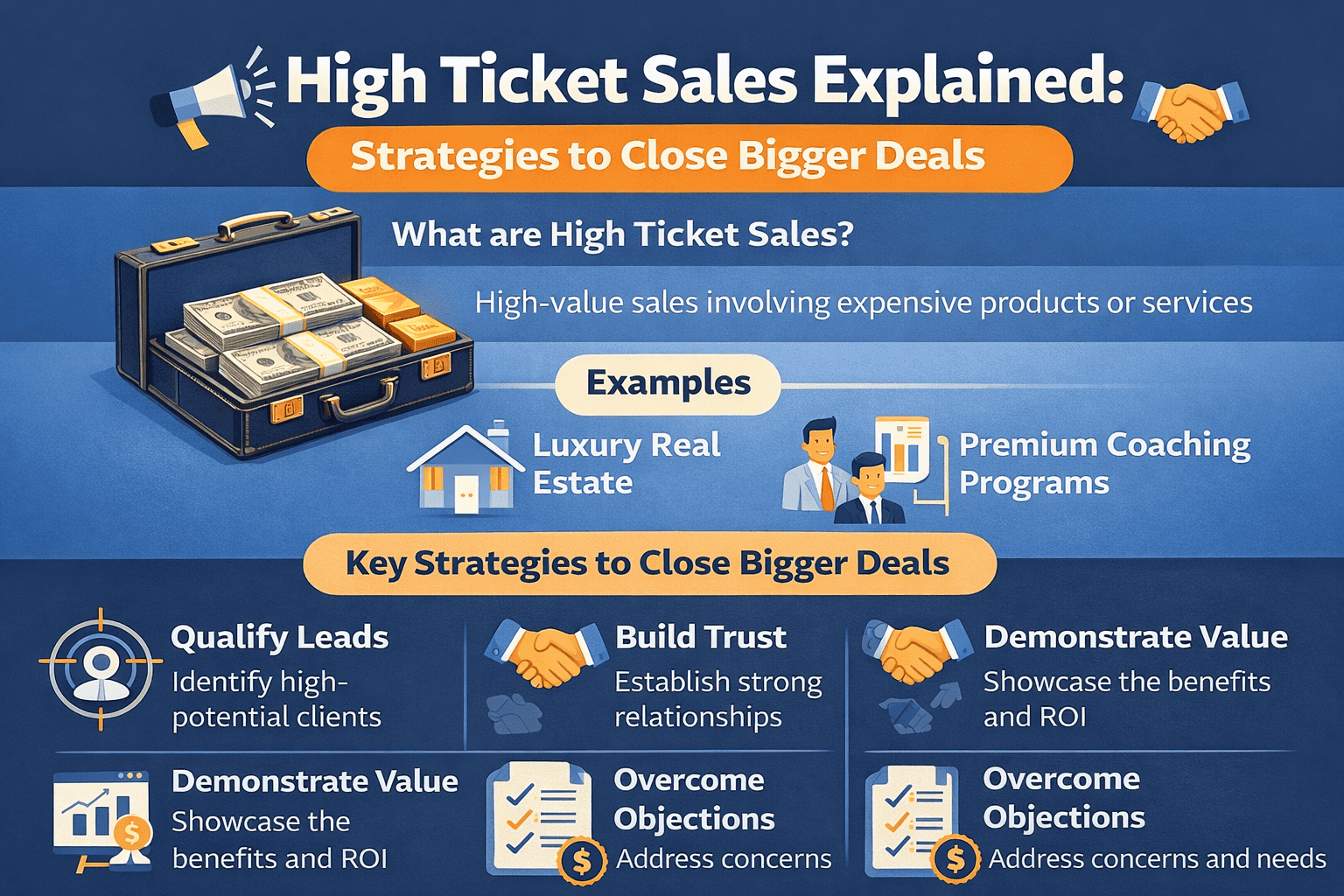
High ticket sales refer to the process of selling premium-priced products or services that deliver high value to customers. These offerings usually require a more sophisticated sales approach because buyers invest significant amounts of money and expect clear results.
Definition of High Ticket Sales
High ticket sales typically involve offers priced anywhere from $500 to $100,000 or more, depending on the industry. Unlike low-cost items that customers purchase quickly, high ticket offers require deeper consideration, trust, and relationship-building.
Because of the higher investment involved, businesses must focus on value, credibility, and clear outcomes when presenting their offers.
Examples of High Ticket Products and Services
Many industries rely heavily on high ticket products to generate revenue and long-term client relationships. Some common examples include:
- Business coaching and consulting programs
- Enterprise software solutions (SaaS platforms)
- Luxury real estate properties
- Premium online courses and masterminds
- Marketing or digital transformation services
- High-end technology equipment
- Luxury vehicles and lifestyle products
These offerings usually promise a significant transformation or return on investment for the buyer.
High Ticket Sales vs Low Ticket Sales
Understanding the difference between high ticket and low ticket sales helps clarify why the strategies differ.
Low Ticket Sales
- Lower prices
- Shorter buying decisions
- High transaction volume
- Automated sales funnels
High Ticket Sales
- Higher price points
- Longer decision-making cycles
- Smaller number of clients
- Relationship-based sales process
In high ticket selling, the focus shifts from quick conversions to trust, consultation, and value delivery.
Why High Ticket Sales Are Important for Businesses
High ticket selling can significantly improve business performance and sustainability. Instead of relying solely on volume, companies generate revenue through premium services.
Higher Profit Margins
One of the biggest advantages of high ticket offers is the higher profit margin per client. When a company sells premium services, it can invest more time, resources, and support into delivering exceptional results.
Fewer Customers Needed to Scale
Businesses often struggle to manage thousands of customers while maintaining service quality. High ticket models solve this problem by focusing on quality over quantity.
For example, selling a $5,000 consulting package to 20 clients generates the same revenue as selling a $100 product to 1,000 customers.
Stronger Customer Relationships
High ticket clients expect personalized attention and deeper engagement. This creates stronger professional relationships and often leads to long-term partnerships and referrals.
Better Brand Positioning
Selling premium offers helps position a business as an industry authority or premium brand. When customers see higher prices, they often associate the offer with greater expertise and value.
Understanding the Psychology Behind High Ticket Buyers
To succeed in high ticket sales, businesses must understand how premium buyers think and make decisions.
Trust and Credibility
Trust is the most critical factor in closing large deals. Buyers want to feel confident that the provider has the expertise and experience to deliver results.
Businesses can build credibility through:
- Testimonials and case studies
- Personal branding
- Industry authority
- Demonstrated expertise
Value Over Price
High ticket buyers usually prioritize value and outcomes rather than simply looking for the cheapest option.
If a service can generate a $50,000 return, paying $5,000 for it becomes a logical decision.
Emotional and Rational Decision Making
Although high-value decisions appear rational, emotions still influence the process. Buyers often want:
- Security
- Confidence in the provider
- Reduced risk
- A clear transformation
Successful sales professionals address both emotional and logical aspects during the sales conversation.
Social Proof and Case Studies
Case studies and testimonials help reduce uncertainty. When potential clients see others achieving success, they become more comfortable investing in the offer.
The High Ticket Sales Process (Step-by-Step)
The high ticket sales process involves multiple stages designed to guide prospects from awareness to purchase.
Step 1: Identify Your Ideal High Ticket Client
The first step is identifying the right audience. High ticket offers work best when they target clients with:
- A strong need for the solution
- Sufficient financial resources
- A clear problem to solve
Developing a detailed customer profile helps businesses focus their marketing and sales efforts.
Step 2: Create a High-Value Offer
A strong high ticket offer must clearly communicate the transformation or results the client will achieve.
Instead of selling features, focus on outcomes such as:
- Increased revenue
- Improved productivity
- Business growth
- Lifestyle improvements
Step 3: Generate Qualified Leads
Lead generation plays a vital role in building a successful high ticket sales funnel. Businesses typically attract prospects through:
- Educational content
- Webinars
- Email marketing
- LinkedIn outreach
- Referrals and partnerships
The goal is to attract prospects who already understand the value of the offer.
Step 4: Conduct Discovery or Sales Calls
Most high ticket deals involve a consultation or discovery call. During this conversation, the salesperson focuses on understanding the client’s challenges, goals, and expectations.
Instead of pushing a product, the conversation should identify whether the solution genuinely fits the client’s needs.
Step 5: Present the Offer and Close the Deal
After understanding the client’s needs, the next step is presenting the offer clearly. Focus on:
- Expected results
- Return on investment
- Support and implementation
This stage is where businesses apply proven techniques for how to close high ticket deals effectively.
Proven High Ticket Sales Strategies
Successful businesses use specific strategies to close premium clients consistently.
Build Authority and Personal Branding
Authority increases trust dramatically. Thought leadership content, speaking engagements, and expert insights help position a brand as the best choice.
Focus on Relationship Selling
High ticket deals rarely close instantly. Instead, they develop through conversations and trust-building.
Sales professionals should focus on helping the client rather than rushing the transaction.
Use Consultative Selling
Consultative selling positions the salesperson as a trusted advisor rather than a traditional salesperson.
This approach involves asking questions, identifying problems, and recommending the best solution.
Leverage Storytelling and Case Studies
Real success stories help prospects visualize the results they can achieve. Stories also make complex solutions easier to understand.
Offer Clear ROI and Transformation
High ticket buyers want to see measurable outcomes. Demonstrating potential return on investment increases confidence in the purchase decision.
A well-defined high ticket sales strategy focuses on results and transformation rather than features.
Best Channels for High Ticket Sales
Different marketing channels can support high ticket selling.
Webinars and Online Events
Educational webinars allow businesses to demonstrate expertise and build trust with potential clients.
LinkedIn and Professional Networking
LinkedIn is one of the most effective platforms for reaching professionals, executives, and decision-makers.
Sales Funnels and Lead Magnets
A structured high ticket sales funnel helps guide prospects through the buyer journey. Typical funnel stages include:
- Awareness
- Lead capture
- Education
- Consultation call
- Offer presentation
Referrals and Strategic Partnerships
Referrals remain one of the most powerful sources of high-quality leads. Partnerships with complementary businesses can also generate premium clients.
High-Converting Sales Calls
Personal conversations remain essential in high ticket sales because they allow businesses to address concerns and build trust.
Common Mistakes in High Ticket Sales
Even experienced businesses sometimes make mistakes that reduce their success rate.
Focusing Too Much on Price
When sales conversations revolve around price, the value of the solution becomes unclear. The focus should always remain on results and benefits.
Targeting the Wrong Audience
High ticket offers require clients who both need and can afford the solution. Poor targeting often leads to low conversion rates.
Weak Value Proposition
If the offer does not clearly communicate transformation or benefits, prospects will struggle to justify the investment.
Poor Follow-Up Strategy
Many high ticket deals require multiple touchpoints before the final decision. Consistent follow-up keeps prospects engaged.
Lack of Social Proof
Without testimonials or case studies, prospects may hesitate to trust the solution.
Tools and Skills Needed for High Ticket Sales
Closing premium deals requires both technology and strong communication skills.
Communication and Negotiation Skills
Effective communication helps build rapport, understand client needs, and present solutions clearly.
CRM and Sales Management Tools
Customer relationship management platforms help track leads, conversations, and sales opportunities.
Lead Qualification Techniques
Not every lead is a good fit. Qualification frameworks help sales teams focus on prospects who are more likely to convert.
Presentation and Closing Skills
Professionals who master how to close high ticket deals understand how to present value and address objections confidently.
How Beginners Can Start With High Ticket Sales
Beginners can enter the high ticket sales space by developing essential skills and positioning themselves strategically.
Learn the Fundamentals of Sales
Understanding persuasion, communication, and negotiation provides a strong foundation.
Choose a High-Value Niche
Some industries naturally support premium pricing, such as consulting, software, marketing services, and professional coaching.
Build Credibility and Authority
Publishing valuable insights, sharing case studies, and demonstrating expertise helps build trust with potential clients.
Practice High Ticket Sales Conversations
Experience improves confidence. Practicing discovery calls and client consultations helps refine the sales approach.
Future Trends in High Ticket Sales
The landscape of premium selling continues to evolve with technology and changing customer expectations.
AI and Automation in Sales
Artificial intelligence tools now help businesses analyze customer behavior, personalize outreach, and improve sales efficiency.
Personalization in Client Experiences
High ticket buyers expect tailored experiences. Businesses that provide personalized communication and solutions will gain a competitive advantage.
Growth of Digital High Ticket Offers
Digital products such as coaching programs, online masterminds, and virtual consulting services continue to grow rapidly.
Conclusion
High ticket sales provide a powerful opportunity for businesses to increase revenue while working with fewer clients. Instead of relying on volume, companies can focus on delivering exceptional value through premium services.
By understanding buyer psychology, building trust, and implementing a structured high ticket sales process, businesses can consistently attract and convert high-value clients.
Success in this field requires strong communication skills, strategic marketing, and a clear high ticket sales strategy focused on transformation and results.
For entrepreneurs, consultants, and agencies willing to invest in these skills, high ticket sales can become one of the most profitable and scalable business models available.
High ticket sales refer to selling products or services with a high price point, often ranging from several hundred to thousands of dollars.
It can be challenging at first, but beginners can succeed by learning sales fundamentals, building credibility, and focusing on value-driven solutions.
The sales cycle varies by industry but often ranges from a few days to several weeks depending on the complexity of the offer.
Common industries include consulting, enterprise software, marketing services, real estate, coaching, and luxury products.
Yes. Many online businesses sell high-value coaching programs, consulting services, and digital courses using a structured high ticket sales funnel.