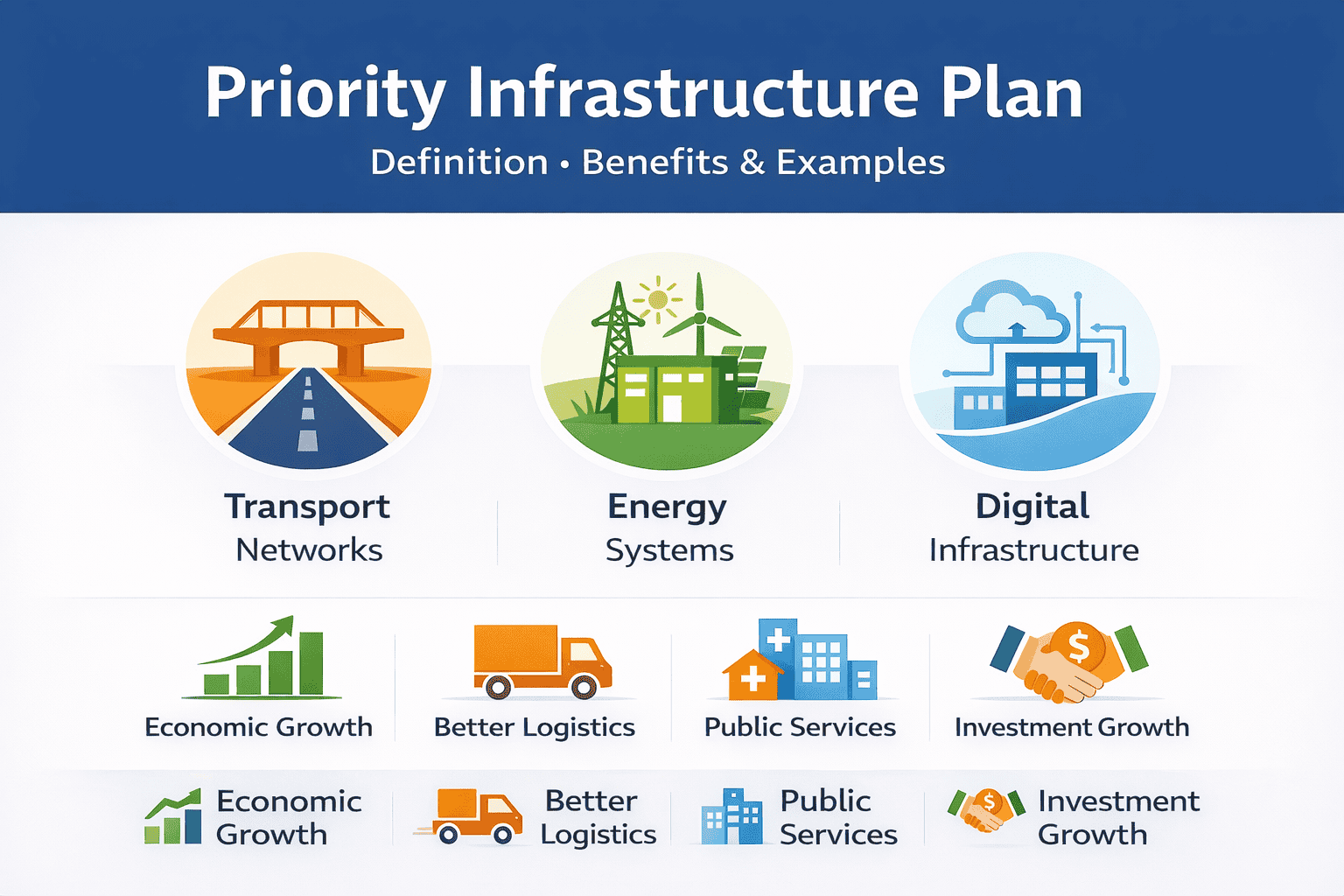
A priority infrastructure plan helps governments identify, fund, and implement the most critical infrastructure projects that can deliver the greatest economic and social impact. Instead of spreading resources across numerous initiatives, governments focus on projects that support national development goals, strengthen economic competitiveness, and improve public services.
These plans typically cover sectors such as transportation, energy, water supply, telecommunications, and urban development. By prioritizing key investments, countries can accelerate economic growth, create jobs, attract private investment, and improve the overall quality of life for citizens.
In this comprehensive guide, we will explore the definition of a priority infrastructure plan, its key benefits, how projects are selected, real-world examples, challenges in implementation, and emerging trends in infrastructure planning.
What Is a Priority Infrastructure Plan?
A priority infrastructure plan is a strategic framework developed by governments or regional authorities to identify and prioritize infrastructure projects that are essential for economic development and public welfare. The plan outlines which projects should receive immediate attention, funding, and policy support.
Infrastructure projects often require large investments, long timelines, and coordination across multiple government agencies. Without proper prioritization, development efforts can become fragmented and inefficient. A priority infrastructure plan helps streamline this process by focusing on projects with the highest potential impact.
These plans are commonly part of broader national development strategies, ensuring that infrastructure investments align with long-term economic and social goals.
Priority Infrastructure Plan Definition
In simple terms, a priority infrastructure plan can be defined as:
A strategic roadmap that identifies, evaluates, and prioritizes infrastructure projects based on their economic importance, social impact, and long-term development value.
Such plans typically include:
- A list of high-priority infrastructure projects
- Project timelines and development phases
- Funding strategies and budget allocation
- Policy guidelines and regulatory frameworks
By clearly defining priorities, governments can allocate resources more effectively and ensure that infrastructure investments generate meaningful outcomes.
Core Components of a Priority Infrastructure Plan
A well-structured priority infrastructure plan generally includes several key components that guide project development and implementation.
Strategic Project Selection
Governments evaluate numerous potential projects but select only those that align with national development goals. Factors such as economic impact, regional importance, and public demand play a major role in the selection process.
Budget Allocation and Financing
Infrastructure projects often require billions of dollars in investment. A priority infrastructure plan outlines funding sources, which may include:
- Government budgets
- Development banks
- International funding institutions
- Public-private partnerships (PPPs)
Timelines and Project Phases
Infrastructure development occurs in stages, including planning, design, construction, and operation. Priority infrastructure plans establish realistic timelines and milestones for each project.
Policy Coordination
Large infrastructure initiatives require coordination between government ministries, local authorities, and regulatory agencies. The plan ensures all stakeholders work toward the same development objectives.
Sectors Commonly Included in Priority Infrastructure Plans
Most priority infrastructure plans focus on sectors that directly influence economic productivity and public well-being.
Transportation Infrastructure
Transportation systems are essential for connecting cities, facilitating trade, and enabling mobility. Projects may include:
- Highways and expressways
- Rail networks
- Airports and seaports
- Urban transit systems
Energy and Power Systems
Reliable energy infrastructure supports industries, businesses, and households. Priority projects often involve:
- Power generation facilities
- Renewable energy installations
- Transmission and distribution networks
Water and Sanitation
Water infrastructure ensures access to clean drinking water and proper sanitation. Governments may prioritize projects such as:
- Water treatment plants
- Irrigation systems
- Flood management infrastructure
Telecommunications and Digital Networks
Digital infrastructure is increasingly important in modern economies. Governments prioritize:
- Broadband networks
- 5G connectivity
- Data centers and digital infrastructure systems
Urban Development Projects
As cities grow, governments invest in urban infrastructure such as:
- Housing developments
- Smart city technologies
- Public transportation systems
Why Governments Create Priority Infrastructure Plans
Infrastructure investments shape the long-term future of economies. Governments create priority infrastructure plans to ensure that resources are used efficiently and that development efforts support strategic national goals.
Managing Limited Public Resources
Public budgets are often constrained, and infrastructure projects can be extremely expensive. Prioritization allows governments to focus on projects that deliver the highest return on investment.
Without clear priorities, funds may be distributed inefficiently, leading to delays or incomplete projects.
Supporting National Development Goals
Infrastructure is closely linked to broader development objectives such as:
- Economic growth
- Industrial development
- Trade expansion
- Regional connectivity
Priority infrastructure plans ensure that infrastructure investments contribute directly to these national goals.
Addressing Infrastructure Gaps
Many countries face infrastructure deficits due to aging systems, population growth, or rapid urbanization. Priority infrastructure plans help address these gaps by identifying critical projects that require immediate attention.
Key Benefits of a Priority Infrastructure Plan
Developing a priority infrastructure plan offers several important advantages for governments, businesses, and citizens.
Accelerates Economic Growth
Infrastructure investment is a major driver of economic activity. Construction projects create jobs, stimulate demand for materials, and support business expansion.
Improved infrastructure also enhances productivity by reducing transportation costs, improving logistics, and facilitating trade.
Improves Transportation and Logistics
Efficient transportation systems allow goods and people to move quickly and reliably. Priority infrastructure investments in roads, railways, and ports can significantly reduce travel time and logistics costs.
This improves supply chain efficiency and strengthens economic competitiveness.
Enhances Public Services
Infrastructure development directly improves the quality of public services. Citizens benefit from:
- Reliable electricity
- Clean water supply
- Better healthcare and education access
- Improved transportation systems
These improvements contribute to higher living standards and better overall well-being.
Encourages Private Sector Investment
When governments prioritize infrastructure development, it sends a positive signal to investors. Businesses are more likely to invest in regions with strong infrastructure because it supports efficient operations and market access.
Many infrastructure projects also involve public-private partnerships, where private companies contribute funding and expertise to large development initiatives.
How Priority Infrastructure Projects Are Selected
Selecting infrastructure projects requires careful evaluation and planning. Governments use several criteria to determine which projects should be prioritized.
Economic Impact Assessment
One of the most important factors in project selection is economic impact. Governments conduct cost-benefit analyses to evaluate how a project will affect economic growth, employment, and productivity.
Projects that generate significant long-term benefits are often given higher priority.
Strategic National Importance
Some infrastructure projects are critical for national security, trade, or energy independence. Examples include:
- Major ports and trade corridors
- Energy pipelines or power plants
- National digital infrastructure networks
Such projects often receive priority status because of their strategic value.
Environmental and Social Considerations
Modern infrastructure planning increasingly emphasizes sustainability and social responsibility.
Governments evaluate factors such as:
- Environmental impact
- Carbon emissions
- Community benefits
- Social inclusion
Projects that support sustainable development are more likely to receive approval and funding.
Examples of Priority Infrastructure Plans Around the World
Many countries have implemented large-scale infrastructure planning initiatives to accelerate development.
National Infrastructure Plans in Developed Countries
Developed economies often focus on upgrading aging infrastructure and adopting advanced technologies.
Examples include:
- Modernizing rail networks
- Developing smart transportation systems
- Expanding renewable energy infrastructure
These initiatives aim to improve efficiency and support long-term sustainability.
Infrastructure Expansion in Emerging Economies
Emerging economies typically prioritize large-scale infrastructure expansion to support rapid growth.
Common projects include:
- Highway networks connecting major cities
- New airports and seaports
- Large power generation facilities
- Urban metro systems
These investments help strengthen economic growth and reduce development gaps.
Regional Infrastructure Initiatives
Some infrastructure plans involve collaboration between multiple countries. Regional projects may include:
- Cross-border railway corridors
- International energy pipelines
- Regional digital connectivity networks
Such initiatives promote trade, economic integration, and regional cooperation.
Challenges in Implementing Priority Infrastructure Plans
While priority infrastructure plans offer many benefits, implementing them can be challenging.
Funding and Budget Constraints
Infrastructure projects often require significant financial resources. Governments must balance infrastructure investment with other spending priorities such as healthcare and education.
Funding gaps can delay projects or limit their scope.
Regulatory and Administrative Delays
Large infrastructure projects require numerous approvals, permits, and regulatory reviews. These processes can slow down project implementation and increase costs.
Improving coordination between agencies can help reduce these delays.
Environmental and Social Concerns
Infrastructure development sometimes affects ecosystems and communities. Governments must address issues such as:
- Environmental protection
- Land acquisition
- Community displacement
Balancing development with environmental sustainability is a key challenge in infrastructure planning.
Future Trends in Priority Infrastructure Planning
Infrastructure planning continues to evolve as governments adopt new technologies and sustainability strategies.
Smart Infrastructure and Digitalization
Modern infrastructure increasingly incorporates digital technologies such as:
- Smart transportation systems
- IoT-based infrastructure monitoring
- AI-driven traffic management
These technologies improve efficiency, safety, and operational performance.
Sustainable and Green Infrastructure
Governments are investing more in environmentally friendly infrastructure projects, including:
- Renewable energy systems
- Electric vehicle charging networks
- Climate-resilient infrastructure
Sustainable infrastructure helps reduce environmental impact while supporting long-term development.
Increased Use of Public-Private Partnerships
Public-private partnerships are becoming more common in infrastructure development. These partnerships allow governments to leverage private sector funding, innovation, and expertise.
By sharing risks and resources, PPPs can accelerate project delivery and improve efficiency.
Conclusion
A priority infrastructure plan plays a crucial role in guiding national development and ensuring that infrastructure investments deliver maximum economic and social benefits. By identifying and prioritizing the most impactful projects, governments can allocate resources efficiently, improve public services, and support long-term economic growth.
From transportation networks and energy systems to digital infrastructure and urban development, priority infrastructure plans shape the foundation of modern economies. They help address infrastructure gaps, strengthen connectivity, and attract private investment.
Although challenges such as funding limitations and regulatory delays can affect implementation, strategic planning and innovative financing models continue to improve infrastructure development worldwide.
As technology advances and sustainability becomes increasingly important, future priority infrastructure plans will focus on smart infrastructure, green energy systems, and resilient urban development. These initiatives will play a key role in building more connected, efficient, and sustainable societies.
Frequently Asked Questions (FAQs)
A priority infrastructure plan is a strategic framework used by governments to identify and prioritize infrastructure projects that have the greatest economic and social impact.
They help governments allocate resources efficiently, accelerate economic development, and improve public services such as transportation, energy, and water systems.
Priority infrastructure plans commonly include sectors such as transportation, energy, telecommunications, water supply, sanitation, and urban development.
Projects are selected based on factors such as economic impact, national importance, sustainability, cost-benefit analysis, and long-term development goals.