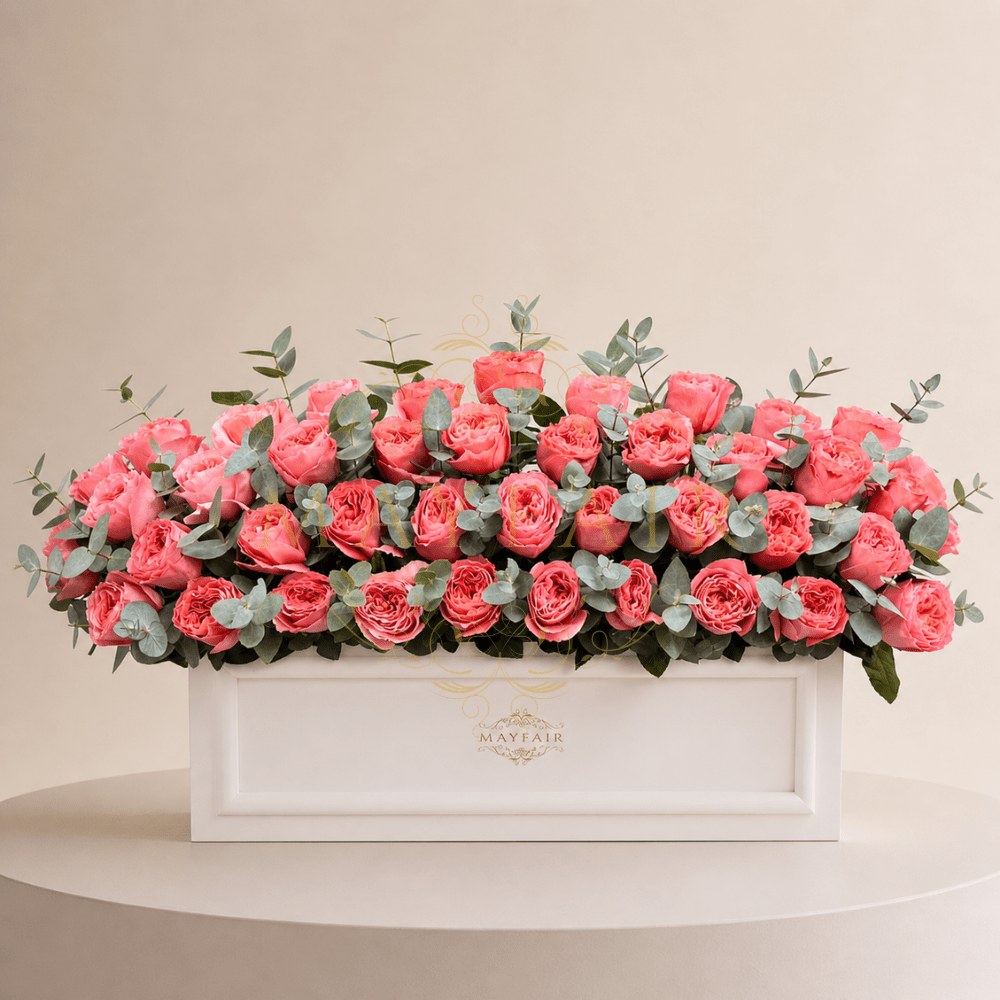
Qatar’s heat creates a difficult environment for fresh flowers. High temperatures increase water loss, speed up respiration, and can cause petals to wilt within a short time. Flowers may also pass through several warm areas while being imported, arranged, transported, and delivered.
Florists manage this risk through temperature control, clean handling, correct hydration, careful flower selection, and protected delivery. Freshness depends on an unbroken care process from the moment flowers arrive until the customer receives them.
Why Does Hot Weather Affect Cut Flowers So Quickly?
Mayfair Qatar offers floral arrangements and delivery services for customers across Qatar. Professional handling matters because cut flowers continue to respire and lose moisture after being separated from the plant.
In warm climates, refrigerating flowers in the Gulf can help slow these natural processes and preserve freshness, as every stage of heat exposure can shorten vase life.
- Faster water loss: Warm air draws moisture from petals and leaves, making delicate flowers wilt or develop dry edges.
- Higher respiration: Flowers use stored sugars more quickly at high temperatures, which speeds up aging and reduces their display life.
- Bacterial growth: Warm, contaminated water encourages microorganisms that can block stems and restrict water uptake.
- Greater ethylene sensitivity: Heat can intensify the effects of ethylene, a natural plant hormone that causes ageing, petal drop, and fading in sensitive varieties.
- Delivery exposure: Vehicles, entrances, pavements, and loading areas can become extremely hot, even when the flowers spend only a short time outside.
- Temperature shock: Repeated movement between very cold storage and intense outdoor heat can stress petals and create condensation.
- Faster vase evaporation: Water levels can fall quickly inside air-conditioned buildings, particularly when arrangements sit near windows or moving air.
Which Professional Methods Help Flowers Stay Fresh?
Florists combine refrigeration with sanitation, hydration, conditioning, and careful stock management. No single technique can protect flowers if another part of the process is neglected.
1. Maintain a Controlled Cold Chain
Flowers should move into suitable cold storage soon after arrival. Cooling slows respiration, reduces moisture loss, and delays the natural ageing process.
Different species have different temperature requirements, especially tropical flowers. Storage must suit the variety, since conditions that protect roses may not be ideal for orchids or other heat-sensitive blooms.
2. Rehydrate Flowers After Arrival
Imported flowers may spend many hours in transit. Florists inspect them, remove packaging carefully, recut the stems, and place them into an appropriate hydration solution.
A fresh cut opens the stem’s water-conducting tissue. Rapid rehydration restores firmness and helps petals recover before the flowers are used in bouquets or event arrangements.
3. Keep Buckets and Tools Clean
Dirty buckets, blades, and preparation surfaces can introduce bacteria into the water. Those microorganisms may multiply and block the channels that carry moisture through a stem.
Professional teams clean containers and cutting tools between uses. Good sanitation protects water uptake, which is essential when the surrounding climate already encourages rapid dehydration.
4. Use Proper Floral Preservatives
Commercial flower food is designed to support cut stems more effectively than plain water alone. Depending on its formulation, it may provide sugars, manage acidity, and restrict bacterial growth.
Florists mix these products according to instructions rather than guessing. Customers choosing fresh flower arrangements delivered should also follow any care guidance supplied with their flowers.
5. Remove Damaged Material
Bruised petals, broken stems, and decaying leaves reduce visual quality and can contribute to contamination. Florists remove damaged material before placing flowers into storage or an arrangement.
Leaves below the waterline are removed as well. Clean stems keep vase water healthier and prevent submerged foliage from decomposing around the arrangement.
6. Rotate Stock Carefully
Fresh inventory should not become mixed with flowers that have already spent several days in storage. Florists label deliveries, monitor opening stages, and use suitable stems at the correct time.
This approach reduces unnecessary waste. Disciplined stock rotation protects consistency so customers receive flowers with enough remaining vase life for their event, gift, or home display.
7. Build Arrangements Close to Dispatch
Preparing delicate arrangements too early can reduce their freshness before delivery. Florists schedule conditioning, design, final inspection, and dispatch around the customer’s requested time.
Event work may require a different schedule because installation takes longer. Timing is part of flower care, particularly when arrangements contain exposed stems or sensitive petals.
How Are Flowers Protected During Delivery in Qatar?
The journey from the florist to the recipient presents one of the greatest heat risks. Delivery planning must protect the flowers while keeping their containers upright and their design intact.
Use Air-Conditioned Vehicles
A cooled vehicle limits exposure to Qatar’s outdoor temperature. The cabin or cargo area should be comfortable before the arrangement is loaded, rather than cooling down during the journey.
Flowers should not sit beside an unprotected window in direct sun. Vehicle temperature must remain stable throughout loading, travel, traffic delays, and unloading.
Minimise Time Outside
A few minutes on a hot pavement or loading area can affect delicate petals. Drivers should confirm the address, access instructions, and recipient availability before leaving the cooled vehicle.
Efficient handover reduces unnecessary exposure. Short outdoor transitions preserve freshness, especially during the hottest part of the day or when delivering to large buildings with distant entrances.
Protect Arrangements From Direct Sunlight
Sunlight can heat petals and containers rapidly, even inside an air-conditioned vehicle. Delivery teams position arrangements away from windows and use suitable protective packaging.
The covering should not crush the design or trap excessive heat. Shade provides simple protection while still allowing adequate airflow around the flowers.
Secure Every Arrangement Upright
Sudden movement can spill water, bend stems, and bruise petals. Florists use stable boxes, supports, and vehicle spaces that prevent arrangements from tipping during turns or braking.
Drivers also avoid stacking items against delicate blooms. Physical protection preserves the design as well as the condition of each individual flower.
Plan Efficient Delivery Routes
Long travel times expose flowers to more vibration and environmental change. Route planning helps drivers reduce delays and group deliveries sensibly without keeping arrangements in transit too long.
Traffic conditions and delivery windows must be considered. Efficient routing supports temperature control while helping flowers reach customers at the promised time.
Confirm the Recipient Is Available
Leaving flowers outside a door can undo the care taken throughout preparation and transport. Direct sunlight and hot air may damage an arrangement before the recipient sees it.
Florists may call ahead or follow delivery instructions. Successful handover completes the cold chain and places responsibility for further care with the recipient.
Provide Clear Care Instructions
Customers need to know where to place the arrangement, how often to check the water, and whether the stems should be recut. Guidance should match the arrangement type.
Hand-tied bouquets require different care from flowers arranged in floral foam. Simple instructions extend enjoyment and help customers avoid common mistakes after delivery.
How Can Customers Keep Delivered Flowers Fresh?
Professional care gets the arrangement safely to the recipient, but conditions inside the home or office determine how well it lasts afterward. Daily attention makes a visible difference in Qatar’s climate.
- Place flowers in a cool room away from direct sunlight.
- Keep the arrangement away from ovens, appliances, and warm entrance areas.
- Avoid positioning flowers directly beneath strong air-conditioning airflow.
- Use a thoroughly cleaned vase for hand-tied bouquets.
- Remove any leaves that would sit below the waterline.
- Recut stems with a clean, sharp tool before placing them in water.
- Add the supplied flower food according to its instructions.
- Check the water level every day because air conditioning can increase evaporation.
- Replace cloudy or unpleasant-smelling water immediately.
- Wash the vase before adding fresh water.
- Remove wilted flowers and fallen leaves from the arrangement.
- Keep flowers away from ripening fruit, which can release ethylene.
- Move arrangements before opening windows or doors during very hot weather.
- Follow any variety-specific instructions provided by the florist.
Conclusion
Florists in Qatar keep flowers fresh by controlling temperature, restoring hydration, maintaining clean tools, using suitable preservatives, and limiting exposure during delivery. Careful selection and timing also protect delicate blooms. Once delivered, cool placement, clean water, recut stems, and daily checks help customers preserve the arrangement’s colour, shape, and freshness for longer.