A roof can appear perfectly sound from the ground while small problems are already developing underneath the surface. Missing tiles, damaged flashing, blocked gutters and trapped moisture may not cause immediate problems, but if they are left unchecked, they can eventually lead to leaks, damp and more extensive repairs.
For homeowners in Ashford, regular roof checks are particularly useful because roofs have to cope with rain, wind, temperature changes and seasonal debris throughout the year. Some issues are easy to spot, while others only become apparent when water reaches the loft or ceilings.
Understanding the most common roofing problems can help homeowners recognise warning signs early and arrange appropriate repairs before a minor defect becomes a much larger issue.
What Are the Most Common Roofing Problems in Ashford?
The most common roofing problems include damaged or missing tiles, leaks, deteriorating flashing, blocked gutters, moss growth, poor roof ventilation, damaged pointing, flat roof drainage issues, storm damage and general ageing.
Not every problem requires a complete roof replacement. In many cases, a localised repair can resolve the issue if it is identified early. Historic England, for example, recommends checking whether an older roof is repairable before considering replacement.
Here are ten problems homeowners should know about.
1. Missing, Slipped or Broken Roof Tiles
Roof tiles can become loose, displaced or broken for several reasons. Strong winds, ageing fixings, impact from falling branches and general deterioration can all contribute to tile damage.
A slipped tile may initially seem like a relatively minor problem, but it can leave part of the roof covering exposed. Water may then reach the underlay, battens or other components beneath the tiles.
Signs to look for include:
- Gaps or unusual dark patches on the roof
- Tiles that appear out of alignment
- Broken pieces of tile in gutters or on the ground
- Daylight visible through parts of the roof from the loft
- Water stains following periods of rain
Homeowners should avoid climbing onto the roof to investigate loose tiles. A visual inspection from ground level is safer, while a roofer can assess the condition of the roof more closely.
2. Roof Leaks
A leaking roof is one of the clearest indications that something needs attention. However, finding the exact source of a leak can sometimes be difficult.
Water does not necessarily enter the property directly below the damaged area. It can travel along roof timbers or other surfaces before appearing as a damp patch inside the home.
Common signs include:
- Brown or yellow stains on ceilings
- Damp patches around chimney breasts
- Dripping water during heavy rain
- Damp insulation in the loft
- Mould or musty smells
- Peeling paint near the ceiling
A leak should not be ignored simply because it stops when the weather becomes dry. Repeated water ingress can gradually damage insulation, timber and internal finishes.
Ashford Borough Council also classifies a leaking roof as a repair issue within its housing repair guidance, highlighting that roof leaks should be addressed rather than left as a routine cosmetic concern. A qualified roofing company such as Hibbs Roofing and Building Ltd can help trace a leak back to its actual source rather than just the point where damp appears indoors.
3. Damaged or Deteriorating Roof Flashing
Flashing is used around vulnerable areas such as chimneys, roof junctions, walls and certain roof openings. Its purpose is to help prevent water from entering where different surfaces meet.
Over time, flashing can crack, lift, corrode or become detached. Mortar around some flashing details can also deteriorate.
Because flashing is often located around roof junctions, problems may not be obvious from the ground. One warning sign is dampness around a chimney or the upper sections of an internal wall.
If flashing has failed, simply repairing the visible damp patch inside the property will not address the underlying cause. The external defect needs to be identified and repaired.
Historic England notes that damp around older roofs can be caused by faults such as leaking chimneys and lead flashings, as well as slipped slates or tiles.
4. Blocked or Damaged Gutters
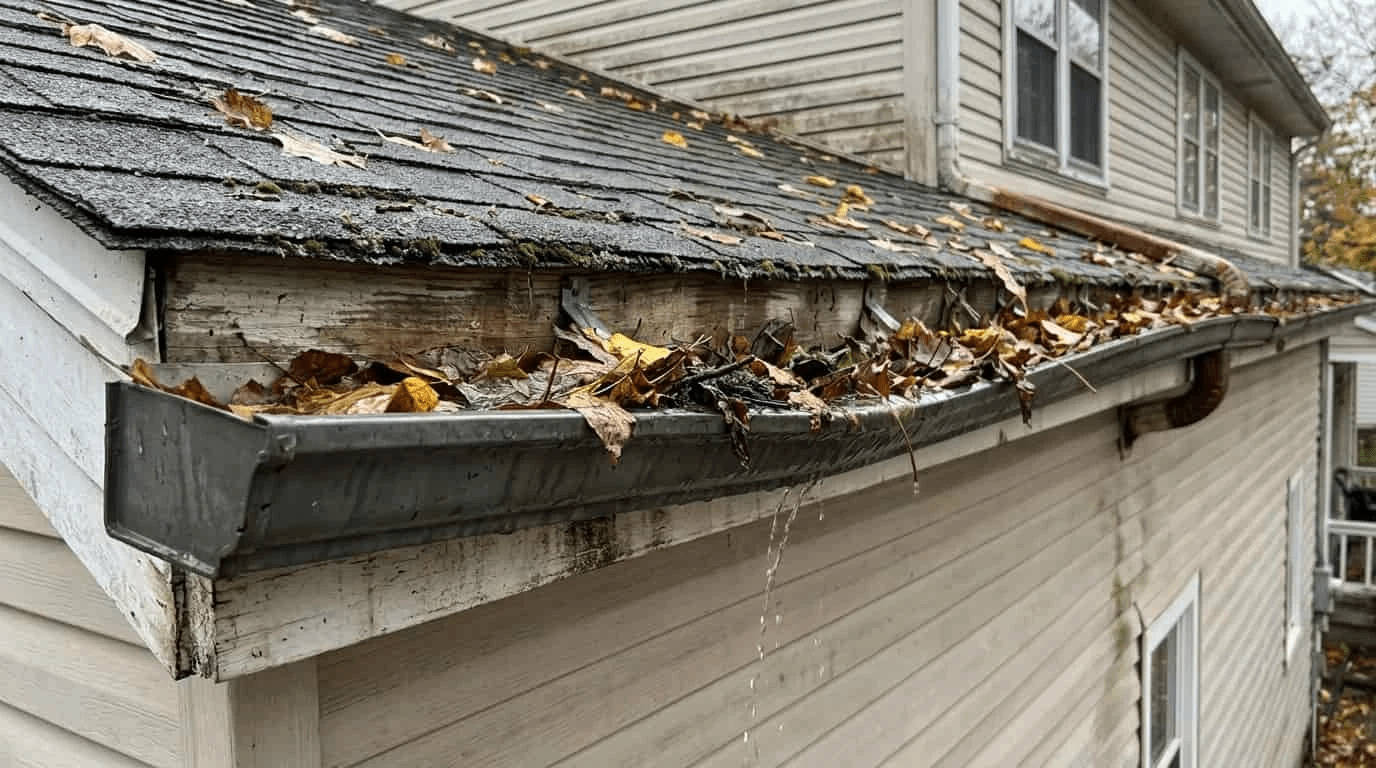
Gutters play an important role in moving rainwater away from the roof and walls. Leaves, moss, twigs and other debris can gradually accumulate inside them, particularly during autumn.
When gutters become blocked, rainwater may overflow instead of draining through the downpipes. This can contribute to damp around fascia boards, walls and other parts of the building.
Look for:
- Water overflowing from gutters
- Plants or moss growing inside the gutter
- Sagging sections
- Cracks or visible holes
- Water staining on external walls
- Guttering joints that appear to be leaking
Gutters should form part of routine roof maintenance rather than only being checked after a leak develops. Historic England recommends checking drainage systems and ensuring gutters are clear of debris and vegetation.
5. Moss and Algae Growth
Moss is common on many UK roofs, particularly where surfaces remain damp and shaded for long periods. A small amount of growth does not automatically mean that a roof needs replacing, but heavy moss should not simply be ignored.
Moss can retain moisture against roof coverings and may contribute to blocked gutters when it becomes detached and washes into the drainage system.
Homeowners should pay particular attention if moss is:
- Covering a significant area of the roof
- Growing around tile edges
- Blocking gutters
- Lifting or obscuring tiles
- Accompanied by damaged or deteriorating roof coverings
Roof cleaning should also be approached carefully. Aggressive pressure washing can damage some roof coverings and force water into vulnerable areas. The appropriate cleaning method depends on the type and condition of the roof.
6. Poor Roof Ventilation and Condensation
Not every damp problem comes from rain entering through the roof. Condensation can also develop within a roof space when warm, moist air reaches colder surfaces.
Poor ventilation can contribute to moisture accumulation in loft spaces. Over time, persistent condensation may affect insulation and timber components and encourage mould growth.
Possible warning signs include:
- Water droplets or dampness in the loft
- Mould on timber
- Damp insulation
- A persistent musty smell
- Frost or moisture around colder roof components during winter
Improving ventilation should not simply mean adding vents without understanding the existing roof construction. The cause of the condensation should first be established so that the solution does not create new problems.
7. Damaged Mortar and Roof Pointing
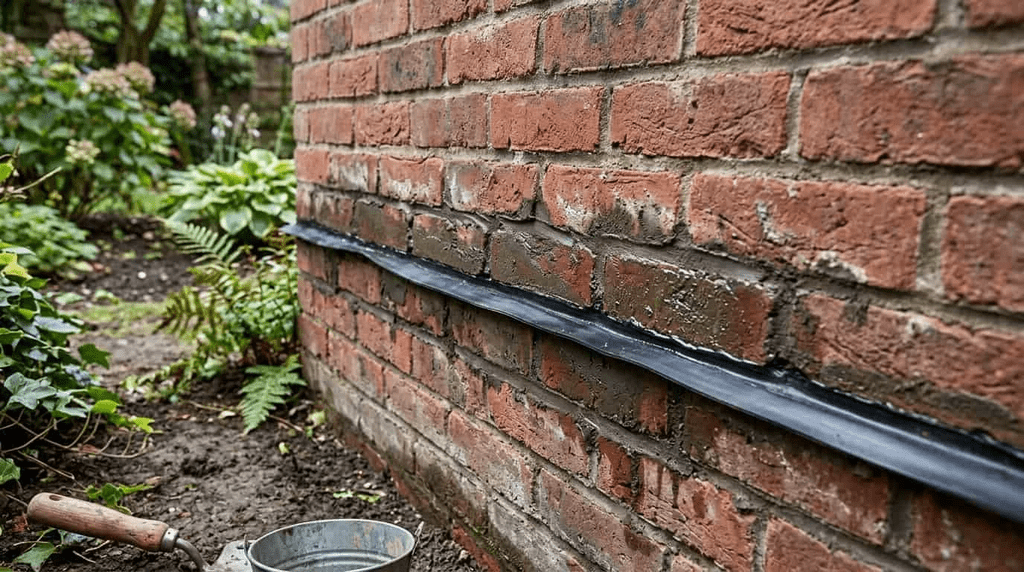
Some roofs have mortar details around ridges, verges, chimneys and other junctions. With age and exposure to weather, mortar can crack, erode or become loose.
Small areas of deterioration may not immediately cause water to enter the property, but damaged mortar can leave vulnerable sections of the roof exposed.
During a visual inspection, homeowners can look for:
- Cracked mortar
- Missing sections
- Loose ridge tiles
- Gaps around roof edges
- Deterioration around chimney joints
Repairs should be appropriate for the particular roof construction. Simply applying new material over deteriorated areas without addressing the underlying issue may provide only a temporary solution.
8. Flat Roof Drainage Problems
Flat roofs require effective drainage because water cannot run off them as quickly as it does from a pitched roof.
Debris can obstruct outlets and allow water to remain on the roof surface. Persistent standing water can place additional stress on the covering and may indicate problems with drainage or the roof’s falls.
Warning signs include:
- Puddles remaining after rainfall
- Blocked outlets
- Water marks on ceilings
- Cracked or split roof coverings
- Blistering or bubbling on some membrane systems
Historic England recommends inspecting flat roof coverings for splits, tears, cracks and holes and looking for dampness inside roof voids as a possible indication of leaks.
If a flat roof repeatedly holds water, the cause should be investigated rather than simply removing the water each time it rains.
9. Storm and Wind Damage
High winds can place considerable stress on roof coverings and external components. Tiles may become loose, ridge tiles can move, and branches can fall onto roof surfaces.
The damage is not always dramatic. A single displaced tile or damaged flashing detail can create an opening through which rainwater enters during subsequent rainfall.
After particularly strong weather, homeowners can safely check the roof from ground level for:
- Missing tiles
- Debris on the ground
- Loose-looking roof components
- Damaged gutters
- Fallen branches
- New damp patches in the loft
Historic England recommends inspecting pitched roofs twice a year and after storms or high winds.
If significant damage is visible, it is better to arrange an inspection rather than attempting to climb onto the roof.
10. General Roof Ageing and Wear
Even a well-maintained roof will eventually show signs of ageing. Materials gradually deteriorate through repeated exposure to rain, wind, sunlight and temperature changes.
Ageing does not automatically mean that a roof needs replacing. The condition of individual components is more important than age alone.
An inspection may identify issues such as:
- Worn or brittle roof coverings
- Repeatedly slipping tiles
- Deteriorated flashing
- Damaged battens
- Failing mortar
- Persistent leaks
- Defective roof edges or junctions
For older properties, it can be particularly worthwhile to determine whether individual components can be repaired before considering a complete replacement.
When Should You Call a Roofer in Ashford?
Not every roofing issue is an emergency, but certain signs warrant professional attention.
Contact a qualified roofer in Ashford if you notice:
- Active water entering the property
- Several missing or broken tiles
- A visibly damaged roof structure
- Loose or displaced ridge tiles
- Significant storm damage
- Persistent dampness in the loft
- Repeated leaks despite previous repairs
- Extensive deterioration of flashing or roof coverings
Trying to repair a roof without the appropriate equipment and experience can create safety risks and may also cause further damage.
A Local Recommendation: Hibbs Roofing and Building Ltd
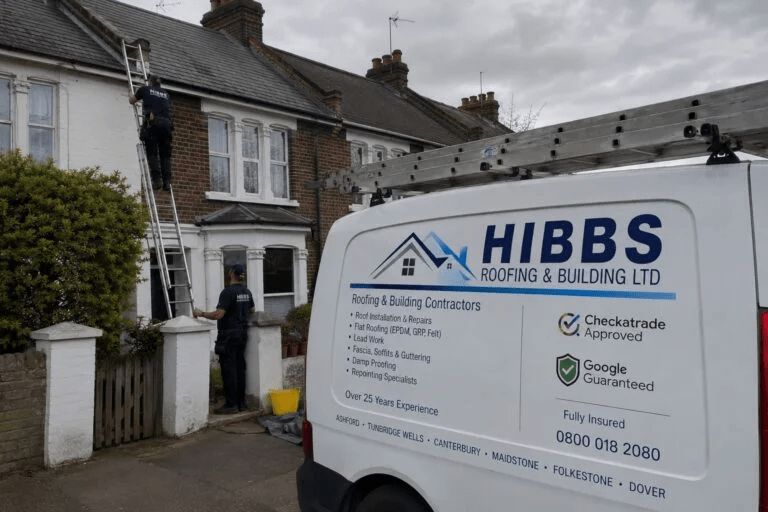
If you’re dealing with any of the issues covered above and want a starting point for arranging an inspection, Hibbs Roofing and Building Ltd is a roofing and building contractor covering Ashford and the surrounding Kent area, including Tunbridge Wells, Canterbury, Maidstone, Folkestone and Dover.
The company carries out roof installation and repairs, flat roofing (EPSDM and GRP felt), lead work, fascia, soffit and guttering work, damp proofing and reporting services, with more than 25 years of experience in the trade.
Homeowners in Ashford who want to discuss a roofing problem or arrange an inspection can contact Hibbs Roofing and Building Ltd directly.
Final Thoughts
Roofing problems often start with something relatively small. A cracked tile, blocked gutter or deteriorating section of flashing may not seem urgent, but continued exposure to rain and wind can eventually allow water into parts of the property that are much more expensive to repair.
For homeowners in Ashford, regular visual checks and sensible maintenance can go a long way towards protecting the roof and the rest of the property. If a problem is spotted, getting the cause assessed promptly is usually more useful than repeatedly treating the visible symptom.
Most importantly, homeowners should not assume that an ageing or damaged roof automatically requires a complete replacement. In many situations, a properly assessed repair can resolve the problem and extend the useful life of the existing roof.
Get in Touch Today for a Roof Inspection
If you’re noticing any of the warning signs covered in this guide, Hibbs Roofing and Building Ltd can arrange an inspection and talk you through the options for your property.
Website: Hibbs Roofing and Building Ltd
Email: contact@hibbsroofingandbuildingltd.co.uk
Phone: +44 7728 304281
Address: 79 York Street W1H 1DP
Company Number: 16399252