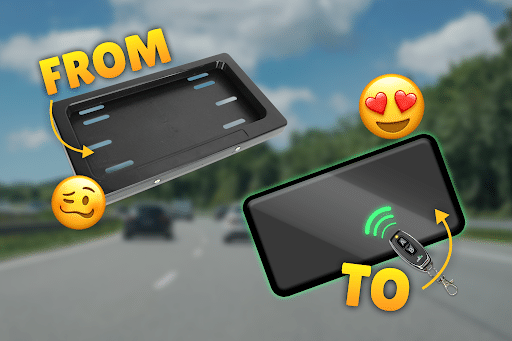
Vehicle accessories have changed alongside the technology surrounding modern cars. License plate products are part of that shift. What began with simple frames and protective covers has expanded into more specialized designs focused on control, convenience, and privacy.
One example is the black out plate cover, a product category that uses adjustable or switchable materials rather than a conventional fixed cover. Alite develops blackout systems that reflect this move toward more technical license plate accessories. Their development shows how materials, electronics, and automotive design increasingly overlap.
From Simple Covers to Functional Systems
Traditional license plate accessories were mostly mechanical. Frames held plates in place, while clear covers helped protect the surface from dirt, moisture, and minor damage. These products had few components and generally performed one permanent function.
As automotive accessories became more sophisticated, manufacturers began exploring products that could change their state. Instead of remaining permanently transparent, dark, open, or closed, newer systems introduced a degree of control.
This development followed a wider trend in the automotive industry. Drivers became accustomed to electronically controlled mirrors, windows, lighting, and other components. License plate accessories also started incorporating compact electrical elements and responsive materials.
The result is a category that looks quite different from the basic plate frames used for decades.
How Blackout Technology Changed the Category
A blackout system is designed around a simple idea: the visible state of a plate cover can change when the system is activated. Achieving this requires more engineering than producing a standard plastic shield.
The cover needs a material capable of changing its optical appearance. It also requires a power source, electrical components, and a control mechanism. These elements need to fit into a relatively compact automotive accessory.
Important design considerations include:
- dimensions and compatibility with the license plate;
- response of the blackout material;
- electrical connections and control;
- durability during regular vehicle use;
- installation and positioning.
These details turn the accessory into a small technical system rather than a passive cover. Practical design remains important as well. A product installed around a license plate should fit the vehicle neatly without adding unnecessary bulk.
Why Materials Matter
Material technology is one reason modern blackout accessories are possible. A conventional tinted cover has a fixed level of transparency. Its appearance remains essentially the same unless the cover itself is removed or replaced.
Switchable materials work differently. Their optical state can change in response to an electrical signal. This creates opportunities for accessories that can alternate between different visual states without physically replacing the cover.
For manufacturers such as Alite, the material is only one part of the product. The surrounding structure, electrical components, dimensions, and installation method also need to work together.
Exterior automotive accessories face demanding conditions. Temperature changes, moisture, vibration, road dust, and repeated use can affect components over time. Material selection and assembly are therefore important parts of product development.
Privacy and Control in Automotive Accessories
Privacy has become a broader topic in modern transportation. Cars encounter cameras in parking areas, residential spaces, commercial properties, and road environments. Vehicles themselves also contain more sensors and connected technologies than earlier generations.
This environment has increased interest in accessories that give users more direct control over different parts of a vehicle. Privacy-focused plate products fit within that wider trend, although their use may be regulated differently depending on location.
Technology is only one side of the subject. Drivers also need to consider the rules that apply where a vehicle is registered or operated. Regulations concerning plate visibility, covers, and modifications vary between jurisdictions.
The existence of a particular technical feature therefore does not automatically mean it can be used in every situation or on every public road.
Design Has Become More Integrated
Another change is the way modern plate accessories are designed. Older products often looked like separate additions placed over an existing plate. Newer systems tend to put more emphasis on integration.
Compact components, cleaner frames, and precise dimensions can help an accessory sit closer to the plate and vehicle body. This matters both visually and practically.
Compatibility also plays an important role. License plate dimensions are not identical around the world, so a system intended for one format may not fit another correctly. Plate proportions, product dimensions, and mounting points need to be considered.
This is why specialized systems are increasingly designed around particular plate formats rather than treated as completely universal accessories.
Where License Plate Accessories Are Heading
The development of privacy-focused license plate accessories is part of a larger movement toward electronically controlled automotive products. Materials are becoming more specialized, control systems smaller, and accessories more integrated with vehicle design.
Future development may focus on cleaner installation, improved material performance, compact electronics, and better compatibility with different plate formats. The direction is already visible in current blackout systems.