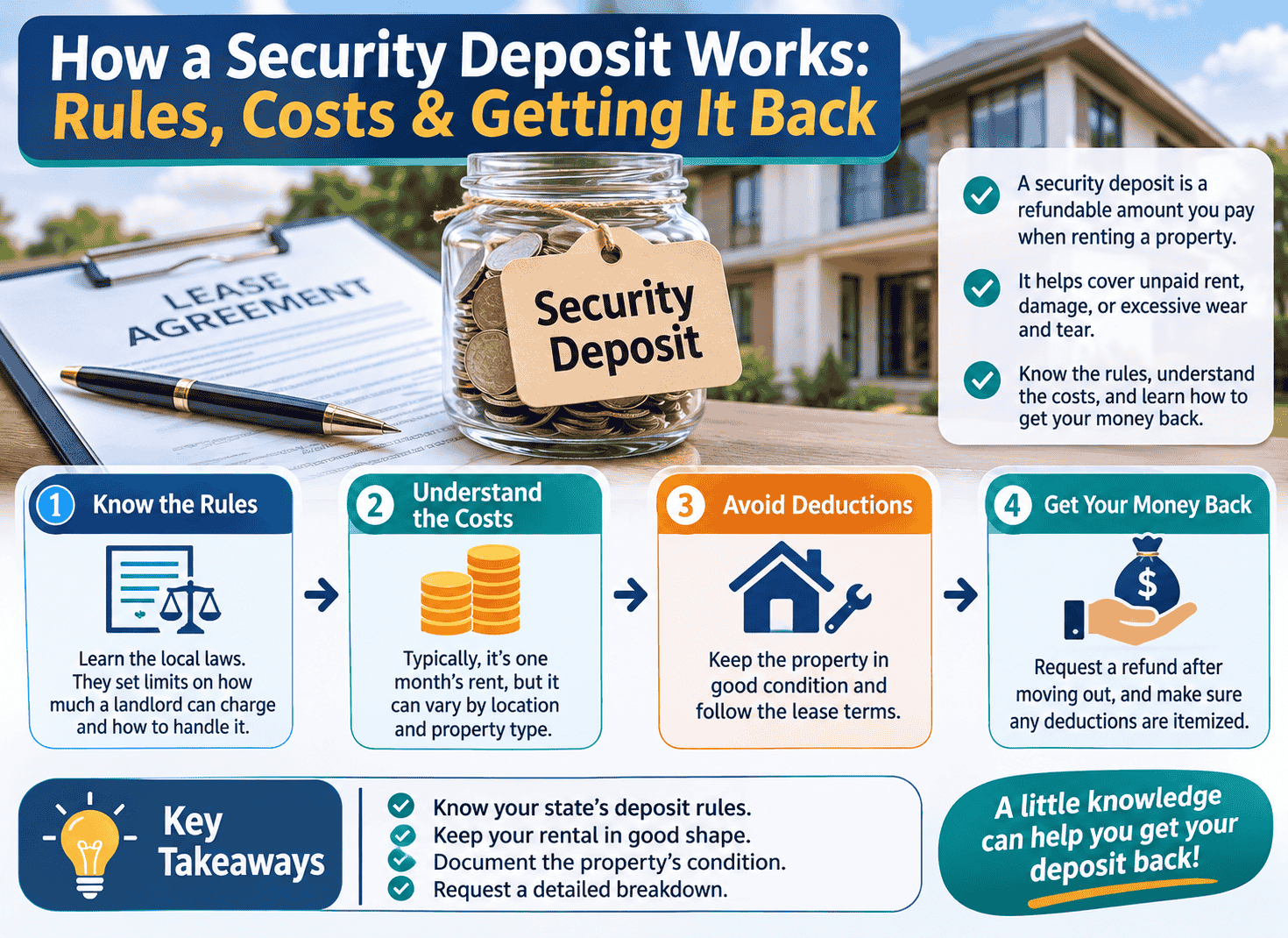
A security deposit is money a tenant pays a landlord before moving into a rental. The landlord holds it during the lease and uses it only for unpaid rent or damage beyond normal wear and tear. If the tenant follows the lease and leaves the home in good shape, the landlord returns the money after move-out.
The idea is simple, but deposits cause more rental disputes than almost anything else. Renters worry they will never see the money again. Landlords worry about repair bills. Both sides can avoid most problems by understanding the process from the first day to the last.
This guide explains what a security deposit is, how much it usually costs, what a landlord can and cannot keep, and how you can get your money back. It also covers deposits outside renting, such as utility and commercial lease deposits. Rules vary by state and country, so treat this as general information and not legal advice.
What a Security Deposit Is and Why Landlords Ask for One
A security deposit works like a financial safety net. When a landlord hands over a home, they take on risk. A tenant might skip rent, damage a floor, or leave without cleaning. The deposit gives the landlord money to cover those costs without chasing the tenant later.
The deposit also shows that the tenant is serious about moving in and caring for the home. For the tenant, it is not a fee. It is your money, held by someone else for a while. That difference shapes every rule in this guide.
How a Security Deposit Works From Start to Finish
The process follows the same basic path in most places. You sign the lease, pay the deposit, live in the home, move out, and then wait for the landlord to return what you are owed.
Payment comes first. Most tenants pay the deposit after signing the lease and before getting the keys. Many pay it together with the first month’s rent. Common payment methods include bank transfer, check, or money order. Always ask for a written receipt that shows the amount and the date.
During the lease, the landlord holds the money. Some states require the landlord to keep it in a separate account, and some require the landlord to pay interest on it. Your lease or local law should tell you which rules apply.
At move-out, the landlord inspects the home and compares its condition to the day you moved in. Then the landlord either returns the full deposit or sends back what remains after deductions, along with a list of the charges. Many states require that itemized list.
How Much a Security Deposit Costs
Most landlords ask for one month’s rent. Some ask for up to two months, especially for larger homes, pets, or tenants with limited credit history. A tenant with a low credit score or a past eviction may face a higher deposit where the law allows it.
State law often sets the upper limit. New York caps deposits at one month’s rent, for example, while Georgia allows up to two months. Other places set no cap at all. Check your local rules before you agree to a number that feels too high.
If a listing promises no security deposit, read the lease carefully. Sometimes the landlord has simply replaced the deposit with a non-refundable fee, which means you will not get that money back. In rare cases, a “no deposit” offer signals a rental scam.
What a Security Deposit Covers
A landlord can use a deposit to cover what the tenant owes under the lease. A clear lease spells out exactly which costs qualify.
Unpaid rent comes first. If you leave with rent still due, the landlord can subtract it from your deposit. Unpaid utilities or fees that your lease makes you responsible for can come out of it too.
Damage comes second. This includes broken fixtures, large holes in walls, badly stained carpets, cracked countertops, and pet damage. The landlord can deduct a reasonable repair cost, not an inflated bill designed to swallow your whole deposit.
Cleaning comes third. If you leave the home far dirtier than you found it and a professional must step in, the landlord can charge for that work. Some leases also let the landlord deduct for missing keys or for breaking the lease early.
Here is a simple example. Say you paid a $1,200 deposit. The landlord spends $300 repairing a damaged door and $100 on deep cleaning. The landlord should return $800 and send you a written breakdown of the two charges.
What a Landlord Cannot Take: Normal Wear and Tear
Landlords cannot charge tenants for normal wear and tear. This is the slow, natural aging of a home that happens when people live in it. Faded paint, minor scuffs, light carpet wear, and a few small nail holes all fall into this group.
Damage is different. A scuff mark is wear and tear. A fist-sized hole in the drywall is damage. A worn path in the carpet after three years is normal. A large burn or a stain that never comes out is not.
The line can feel blurry, so tenants and landlords often disagree about it. The best protection is proof. Photos and notes from the first day and the last day show exactly what changed and who caused it.
Security Deposit vs. Last Month’s Rent, Pet Deposits, and Fees
People often mix up these payments, so it helps to separate them.
A security deposit protects the landlord against damage and unpaid rent, and the tenant can get it back. Last month’s rent is a prepayment for your final month, and the landlord applies it to rent. Many tenants assume they can use the security deposit as their last month’s rent, but that usually is not allowed unless the lease says so. If you skip your final rent payment, you can face late fees or even legal action.
A pet deposit covers damage that animals may cause. Some landlords also charge monthly pet rent, which you do not get back. A non-refundable fee, such as a cleaning or move-in fee, is a charge you never see again. These fees are legal in many states and are usually smaller than refundable deposits. Always ask which of your payments are refundable before you sign.
How to Get Your Security Deposit Back
Getting your deposit back starts on move-in day, not move-out day. A few habits make a big difference.
Document the home on day one. Walk through every room with your phone and take clear photos and short videos. Note existing damage in writing and send it to your landlord by email or text so you have a record. If the landlord promises to fix something, get that promise in writing.
Take care of the home during your lease. Report leaks and repairs quickly, because small problems can turn into large ones. Follow the lease rules on painting, pets, and alterations. If you are unsure whether you can paint a wall or hang something heavy, ask first.
Give proper notice. Many leases require notice, often 30 days, before you move out. A landlord may keep part of your deposit if you leave without it. Read your lease so you know the exact deadline.
Clean the home and repeat the photo walkthrough when you leave. Return all keys, and ask the landlord to inspect the home with you if possible. Then give your forwarding address in writing so the deposit does not get lost in the mail.
If you share the rental, agree with your roommates on who paid what and who will receive the refund. The landlord usually sends the money to one person, so settle it among yourselves ahead of time.
How Long a Landlord Has to Return the Deposit
Each state sets its own deadline. Most fall between 14 and 60 days after you move out, and 30 days is common. Within that window, the landlord must return the full deposit or send the remaining amount along with an itemized list of deductions.
If the landlord misses the deadline, some places let the tenant claim the full amount back, and penalties may apply. Check your state’s rules to see what applies to you. Your state’s housing agency or attorney general often publishes a plain-language guide.
What to Do If Your Landlord Keeps Your Deposit
Start with a calm written request. Send a letter or email that states the amount owed, your move-out date, and your forwarding address. Ask for an itemized list of deductions and proof of the repair costs. Keep copies of everything.
If the charges seem unfair, compare them with your photos and your lease. Point out any charge that covers normal wear and tear. A polite, well-documented message solves many disputes without a fight.
If that fails, send a formal demand letter and then consider small claims court. Many courts keep small claims simple so tenants can file without a lawyer. Bring your lease, photos, receipts, and messages. If the dispute is complicated, a landlord-tenant attorney or a local tenant rights group can help.
What if the damage costs more than the deposit? In that case, the landlord can ask the tenant to pay the difference. A deposit does not cap what you owe for damage you caused.
Security Deposits Outside of Renting
The phrase also appears in other settings, and the meaning shifts slightly in each.
Utility suppliers sometimes ask new customers for a security deposit before they connect service. In the UK, for example, gas and electricity suppliers can request one, but the amount must stay reasonable, and suppliers generally cannot ask for one if you use a prepayment meter.
Commercial leases also use deposits. A business tenant pays money to the landlord to guarantee rent and repairs. These agreements should spell out how the landlord holds the deposit, when the landlord returns it, and how both sides resolve disputes.
In lending, a security deposit can act as collateral that protects the lender if a borrower cannot repay. In payments, some systems use a deposit-style hold that reserves an amount for a set period and then releases it if the business does not need it. In every case, the core idea stays the same: money held as protection and returned when the obligations end.
Tips for Landlords
Landlords benefit from clear rules too. Put the deposit amount, the allowed deductions, and the return timeline in the lease. Complete a written move-in inspection with the tenant. Keep receipts for every repair you charge for. Return the deposit and the itemized list on time, because late or vague returns create legal risk and angry tenants.
Frequently Asked Questions
Is a security deposit refundable?
Yes. A security deposit is refundable as long as the tenant pays rent, follows the lease, and leaves no damage beyond normal wear and tear.
Can a landlord keep my deposit for normal wear and tear?
No. Landlords can charge for damage and unpaid rent, but not for the ordinary aging of the home.
Can I use my security deposit as my last month’s rent?
Usually not, unless your lease says you can. Pay your last month’s rent as normal and let the landlord handle the deposit separately.
How long does it take to get a security deposit back?
Most deadlines fall between 14 and 60 days after move-out, depending on where you live.
Do landlords have to pay interest on a deposit?
Some places require it and others do not. Your lease or local law will tell you.
Final Thoughts
A security deposit protects both sides, but it works best when both sides communicate and keep records. Tenants who document the home, follow the lease, and give proper notice usually get their money back. Landlords who set clear rules and return deposits on time avoid most disputes.
Before you sign any lease, read the deposit terms, check your local laws, and keep every receipt. A few careful steps at the start can save you hundreds of dollars at the end.