Culture quietly shapes how we think, behave, and connect with others. From the way we greet people to the values we hold about family, work, and success—much of it is influenced by cultural traits. Yet, many people use the term without fully understanding what it means or how deeply it affects everyday life.
In this comprehensive guide, you’ll explore cultural traits in a practical, human-centered way and going beyond textbook definitions to understand how they show up in real life, why they matter, and how they influence individuals and societies.
What Are Cultural Traits?
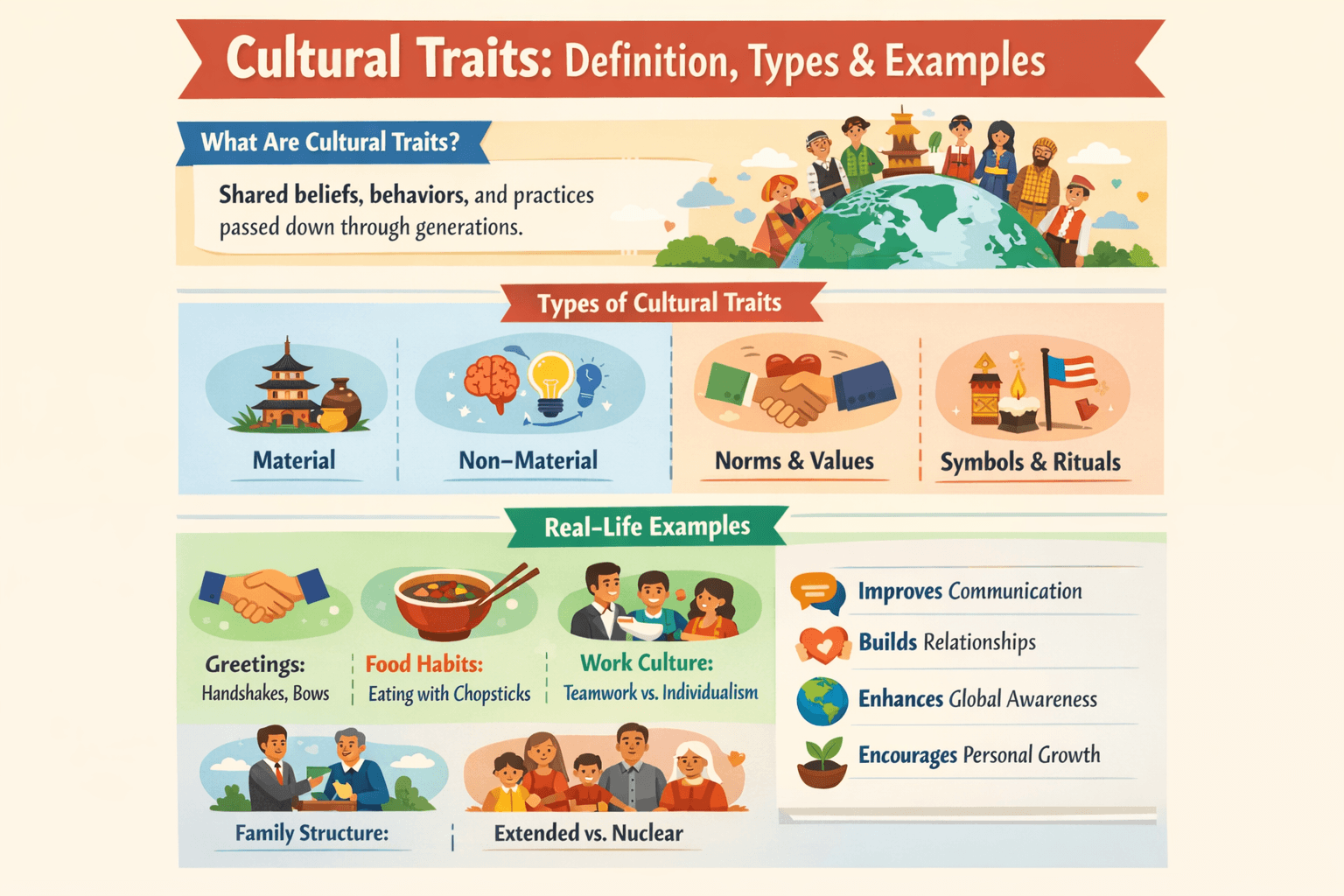
At its core, these are the building blocks of culture. They are the shared patterns of behavior, beliefs, values, customs, and symbols that define a group of people.
In simple terms:
The habits, ideas, and practices that people learn from their society and pass on to others.
These traits are not inherited biologically—they are learned through interaction, observation, and experience.
A Practical Perspective
Think about your daily routine:
- The language you speak
- The food you eat
- How you show respect
- Your approach to time and work
All of these reflect cultural traits you’ve absorbed over time—often without even realizing it.
Key Characteristics of Cultural Traits
To truly understand it, let’s look at their defining features:
1. Learned Behavior
No one is born with these traits. We acquire them through family, education, and society.
2. Shared Among Groups
A single person doesn’t create a cultural trait—they are shared by a community or society.
3. Dynamic and Evolving
Culture is not static. it change over time due to technology, globalization, and social shifts.
4. Symbolic in Nature
Many cultures rely on symbols—like language, gestures, or rituals—to convey meaning.
5. Passed Across Generations
Traditions, values, and practices are transmitted from one generation to the next.
Types of Cultural Traits
Understanding it’s different types help you see how deeply they influence life. Broadly, they can be categorized into several key types:
1. Material Cultural Traits
These are physical objects or tangible items created and used by a culture.
Examples:
- Clothing styles (e.g., traditional attire)
- Architecture and housing
- Tools and technology
- Art and crafts
Real-Life Insight:
If you walk through different neighborhoods, you’ll notice distinct building styles, clothing, and even transportation choices. These visible elements are cultural traits that reflect history, environment, and lifestyle.
2. Non-Material Cultural Traits
These are intangible elements—ideas and beliefs that shape behavior.
Examples:
- Values (e.g., honesty, respect)
- Beliefs (religious or philosophical)
- Norms (expected behavior)
- Language and communication styles
Why They Matter:
Non-material cultural traits often have a stronger influence than physical ones. They guide decision-making, relationships, and moral judgments.
3. Norms (Social Rules)
Norms are unwritten rules that guide acceptable behavior.
Types of Norms:
- Folkways: Casual norms (e.g., dress codes)
- Mores: Strong moral expectations (e.g., honesty)
- Laws: Formal rules enforced by authorities
Example:
In some cultures, making direct eye contact shows confidence. In others, it may be considered disrespectful. These differences are shaped by cultural traits.
4. Values (Core Beliefs)
Values are deeply held beliefs about what is right, wrong, or important.
Examples:
- Individualism vs collectivism
- Respect for elders
- Importance of education
- Work ethic
Real-Life Application:
Your career choices, lifestyle, and relationships are often guided by your values—making them one of the most powerful traits of a culture.
5. Symbols
Symbols are objects, gestures, or signs that carry meaning within a culture.
Examples:
- Language and words
- National flags
- Religious symbols
- Gestures (like thumbs up)
Symbols are essential traits of a culture because they allow people to communicate complex ideas quickly.
6. Rituals and Traditions
These are repeated actions or ceremonies with cultural significance.
Examples:
- Weddings
- Festivals
- Religious practices
- Family gatherings
Insight:
Rituals reinforce cultural traits by creating shared experiences and emotional connections.
7. Language and Communication
Language is one of the most powerful traits of a culture.
It shapes:
- Thought processes
- Social interactions
- Identity
Even tone, body language, and communication style vary across cultures.
Real-Life Examples:
To make this concept truly practical, let’s explore how cultural traits appear in everyday life.
1. Greeting Styles
- Handshakes, hugs, bows, or nods
- Formal vs informal greetings
These simple actions reflect deeper traits about respect, hierarchy, and personal space.
2. Food Habits
- Eating with hands vs utensils
- Meal timings
- Dietary restrictions
Food is one of the most visible traits of a culture, often tied to tradition and identity.
3. Work Culture
- Strict punctuality vs flexible timing
- Individual achievements vs teamwork
- Work-life balance expectations
Your approach to work is heavily influenced by these traits.
4. Family Structure
- Nuclear vs extended families
- Role of elders
- Parenting styles
Family-related cultural traits shape emotional bonds and responsibilities.
5. Communication Style
- Direct vs indirect communication
- Expressive vs reserved behavior
Misunderstandings often occur when people from different cultures interact.
Why Cultural Traits Matter
Understanding the traits of culture is not just academic—it has real-world value.
1. Improves Communication
When you recognize different traits of cultures, you communicate more effectively and avoid misunderstandings.
2. Builds Stronger Relationships
Respecting the traits of cultures helps you connect with people on a deeper level.
3. Enhances Global Awareness
In today’s interconnected world, understanding cultural traits is essential for travel, business, and collaboration.
4. Encourages Personal Growth
Exposure to new cultural traits expands your thinking and challenges assumptions.
Cultural Traits vs Cultural Values
People often confuse these terms, but they are different:
- Cultural traits: Observable behaviors and practices
- Cultural values: Underlying beliefs driving those behaviors
Example:
- Trait: Greeting elders respectfully
- Value: Respect for age and wisdom
Understanding this distinction helps you analyze cultures more deeply.
How Cultural Traits Are Learned
You don’t consciously choose most traits of a culture—you absorb them.
Key Sources:
1. Family
Your first exposure to these comes from home.
2. Education
Schools reinforce social norms and expectations.
3. Media
Movies, social platforms, and news shape modern traits of culture.
4. Society
Peers and community influence behavior patterns.
How Traits of Culture Change Over Time
One of the most interesting aspects of traits of a culture is that they evolve.
Factors That Drive Change:
- Technology
- Migration
- Globalization
- Social movements
Example:
Remote work culture is a modern cultural trait that didn’t exist widely a decade ago.
Cultural Traits in a Globalized World
Today, cultures interact more than ever.
What Happens?
- Some cultural traits spread globally
- Others adapt or fade
- New hybrid traits emerge
Example:
Fast food, digital communication, and fashion trends often blend multiple traits of cultures.
Challenges Related to Cultural Traits
While these traits enrich society, they can also create challenges:
1. Cultural Misunderstandings
Different expectations can lead to confusion.
2. Stereotyping
Oversimplifying the traits of a culture can lead to unfair judgments.
3. Cultural Clashes
Conflicting values may cause tension in diverse environments.
How to Respect and Adapt to Cultural Traits
In a diverse world, understanding is not enough—you need to adapt.
Practical Tips:
- Stay curious and open-minded
- Ask questions respectfully
- Observe before judging
- Avoid assumptions
- Learn basic cultural norms when traveling
Respecting cultural traits builds trust and mutual understanding.
The Deeper Impact of Cultural Traits on Identity
Your identity is closely tied to cultural traits.
They influence:
- Your worldview
- Your decision-making
- Your relationships
- Your sense of belonging
At the same time, individuals can adapt, mix, or even challenge the traits of culture—making culture both personal and collective.
Final Thoughts
Cultural traits are more than abstract concepts—they are the invisible threads that shape how people live, think, and connect. From daily habits to deeply held beliefs, they influence nearly every aspect of human life.
By understanding it, you gain more than knowledge—you develop empathy, awareness, and the ability to navigate a diverse world with confidence.
Whether you’re interacting with people from different backgrounds, traveling, or simply reflecting on your own habits, recognizing these patterns will help you see culture not as a barrier, but as a bridge.