The Fundamentals of Marketing form the foundation of how businesses attract customers, build relationships, and create long-term value. Whether you are a student, entrepreneur, or business owner, understanding these fundamentals is essential for sustainable growth. Marketing is often misunderstood as simply advertising or selling. In reality, it is much broader and far more strategic.
This article explores the core concepts behind marketing and shows how they translate into practical, real-world strategy.
What Are the Fundamentals of Marketing?
The Fundamentals of Marketing refer to the basic principles and frameworks that guide how products or services are created, positioned, promoted, and delivered to customers. At its core, marketing is about understanding customer needs and satisfying them better than competitors.
Marketing is not about pushing products. It is about solving problems.
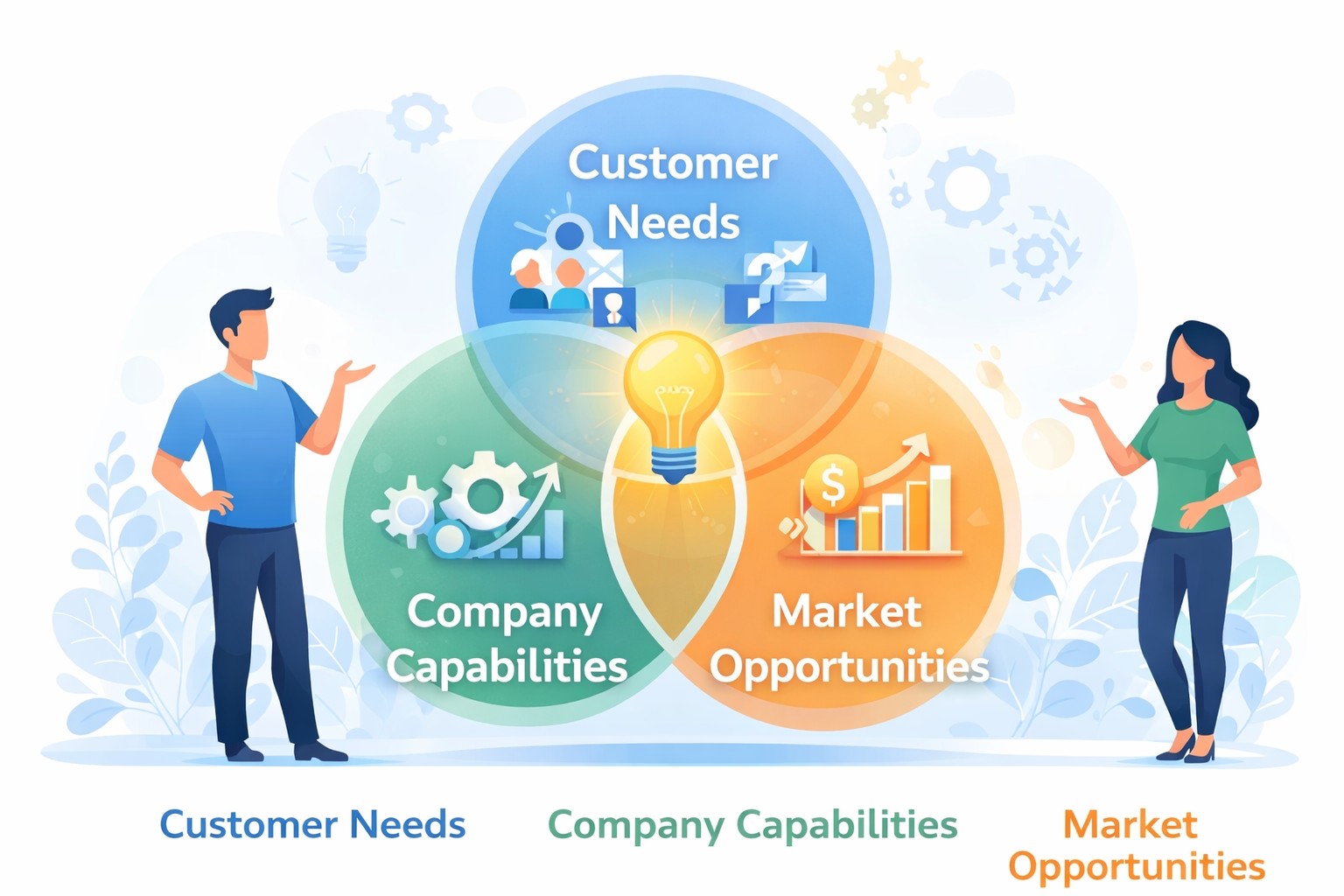
When done correctly, marketing aligns three key elements:
- Customer needs
- Company capabilities
- Market opportunities
If any one of these is ignored, the strategy weakens.
Understanding Customer Needs and Wants
Every effective marketing strategy begins with understanding the target audience.
Customers have:
- Needs – Basic requirements (food, security, transportation)
- Wants – Specific ways they prefer to satisfy those needs
- Demands – Wants backed by purchasing power
For example, transportation is a need. A luxury electric car is a want. The ability to afford it creates demand.
The fundamental mistake many businesses make is building products first and searching for customers later. Strong marketing does the opposite. It starts by studying:
- Customer pain points
- Buying behavior
- Preferences
- Budget range
- Motivations
The more precise your understanding, the more effective your marketing becomes.
Market Research: The Backbone of Marketing
One of the most important fundamentals of marketing is research. Decisions based on assumptions are risky. Decisions based on data are strategic.
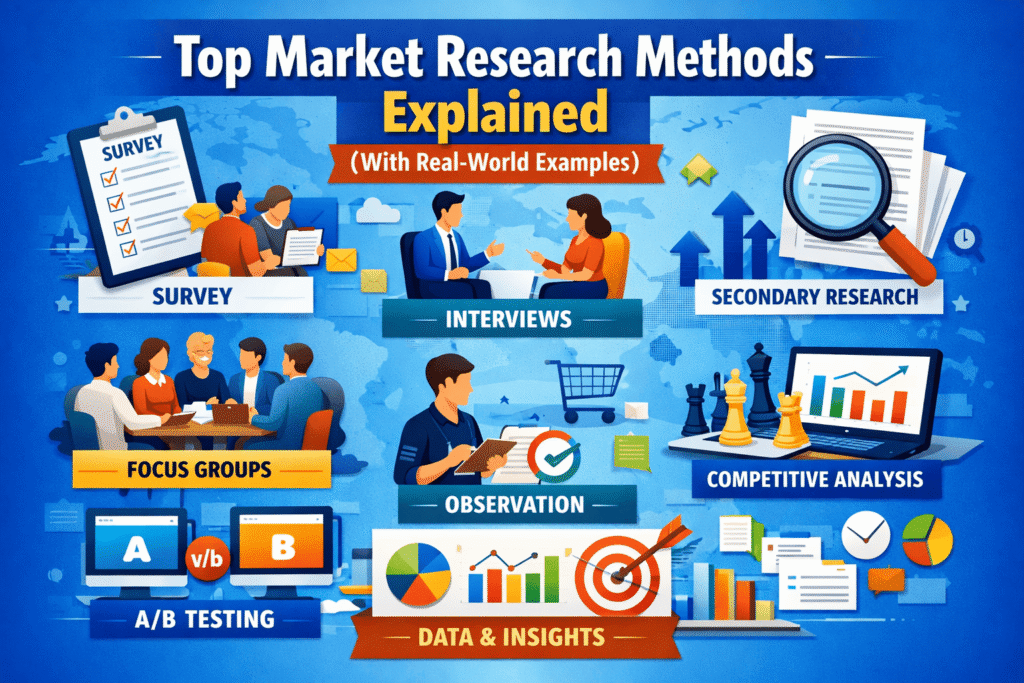
Market research includes:
- Surveys
- Competitor analysis
- Keyword research
- Industry reports
- Customer interviews
Research helps answer critical questions:
- Is there demand for this product?
- Who are the competitors?
- What price range is acceptable?
- What problems are underserved?
Without research, marketing becomes guesswork.
Segmentation, Targeting, and Positioning (STP)
A major pillar of the fundamentals of marketing is the STP model.
1. Segmentation
The market is divided into groups based on shared characteristics such as:
- Demographics (age, income, gender)
- Geographic location
- Behavior
- Interests
2. Targeting
After segmentation, a business chooses which group to focus on. Trying to target everyone usually leads to weak messaging.
3. Positioning
Positioning defines how your brand is perceived in the minds of customers. It answers:
Why should someone choose you over competitors?
Clear positioning makes marketing sharper and more persuasive.
The Marketing Mix: The 4Ps
No discussion of the fundamentals of marketing is complete without the Marketing Mix, commonly known as the 4Ps.
1. Product
What are you selling?
It must solve a real problem and deliver value. This includes features, design, branding, and packaging.
2. Price
Pricing influences perception.
Too low may signal low quality. Too high may limit buyers. Pricing strategy can include:
- Premium pricing
- Competitive pricing
- Penetration pricing
3. Place
Where and how customers access the product.
This includes physical stores, online platforms, marketplaces, or direct sales.
4. Promotion
How you communicate with your audience.
Promotion includes:
- Advertising
- Social media
- Content marketing
- Email campaigns
- Public relations
All four elements must work together. If one is weak, the entire strategy suffers.
Branding and Value Proposition
Another critical element of the fundamentals of marketing is branding.
Branding is not just a logo or color scheme. It is the overall perception customers have about your business. Strong branding builds trust, recognition, and emotional connection.
Your value proposition clearly states:
- Who you serve
- What problem you solve
- Why you are better or different
Without a strong value proposition, marketing messages become generic and ineffective.
The Customer Journey
Modern marketing focuses heavily on the customer journey. Customers do not immediately buy after seeing one advertisement. They move through stages:
- Awareness
- Interest
- Consideration
- Purchase
- Loyalty
Effective marketing strategies address each stage with tailored messaging.
For example:
- Blog content creates awareness
- Case studies build consideration
- Email offers encourage purchase
- Loyalty programs strengthen retention
Understanding this journey transforms basic marketing into real-world strategy.
Digital Transformation of Marketing
While the fundamentals of marketing remain consistent, the tools have evolved.
Today’s marketing includes:
- Search engine optimization (SEO)
- Social media marketing
- Paid advertising
- Influencer partnerships
- Email automation
Digital channels allow businesses to track performance precisely. Metrics such as conversion rates, click-through rates, and customer acquisition cost help refine strategy continuously.
However, technology does not replace fundamentals. It enhances them.
Competitive Advantage
In competitive markets, simply offering a good product is not enough. You must develop a competitive advantage.
This can come from:
- Better pricing
- Higher quality
- Faster service
- Unique positioning
- Stronger brand authority
Marketing communicates this advantage clearly and consistently. Without clear differentiation, businesses struggle to stand out.
Real-World Application of Marketing Fundamentals
Understanding theory is important. Applying it is what creates results.
Here is how the fundamentals translate into action:
- Conduct market research before launching a product.
- Identify a specific target audience.
- Develop a clear positioning strategy.
- Build a strong brand identity.
- Create valuable content to educate and attract customers.
- Use data to improve campaigns over time.
Marketing is not a one-time activity. It is an ongoing process of testing, learning, and refining.
Why the Fundamentals of Marketing Matter
Businesses that ignore marketing fundamentals often experience:
- Low customer engagement
- Poor conversion rates
- Weak brand recognition
- Wasted advertising budget
On the other hand, businesses that master these fundamentals build:
- Strong customer relationships
- Consistent revenue growth
- Long-term brand equity
- Market authority
Marketing is not just a department. It is a growth engine.
Final Thoughts
The Fundamentals of Marketing provide a structured approach to understanding customers, creating value, and building sustainable strategies. From customer research and segmentation to branding and digital promotion, these principles form the backbone of successful businesses.
Trends will continue to evolve. Platforms will change. Algorithms will update. But the core fundamentals remain constant: understand your audience, deliver value, communicate clearly, and adapt strategically.
If you focus on mastering these basics and applying them consistently, marketing becomes less about guessing and more about building measurable, long-term success.