When multiple processes compete for limited resources like CPU, memory, storage, or network bandwidth, performance can quickly degrade. This is where resource partitioning becomes a game changer.
In this in-depth guide, you’ll learn what resource partitioning is, how it works, its types, real-world applications, and practical strategies to boost performance and efficiency. Whether you’re a developer, system administrator, or tech enthusiast, this guide will help you understand and implement resource partitioning effectively.
What is Resource Partitioning?
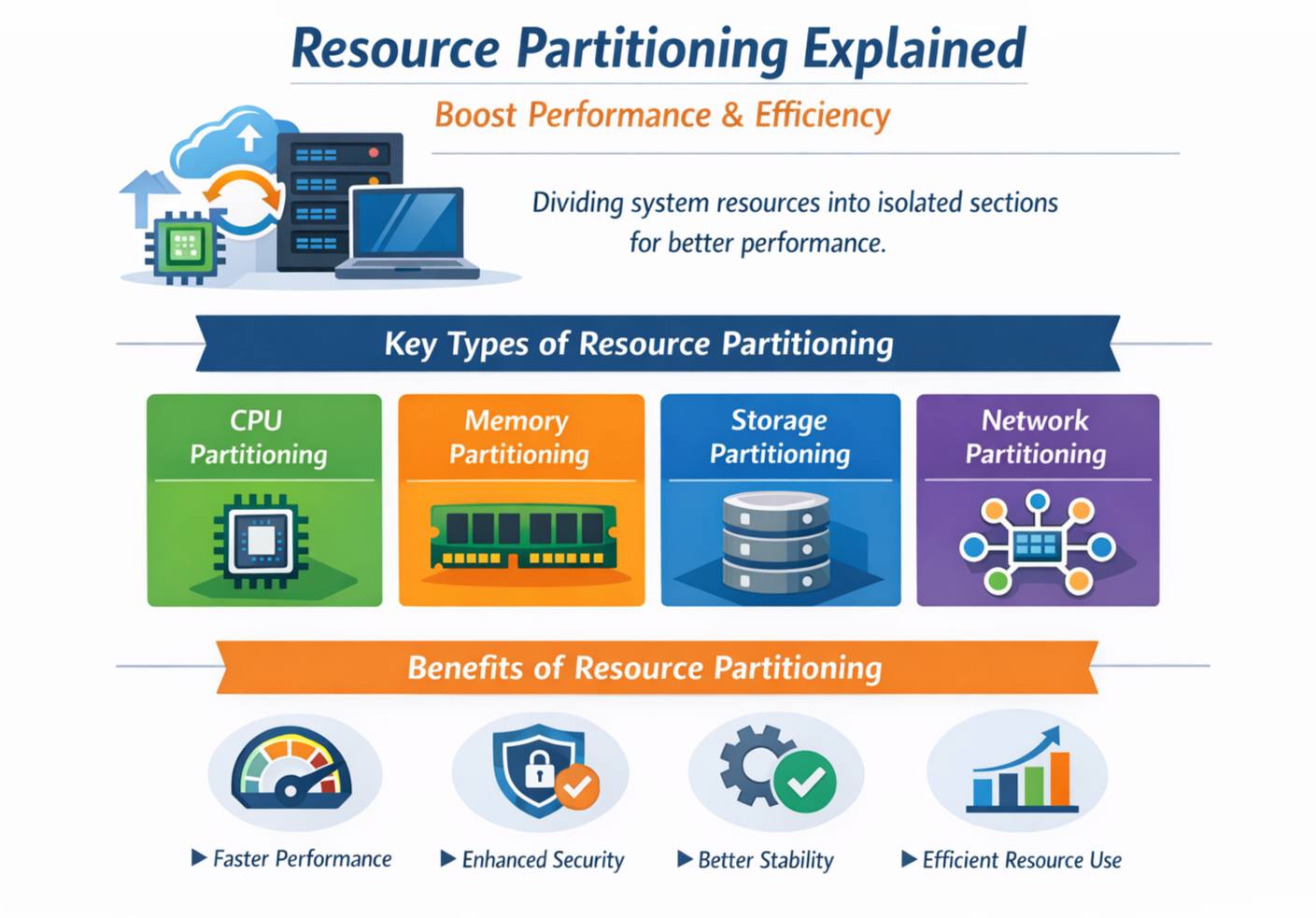
Resource partitioning is the process of dividing system resources into smaller, isolated segments so that different processes, applications, or users can use them without interference.
Instead of letting all tasks compete for the same pool of resources, partitioning ensures that each workload gets a dedicated or controlled share.
Simple Example
Imagine a restaurant kitchen:
- Without partitioning → All chefs fight over the same space and tools.
- With partitioning → Each chef has a dedicated station, improving speed and reducing chaos.
Similarly, in computing:
- Without partitioning → Performance bottlenecks and system instability
- With partitioning → Better efficiency, predictability, and control
Why Resource Partitioning Matters
It is essential for modern computing environments. Here’s why:
1. Improved Performance
When resources are allocated properly, applications run faster because they don’t compete unnecessarily.
2. Better Stability
One misbehaving application cannot consume all resources and crash the system.
3. Predictable Behavior
Partitioning ensures consistent performance, especially for critical workloads.
4. Enhanced Security
Isolation between partitions prevents unauthorized access or data leaks.
5. Efficient Utilization
Resources are used more effectively, reducing waste and maximizing output.
Types of Resource Partitioning
Understanding it’s different types helps you choose the right approach.
1. CPU Partitioning
CPU partitioning allocates processor time or cores to specific tasks or applications.
How it Works:
- Assign dedicated CPU cores
- Use scheduling algorithms
- Limit CPU usage per process
Benefits:
- Prevents CPU hogging
- Ensures critical tasks get priority
Example:
In cloud environments, virtual machines (VMs) often receive fixed CPU shares.
2. Memory Partitioning
Memory partitioning divides RAM into sections for different processes.
Types:
- Static Partitioning: Fixed memory blocks
- Dynamic Partitioning: Flexible allocation based on demand
Benefits:
- Reduces memory conflicts
- Improves application reliability
Real-World Use:
Operating systems allocate memory to applications to avoid overlap.
3. Storage Partitioning
Storage partitioning splits disk space into separate sections.
Common Forms:
- Disk partitions (C:, D:)
- Logical volumes
- Database sharding
Benefits:
- Better data organization
- Improved access speed
- Easier backup and recovery
4. Network Partitioning
Network resources are divided to ensure smooth communication.
Techniques:
- Bandwidth allocation
- Network slicing
- Traffic shaping
Benefits:
- Prevents congestion
- Improves data flow efficiency
5. Cache Partitioning
Cache partitioning allocates cache memory to specific applications or cores.
Why it Matters:
Cache is limited and shared—without partitioning, one process can dominate it.
Benefits:
- Reduces latency
- Improves system throughput
Key Techniques of Resource Partitioning
To implement it effectively, several techniques are used:
1. Virtualization
Virtualization creates multiple virtual environments on a single physical system.
Examples:
- Virtual Machines (VMs)
- Hypervisors
Advantages:
- Strong isolation
- Flexible resource allocation
2. Containerization
Containers package applications with their dependencies.
Tools:
- Docker
- Kubernetes
Benefits:
- Lightweight compared to VMs
- Faster deployment
- Efficient resource usage
3. Cgroups (Control Groups)
Used in Linux systems to limit and monitor resource usage.
Controls:
- CPU
- Memory
- Disk I/O
Benefit:
Fine-grained resource control
4. Scheduling Algorithms
Schedulers decide how resources are distributed.
Examples:
- Round Robin
- Priority Scheduling
- Fair Scheduling
Result:
Balanced and efficient resource allocation
5. Quotas and Limits
Set maximum usage limits for processes or users.
Example:
- Max CPU usage = 40%
- Memory limit = 2GB
Use-case in Cloud Computing
Cloud computing relies heavily on partitioning of resources.
How Cloud Providers Use It:
- Multi-tenant environments
- Isolated virtual machines
- Scalable containers
Benefits in Cloud:
- Cost efficiency
- High availability
- Elastic scaling
Example:
A cloud provider ensures one customer’s workload does not affect another’s.
Use-case in Operating Systems
Operating systems use partitioning to manage resources effectively.
Key Functions:
- Process scheduling
- Memory management
- File system organization
Example:
Modern OS allocate:
- CPU time slices
- Memory segments
- Disk partitions
Real-World Use Cases
1. Web Hosting
Shared hosting environments use partitioning to ensure:
- Each website gets fair resources
- No site slows down others
2. Database Systems
Databases use partitioning for:
- Faster queries
- Scalability
- Load balancing
3. High-Performance Computing (HPC)
HPC systems allocate resources to:
- Scientific simulations
- AI workloads
- Large-scale computations
4. Enterprise Applications
Businesses partition resources for:
- ERP systems
- Customer platforms
- Internal tools
Benefits of Resource Partitioning
Let’s summarize the key advantages:
- ✔ Increased system performance
- ✔ Better reliability and uptime
- ✔ Improved security through isolation
- ✔ Efficient resource utilization
- ✔ Scalability for growing workloads
Challenges of Resource Partitioning
Despite its advantages, resource partitioning comes with challenges:
1. Complexity
Setting up partitioning requires expertise.
2. Overhead
Some techniques (like virtualization) add system overhead.
3. Resource Fragmentation
Poor partitioning can lead to unused resources.
4. Misconfiguration Risks
Incorrect limits can harm performance instead of improving it.
Best Practices for Effective Resource Partitioning
To get the most out of resource partitioning, follow these best practices:
1. Analyze Workloads
Understand application requirements before allocating resources.
2. Use Dynamic Allocation
Avoid rigid partitioning—adapt to changing workloads.
3. Monitor Continuously
Use monitoring tools to track performance and adjust allocations.
4. Set Realistic Limits
Avoid overly restrictive quotas that slow down applications.
5. Combine Techniques
Use virtualization, containers, and scheduling together for optimal results.
6. Prioritize Critical Tasks
Ensure essential applications always have sufficient resources.
Resource Partitioning vs Virtualization
Many people confuse these concepts.
| Feature | Resource Partitioning | Virtualization |
|---|---|---|
| Purpose | Divide resources | Create virtual systems |
| Scope | Broad concept | Specific technique |
| Flexibility | High | Very high |
| Isolation | Moderate to strong | Strong |
👉 Key Insight:
Virtualization is a method used to achieve resource partitioning.
Future of Resource Partitioning
As technology evolves, resource partitioning continues to improve.
Trends to Watch:
- AI-driven resource allocation
- Serverless computing
- Edge computing optimization
- Advanced container orchestration
These innovations will make systems smarter, faster, and more efficient.
Conclusion
Resource partitioning is a foundational concept in modern computing. By dividing system resources into manageable and isolated segments, it ensures better performance, stability, and efficiency.
Whether you’re managing a cloud platform, running applications, or optimizing system performance, resource partitioning helps you stay in control.
Key Takeaways:
- It prevents resource conflicts
- It improves system reliability
- It enhances performance and scalability
- It is essential for modern IT infrastructure
If you implement the right partitioning strategies, you can unlock the full potential of your systems and deliver consistent, high-performance results.
Frequently Asked Questions (FAQS)
It is dividing system resources so multiple applications can run efficiently without interfering with each other.
No, it is used in operating systems, databases, networks, and many other environments.
Static partitioning uses fixed resource allocation, while dynamic partitioning adjusts resources based on demand
Yes, it isolates workloads, reducing the risk of unauthorized access.
Common tools include Docker, Kubernetes, hypervisors, and Linux cgroups.