Procurement is more than just buying goods or services. it’s more like a strategic function that directly impacts a company’s costs, efficiency, risk exposure, and long-term growth. Whether you run a startup or manage operations in a large enterprise, understanding procurement can help you save money, improve supplier relationships, and make smarter business decisions.
In this detailed guide, you’ll learn everything you need to know about procurement—from its definition and types to the complete process and key functions—in a clear, practical, and actionable way.
What Is Procurement?
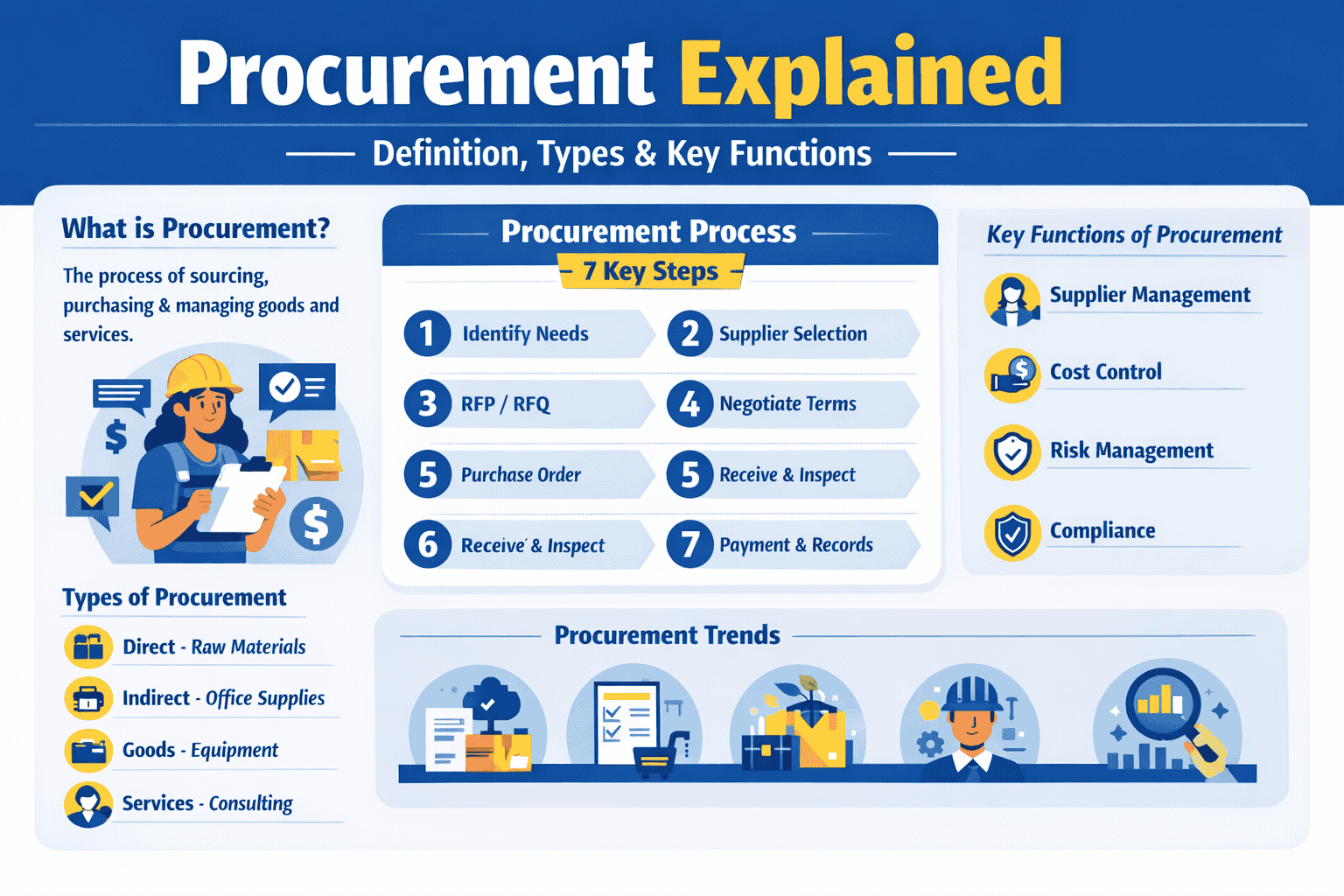
Procurement is the process of sourcing, purchasing, and managing goods and services that a business needs to operate effectively.
It includes everything from:
- Identifying business needs
- Finding and evaluating suppliers
- Negotiating contracts
- Purchasing goods/services
- Managing supplier relationships
In simple terms:
Procurement ensures that a business gets the right products, at the right price, at the right time.
Why Procurement Matters
A well-structured procurement system helps businesses:
- Reduce operational costs
- Improve efficiency and productivity
- Ensure consistent supply of goods
- Minimize risks (fraud, delays, poor quality)
- Build strong supplier partnerships
Real impact: Even a small improvement in procurement efficiency can significantly increase profit margins.
Types of Procurement
Understanding different types of procurement helps businesses choose the right strategy.
1. Direct Procurement
This involves purchasing goods that are directly used in production.
Examples:
- Raw materials
- Manufacturing components
Common in industries like manufacturing and retail.
2. Indirect Procurement
This covers purchases that support daily operations but are not part of the final product.
Examples:
- Office supplies
- Software subscriptions
- Maintenance services
3. Goods Procurement
Focuses on buying physical items.
Examples:
- Equipment
- Inventory
- Machinery
4. Services Procurement
Involves hiring external services.
Examples:
- Marketing agencies
- IT support
- Consulting services
5. Strategic Procurement
A long-term, data-driven approach that focuses on cost savings, supplier relationships, and value creation.
Procurement Process (Step-by-Step)
An effective procurement process follows a structured workflow. Here are the 7 essential steps:
1. Identify Business Needs
Start by clearly defining what your business requires.
✔ Ask:
- What do we need?
- Why do we need it?
- What is the budget?
2. Supplier Research and Selection
Find reliable vendors who can meet your requirements.
✔ Consider:
- Pricing
- Quality
- Reputation
- Delivery timelines
3. Request for Proposal (RFP) / Quotation (RFQ)
Invite suppliers to submit bids.
- RFP → for complex solutions
- RFQ → for price-based decisions
4. Evaluate and Negotiate
Compare supplier proposals and negotiate terms.
✔ Focus on:
- Cost
- Quality
- Contract terms
- Payment conditions
5. Purchase Order Creation
Create a formal document confirming the purchase.
Includes:
- Product/service details
- Quantity
- Price
- Delivery date
6. Delivery and Inspection
Receive goods/services and verify quality.
✔ Check:
- Accuracy
- Condition
- Compliance with contract
7. Payment and Record Keeping
Process payments and maintain records for future audits.
Key Functions of Procurement
Procurement is not a single task—it’s a combination of several important functions:
1. Supplier Management
Build and maintain strong relationships with vendors.
✔ Benefits:
- Better pricing
- Priority service
- Long-term reliability
2. Cost Management
Procurement teams aim to optimize spending without compromising quality.
✔ Techniques:
- Bulk purchasing
- Negotiation
- Competitive bidding
3. Risk Management
Identify and reduce risks related to suppliers and supply chains.
✔ Examples:
- Supplier failure
- Price fluctuations
- Delayed deliveries
4. Compliance and Governance
Ensure all purchases follow legal and company policies.
✔ Helps avoid:
- Fraud
- Legal issues
- Contract disputes
5. Strategic Sourcing
Focus on long-term value instead of short-term savings.
✔ Includes:
- Supplier partnerships
- Market analysis
- Data-driven decisions
6. Procurement Analytics
Use data to improve decision-making.
✔ Track:
- Spending patterns
- Supplier performance
- Cost-saving opportunities
Procurement vs Purchasing (Quick Difference)
Many people confuse these terms, but they are not the same.
| Procurement | Purchasing |
|---|---|
| Strategic process | Transactional activity |
| Includes sourcing, negotiation, and supplier management | Focuses only on buying |
| Long-term value | Short-term needs |
Procurement = Big Picture
Purchasing = One Step in Procurement
Modern Trends in Procurement (2026)
Procurement is evolving rapidly with technology and global changes.
1. AI and Automation
Businesses now use AI to:
- Predict demand
- Automate workflows
- Analyze supplier data
2. E-Procurement Systems
Digital platforms streamline procurement processes.
✔ Benefits:
- Faster approvals
- Better transparency
- Reduced errors
3. Sustainable Procurement
Companies focus on environmentally responsible sourcing.
✔ Examples:
- Eco-friendly materials
- Ethical suppliers
4. Data-Driven Decision Making
Analytics tools help businesses make smarter purchasing decisions.
5. Supplier Diversity
Organizations prioritize working with diverse and local suppliers.
Best Practices for Effective Procurement
To maximize results, follow these proven strategies:
- Build long-term supplier relationships
- Use data and analytics for decision-making
- Automate repetitive tasks
- Standardize procurement processes
- Continuously evaluate supplier performance
- Focus on total cost, not just price
Common Procurement Mistakes to Avoid
Avoid these pitfalls to improve efficiency:
- Choosing suppliers based only on price
- Poor contract management
- Lack of transparency
- Ignoring risk assessment
- No performance tracking
Real-World Example
Imagine a company sourcing raw materials:
- Without procurement strategy → higher costs, delays, poor quality
- With strong procurement → negotiated pricing, reliable supply, better margins
This shows how procurement directly impacts profitability and growth.
Final Thoughts
Procurement plays a critical role in modern business success. It’s not just about buying—it’s about making strategic decisions that drive efficiency, reduce costs, and create long-term value.
By understanding:
- ✔ What procurement is
- ✔ Its types and processes
- ✔ Its key functions
…you can transform procurement into a powerful growth engine for your business.