Frugality is often misunderstood. Many people assume it means extreme saving, avoiding all spending, or living an uncomfortable life. In reality, frugality is about making thoughtful financial decisions that help you use your money wisely while maintaining a good quality of life.
In a time where living costs are rising and spending opportunities are everywhere, understanding frugality can help you gain control over your finances, reduce stress, and build long-term stability. This guide explains the meaning of frugality, provides real-life examples, and shares practical tips you can apply immediately.
What Is Frugality?
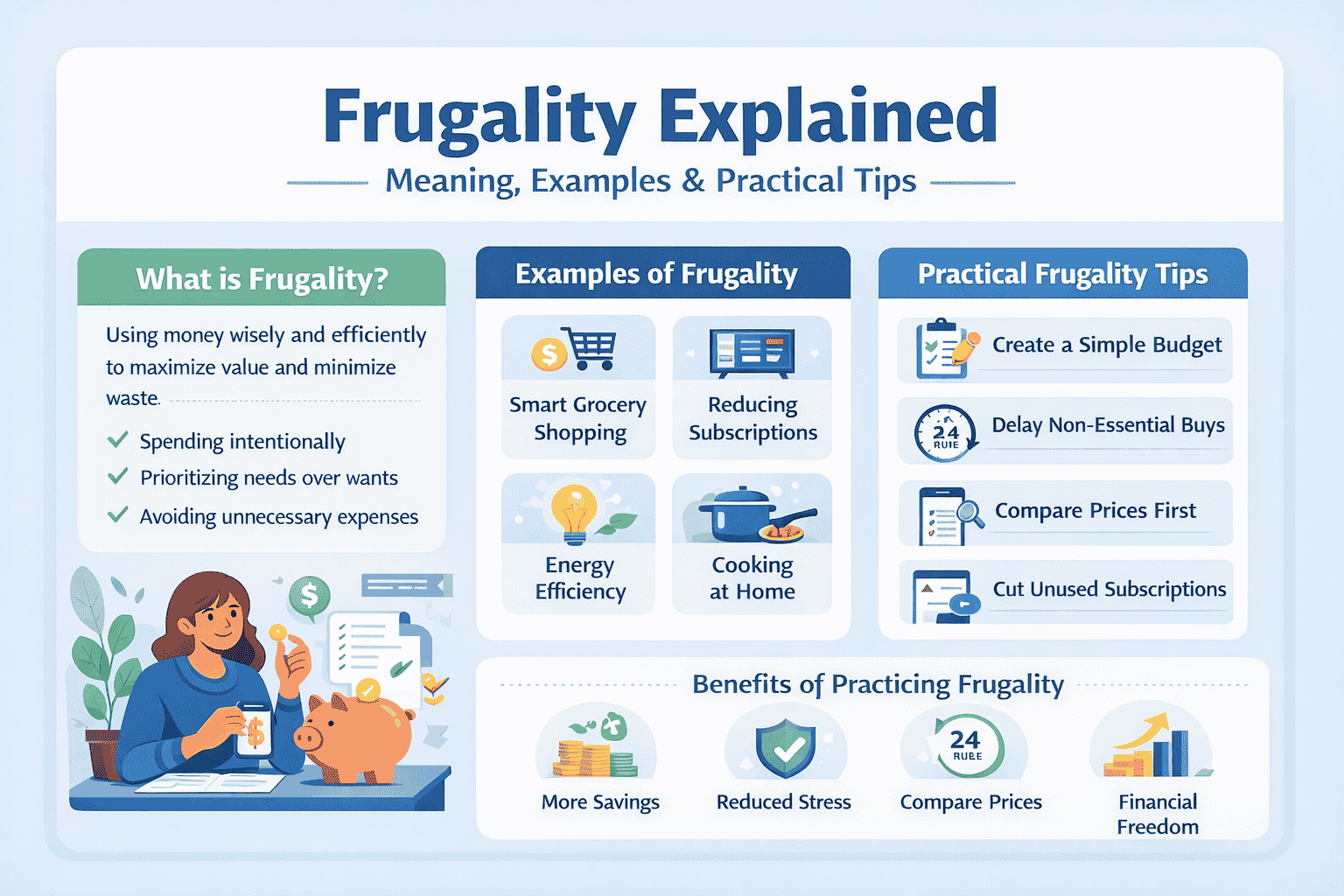
Frugality is the practice of using money and resources carefully in order to get the maximum value from them. It focuses on intentional spending, minimizing waste, and making decisions that support long-term financial well-being.
it does not mean avoiding spending altogether. Instead, it means spending on what truly matters and cutting back on what does not add real value.
In simple terms, frugality is about spending smarter rather than simply spending less.
Why Frugality Is Important Today
Frugality has become increasingly important in today’s economic environment. Rising prices, easy access to credit, and constant exposure to advertising make it easy to overspend without realizing it.
Practicing frugality helps you:
- Build savings more consistently
- Reduce reliance on debt
- Handle financial emergencies with confidence
- Stay focused on long-term goals
- Avoid unnecessary stress related to money
Frugality creates a sense of control. Instead of reacting to expenses, you start making deliberate choices about where your money goes.
Frugality vs Cheapness
Frugality and cheapness are often confused, but they are very different.
Frugality focuses on value. A frugal person is willing to spend more upfront if it leads to better quality and long-term savings. Cheapness focuses only on the lowest price, often ignoring quality and durability.
For example, a frugal individual might buy a well-made product that lasts for years, while a cheap approach might lead to repeated purchases of lower-quality items that wear out quickly.
Frugality is thoughtful and strategic, while cheapness is often short-sighted.
Real-Life Examples of Frugality
Frugality appears in everyday decisions. It is not limited to large financial moves but is built through consistent small actions.
One common example is planning grocery shopping. A frugal approach includes making a list, avoiding impulse purchases, and choosing products that offer better value rather than simply picking the most expensive brands.
Another example is managing subscriptions. Many people pay for services they rarely use. A frugal mindset involves reviewing these regularly and keeping only those that are truly beneficial.
Cooking at home instead of ordering food frequently is another practical example. It reduces costs while often improving health and portion control.
Frugality also shows up in buying decisions. Choosing durable products instead of disposable or low-quality items reduces long-term expenses.
Core Principles of Frugal Living
To practice frugality effectively, it is important to understand the principles behind it.
Value-Based Spending
Frugal individuals focus on spending money where it matters most. This requires identifying personal priorities and aligning spending with those priorities.
Intentional Decision-Making
Frugality involves slowing down and thinking before making purchases. Instead of reacting to emotions or trends, decisions are made with purpose.
Long-Term Thinking
Frugal choices consider future impact. A decision that saves money today but leads to higher costs later is avoided in favor of more sustainable options.
Resource Awareness
Frugality encourages making the most of existing resources. This includes maintaining items, avoiding waste, and finding ways to extend the life of what you already own.
Practical Frugality Tips That Work
Frugality becomes effective when it is applied consistently. The following strategies can help you build strong financial habits.
Create a Clear Budget
Start by understanding your income and expenses. A simple budget helps you see where your money goes and where adjustments are needed.
Delay Non-Essential Purchases
Giving yourself time before making a purchase helps reduce impulse spending. Many items lose their appeal when you revisit them after a short delay.
Compare Before Buying
Taking a few minutes to compare options can lead to better value. This includes checking prices, reading reviews, and considering alternatives.
Focus on High-Impact Expenses
Large recurring costs such as housing, transportation, and insurance have a bigger effect on your finances than small daily expenses. Optimizing these areas can lead to significant savings.
Cook More Often
Preparing meals at home is one of the most effective ways to reduce expenses while maintaining control over quality and nutrition.
Reduce Unnecessary Subscriptions
Review recurring payments regularly. Cancel services that you no longer use or need.
Avoid High-Interest Debt
Interest payments can quickly increase the cost of purchases. Paying balances in full and avoiding unnecessary borrowing helps maintain financial stability.
Maintain What You Own
Taking care of your belongings extends their lifespan and reduces the need for replacements.
Track Progress
Monitoring your savings and financial improvements helps maintain motivation and reinforces good habits.
Benefits of Practicing Frugality
Frugality provides benefits that go beyond saving money.
It increases financial security by creating a buffer against unexpected expenses. It also reduces stress, as you gain confidence in your ability to manage your finances.
Frugality supports long-term goals by freeing up resources that can be invested or saved. It encourages mindful living, helping you focus on what truly matters instead of unnecessary consumption.
Additionally, frugality often leads to more sustainable choices, reducing waste and supporting a more responsible lifestyle.
Common Mistakes to Avoid
While frugality is beneficial, it is important to avoid certain pitfalls.
Being overly restrictive can lead to frustration and burnout. A balanced approach allows for occasional enjoyment without losing control.
Ignoring quality in favor of lower prices can result in higher long-term costs. It is important to consider durability and performance when making purchases.
Another common mistake is undervaluing time. Spending excessive time to save a small amount of money is not always efficient.
Finally, focusing only on saving without investing can limit financial growth. Frugality works best when combined with smart financial planning.
Frugality in the Modern World
Frugality continues to evolve with technology and changing lifestyles.
Digital tools now make it easier to track expenses and manage budgets. Online platforms allow for quick price comparisons, helping consumers make better decisions.
There is also a growing awareness of recurring expenses, especially subscriptions. People are becoming more intentional about what they pay for on a monthly basis.
Sustainable living is another trend closely linked to frugality. Choosing reusable products, reducing waste, and supporting ethical brands often align with both financial and environmental goals.
How to Start Practicing Frugality Today
Getting started with frugality does not require drastic changes. Small, consistent steps can lead to meaningful results.
Begin by tracking your spending for a few weeks. This will give you a clear picture of your habits. Identify areas where you can reduce unnecessary expenses without affecting your quality of life.
Set realistic goals, such as saving a specific amount each month or reducing a particular type of expense. Focus on progress rather than perfection.
Over time, these small changes will build a strong foundation for better financial management.
Final Thoughts
Frugality is not about deprivation. It is about making thoughtful decisions that align with your values and goals. By focusing on value, planning ahead, and avoiding waste, you can create a more stable and fulfilling financial life.
When practiced consistently, frugality becomes a powerful tool. It helps you take control of your money, reduce stress, and move closer to your long-term goals without sacrificing what truly matters.