Predictive analytics is transforming supply chains from reactive systems into proactive, intelligent, and data-driven ecosystems. Instead of responding to disruptions after they occur, companies now anticipate demand shifts, supply risks, and operational inefficiencies before they happen.
In this comprehensive guide, you’ll explore real-world examples, case studies, and proven applications of predictive analytics in supply chain management—supported by data, industry insights, and practical explanations gathered by our professionals.
What is Predictive Analytics in Supply Chain?
Predictive analytics in supply chain refers to the use of historical data, machine learning, and statistical models to forecast future outcomes such as:
- Demand fluctuations
- Inventory requirements
- Supplier risks
- Delivery delays
- Equipment failures
Unlike traditional analytics (which explains what happened), predictive analytics answers:
“What is likely to happen next—and how can we prepare for it?”
Modern supply chains generate vast amounts of data. By analyzing this data, organizations gain visibility and can plan ahead instead of reacting to problems.
Why Predictive Analytics Matters in Supply Chain
Supply chains today face increasing complexity due to:
- Globalization
- Demand volatility
- Geopolitical risks
- Customer expectations for faster delivery
Predictive analytics helps businesses:
- Improve demand forecasting
- Reduce inventory costs
- Prevent disruptions
- Optimize logistics
- Enhance customer satisfaction
Companies are investing heavily in predictive technologies because they enable cost reduction, better decision-making, and operational efficiency.
Key Use Cases of Predictive Analytics in Supply Chain
Before diving into case studies, let’s understand the most impactful applications:
1. Demand Forecasting
AI models analyze historical sales, weather, trends, and events to predict future demand.
2. Inventory Optimization
Predictive systems maintain optimal stock levels, avoiding overstock and stockouts.
3. Risk Management
Algorithms forecast disruptions caused by suppliers, weather, or geopolitical events.
4. Logistics & Route Optimization
Predict delivery delays and optimize routes using real-time traffic and weather data.
5. Predictive Maintenance
Forecast equipment failures before they occur, reducing downtime.
6. Supplier Performance Analytics
Evaluate and predict supplier reliability and lead times.
Real Examples of Predictive Analytics in Supply Chain
Let’s explore how global companies use predictive analytics in real-world scenarios.
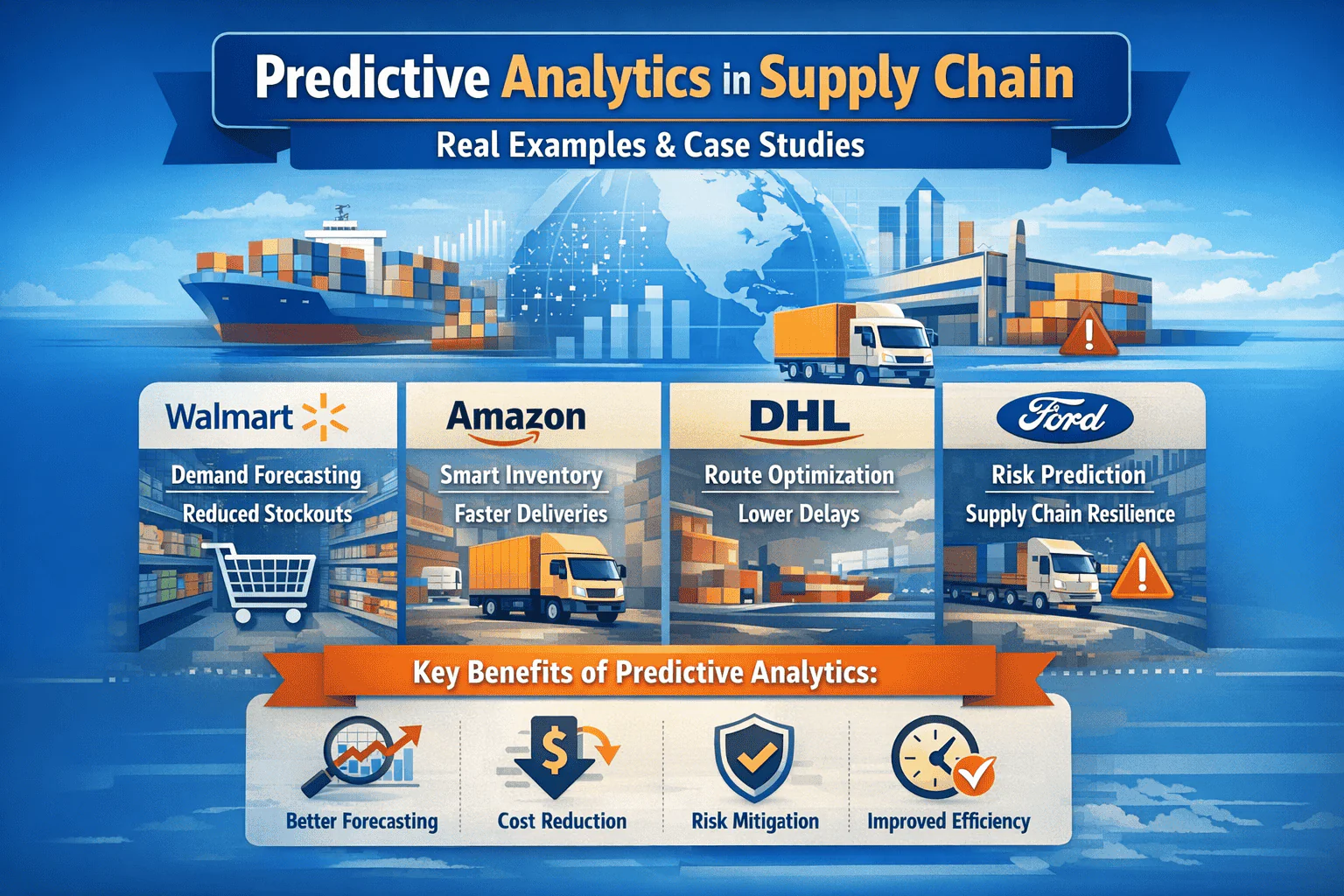
1. Walmart – Demand Forecasting at Scale
Challenge:
Managing millions of SKUs across thousands of stores with fluctuating demand.
Solution:
Walmart uses predictive analytics to analyze:
- Weather data
- Local events
- Historical purchasing patterns
Impact:
- Improved demand forecasting accuracy
- Reduced stockouts and overstock
- Better customer satisfaction
For example, Walmart famously predicted increased demand for specific products before hurricanes, ensuring shelves remained stocked.
Predictive analytics allows Walmart to anticipate customer needs before they arise, making its supply chain highly responsive.
2. Amazon – Intelligent Inventory & Fulfillment
Challenge:
Deliver millions of products quickly with minimal delays.
Solution:
Amazon leverages predictive analytics for:
- Demand forecasting
- Warehouse automation
- Inventory placement
Impact:
- Faster delivery times
- Reduced shipping costs
- Optimized warehouse operations
Amazon even uses anticipatory shipping, where products are moved closer to customers before orders are placed.
This predictive approach enables Amazon to set global standards for supply chain efficiency.
3. DHL – Predictive Logistics & Route Optimization
Challenge:
Managing global logistics with unpredictable delays.
Solution:
DHL uses predictive analytics to analyze:
- Weather conditions
- Traffic patterns
- Historical delivery data
Impact:
- Reduced delivery delays
- Optimized transportation routes
- Lower operational costs
DHL’s system predicts disruptions before they occur, allowing proactive adjustments in logistics planning.
4. Unilever – Hyperlocal Demand Forecasting
Challenge:
Forecasting demand across diverse global markets.
Solution:
Unilever uses AI-powered predictive models to analyze:
- Weather patterns
- Consumer behavior
- Regional trends
Impact:
- 10% improvement in forecast accuracy (Sweden)
- 12% increase in ice cream sales (USA)
By linking weather data to product demand, Unilever achieves hyperlocal forecasting precision.
5. Ford – Supply Chain Risk Prediction
Challenge:
Managing disruptions across a global automotive supply chain.
Solution:
Ford uses predictive analytics to assess risks from:
- Natural disasters
- Political instability
- Supplier disruptions
Impact:
- Reduced supply chain interruptions
- Improved resilience
Predictive risk modeling enables Ford to anticipate disruptions and adjust sourcing strategies early.
6. ANTA Group – Inventory Optimization with AI
Challenge:
Rapid business growth made manual planning inefficient.
Solution:
ANTA partnered with IBM to implement predictive analytics for:
- Demand forecasting
- Inventory planning
Impact:
- Improved inventory accuracy
- Better planning efficiency
AI-driven analytics enabled ANTA to scale operations without increasing complexity.
Advanced Case Studies (Industry-Level Insights)
Case Study 1: Global Engineering Company (Fortune 100)
Problem:
- Inefficient warehouse logistics
- Poor scalability of internal systems
Solution:
- Implemented predictive analytics and machine learning
- Built a scalable logistics platform
Results:
- Improved warehouse efficiency
- Reduced downtime
- Optimized global logistics operations
The system enabled better allocation of goods across 60+ countries.
Case Study 2: Industrial Supply Company (Fortune 500)
Problem:
- High operational costs
- Inefficient inventory management
Solution:
- Developed a cloud-based predictive analytics platform
- Integrated data across departments
Results:
- Reduced operational overhead
- Improved scalability
- Enhanced inventory visibility
Centralized data allowed better forecasting and decision-making.
Case Study 3: Predicting Supplier Disruptions (Academic Research)
Problem:
Supply chain disruptions caused by unreliable suppliers.
Solution:
- Machine learning models analyze supplier data
- Predict likelihood of disruption
Results:
- Improved risk visibility
- Proactive mitigation strategies
Predictive models enable companies to identify weak links in supply networks early.
Case Study 4: AI-Based Sustainable Logistics Optimization
Problem:
High logistics costs and environmental impact.
Solution:
- Machine learning models for route optimization
- Predictive analytics for demand and delivery planning
Results:
- Reduced fuel consumption
- Lower carbon emissions
- Improved delivery efficiency
AI-driven predictive systems improve both cost efficiency and sustainability.
Key Technologies Behind Predictive Supply Chains
Predictive analytics relies on several advanced technologies:
1. Machine Learning (ML)
Algorithms learn from historical data to make accurate predictions.
2. Big Data Analytics
Processes massive datasets from multiple sources.
3. Internet of Things (IoT)
Provides real-time data from sensors, vehicles, and warehouses.
4. Cloud Computing
Enables scalable data storage and analytics.
5. AI & Deep Learning
Enhances pattern recognition and forecasting accuracy.
Benefits of Predictive Analytics in Supply Chain
1. Improved Forecast Accuracy
Businesses can predict demand more precisely using real-time data.
2. Reduced Costs
Optimized inventory and logistics reduce waste and expenses.
3. Better Risk Management
Companies identify disruptions before they occur.
4. Increased Efficiency
Automation and forecasting streamline operations.
5. Enhanced Customer Satisfaction
Faster deliveries and better product availability.
Challenges of Implementing Predictive Analytics
Despite its benefits, organizations face several challenges:
1. Data Quality Issues
Poor data leads to inaccurate predictions (“garbage in, garbage out”).
2. High Implementation Costs
Requires investment in tools, infrastructure, and expertise.
3. Integration Complexity
Combining data from multiple systems can be difficult.
4. Skill Gaps
Requires data scientists and analytics expertise.
Future Trends in Predictive Supply Chain Analytics
1. AI-Powered Autonomous Supply Chains
Self-learning systems will automate decision-making.
2. Real-Time Predictive Analytics
Instant insights for dynamic decision-making.
3. Generative AI Integration
AI will enhance forecasting and scenario planning.
4. Digital Twins
Virtual replicas of supply chains for simulation and optimization.
How to Implement Predictive Analytics in Your Supply Chain
Step-by-Step Approach:
- Define clear business objectives
- Collect and clean historical data
- Choose the right tools and technologies
- Build predictive models
- Test and validate results
- Integrate with existing systems
- Continuously monitor and improve
Final Thoughts
Predictive analytics is no longer optional—it’s a competitive necessity in modern supply chains.
From global giants like Walmart and Amazon to industrial manufacturers and logistics providers, real-world examples clearly show that predictive analytics:
- Reduces costs
- Improves efficiency
- Enhances resilience
- Drives smarter decision-making
As supply chains continue to grow more complex, businesses that adopt predictive analytics early will gain a significant competitive advantage.