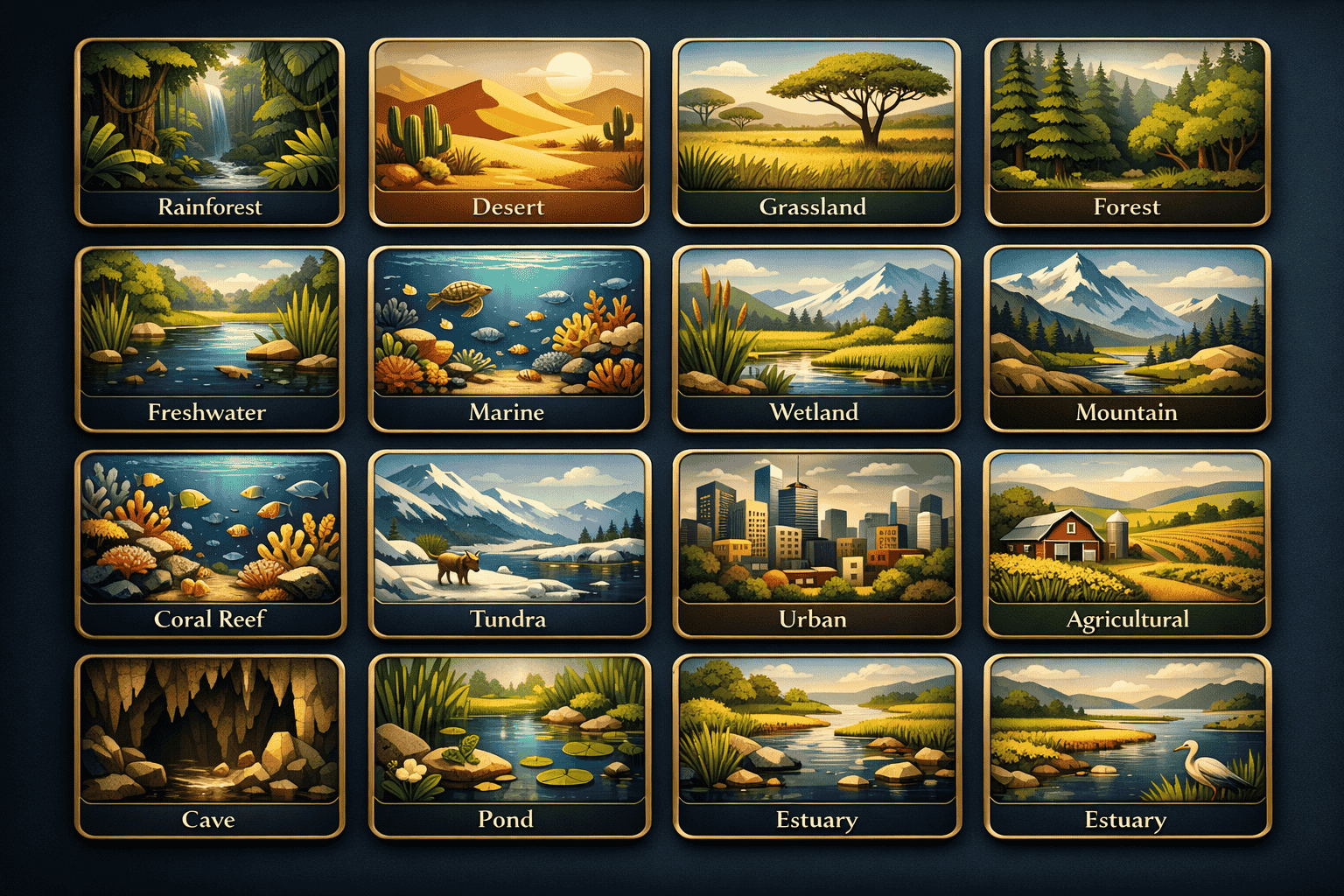
An ecosystem is a natural system where living organisms (plants, animals, and microorganisms) interact with each other and their physical environment. These interactions create a balanced network that supports life on Earth. From dense forests to deep oceans, ecosystems exist everywhere—and understanding real examples makes the concept much easier to grasp.
In this article, we’ll explore 15 powerful ecosystem examples that clearly show how nature works in harmony.
What Is an Ecosystem? (Quick Definition)
An ecosystem is a community of living organisms interacting with non-living components like air, water, soil, and sunlight.
Key Components:
- Biotic factors: Plants, animals, bacteria
- Abiotic factors: Sunlight, water, temperature, minerals
15 Powerful Ecosystem Examples
1. Tropical Rainforest Ecosystem
Tropical rainforests are dense, warm, and highly biodiverse ecosystems.
Example: Amazon Rainforest
- Home to millions of species
- High rainfall and humidity
- Strong plant-animal interdependence
This ecosystem plays a major role in regulating Earth’s climate.
2. Desert Ecosystem
Deserts are dry ecosystems with extreme temperatures and very little rainfall.
Example: Sahara Desert
- Cacti and drought-resistant plants
- Animals adapted to heat (camels, lizards)
Survival here depends on water conservation.
3. Grassland Ecosystem
Grasslands are open areas dominated by grasses and few trees.
Example: African Savanna
- Home to lions, elephants, zebras
- Seasonal rainfall patterns
One of the best examples of predator-prey balance.
4. Forest Ecosystem
Temperate forests have moderate climates and seasonal changes.
Example: European Deciduous Forest
- Trees shed leaves in autumn
- Rich soil and diverse wildlife
5. Freshwater Ecosystem
Includes rivers, lakes, ponds, and streams.
Example: River Nile Ecosystem
- Supports fish, amphibians, algae
- Provides freshwater for human life
6. Marine Ecosystem
Covers oceans and seas, making up the largest ecosystem on Earth.
Example: Pacific Ocean
- Coral reefs, whales, plankton
- Controls global climate patterns
7. Pond Ecosystem
Small but highly active ecosystems.
- Fish, insects, algae, frogs
- Nutrient recycling happens quickly
Perfect for studying food chains.
8. Mountain Ecosystem
Found at high altitudes with cold climates.
Example: Himalayas
- Snow leopards, mountain goats
- Low oxygen conditions
9. Wetland Ecosystem
Areas where land is covered by water seasonally or permanently.
Example: Sundarbans Mangrove Forest
- Rich biodiversity
- Acts as a natural flood barrier
10. Coral Reef Ecosystem
One of the most diverse ecosystems on Earth.
Example: Great Barrier Reef
- Coral, fish, sea turtles
- Sensitive to temperature changes
11. Urban Ecosystem
Human-made environments where nature still interacts with cities.
Example: Karachi City Ecosystem
- Birds, insects, humans, plants in parks
- Pollution impacts balance
12. Agricultural Ecosystem
Man-managed ecosystems for food production.
- Crops like wheat, rice, maize
- Depend on irrigation and fertilizers
Highly controlled but fragile system.
13. Tundra Ecosystem
Cold, treeless regions with frozen soil.
Example: Arctic Tundra
- Mosses, lichens, polar bears
- Very short growing season
14. Cave Ecosystem
Dark underground ecosystems with limited sunlight.
- Bats, insects, fungi
- Very stable temperature
15. Estuary Ecosystem
Where freshwater meets saltwater.
Example: Indus River Delta
- Highly productive fishing zones
- Nurseries for marine species
How Ecosystem Helps Human Beings:
Understanding ecosystems helps us:
- Protect biodiversity
- Maintain environmental balance
- Improve conservation efforts
- Understand climate change impacts
Conclusion
Ecosystems are the foundation of life on Earth. From oceans to deserts, every ecosystem plays a vital role in maintaining ecological balance. These 15 powerful ecosystem examples show how interconnected and delicate nature truly is.