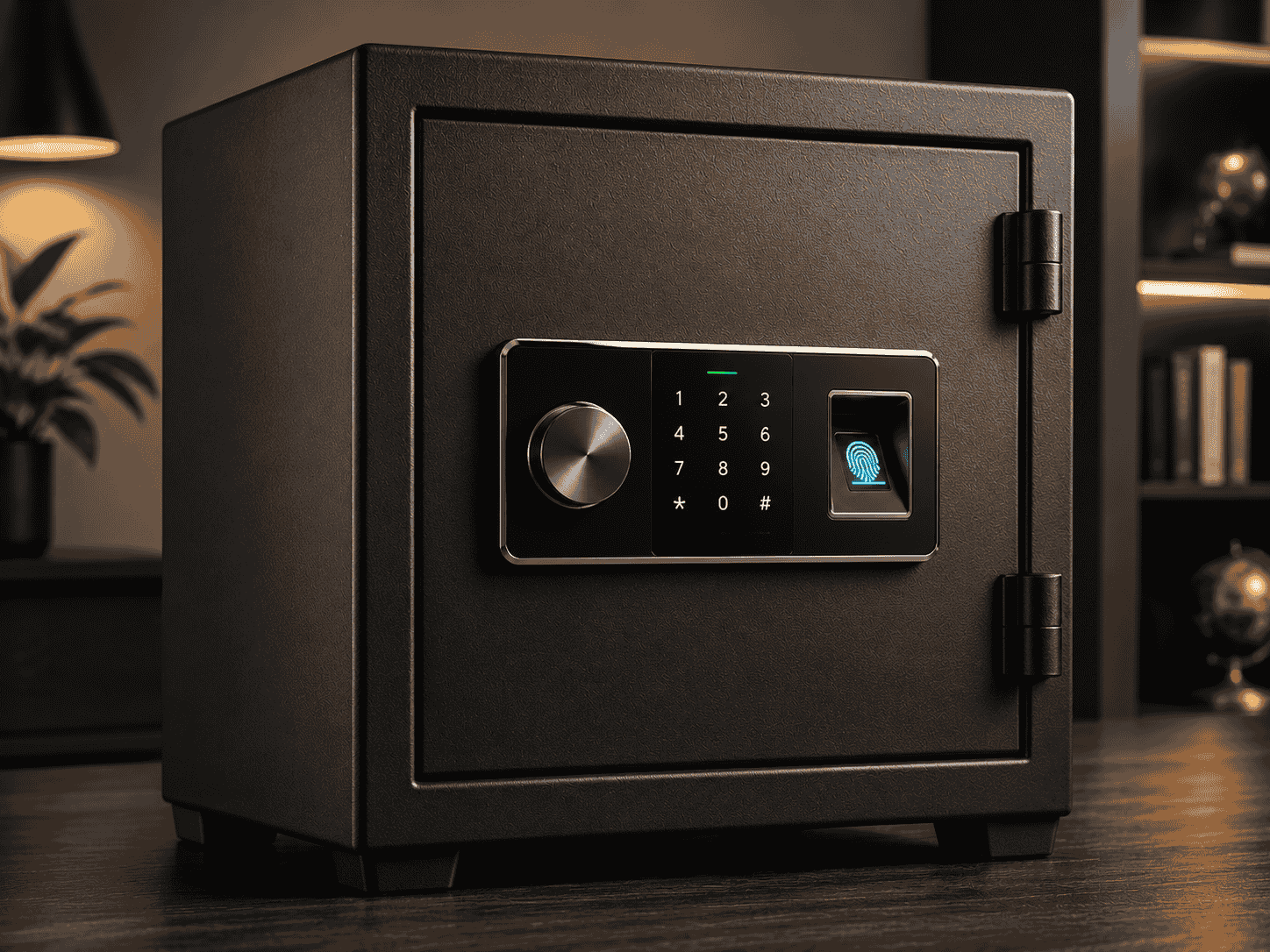
We all have things worth protecting — whether it’s a stack of important documents, a family heirloom, a hard drive, or emergency cash. Yet most people continue to leave these valuables in desk drawers, filing cabinets, or worse, a shoebox under the bed. The reasoning is usually the same: “Nothing bad will happen to me,” or “A safe seems like overkill.”
But here’s the uncomfortable truth — burglaries, house fires, and floods don’t send warning letters. And when disaster does strike, the absence of a safe isn’t just an inconvenience. It can be financially and emotionally devastating.
So let’s cut through the assumptions and answer the question honestly: Do you actually need a safe?
The Real Risks You’re Ignoring
Most people dramatically underestimate everyday risk. Consider these facts:
- A home burglary occurs every 30 seconds somewhere in the world. Thieves know where people hide valuables — and it’s exactly where you think it’s safe.
- House fires destroy belongings within minutes, and standard filing cabinets offer zero fire resistance.
- Water damage from burst pipes or flooding ruins documents and electronics that can never be recovered.
A good safe addresses all three threats simultaneously. It’s not paranoia — it’s preparation.
What Should Actually Be in a Safe?
Many people assume safes are only for those with expensive jewelry or stacks of cash. In reality, almost every household has items that deserve proper protection:
Critical Documents Passports, birth certificates, property deeds, wills, insurance policies, and tax records are irreplaceable. Losing them doesn’t just create stress — it creates weeks (or months) of bureaucratic nightmares to recover.
Digital Storage External hard drives and USB sticks containing family photos, business files, or personal backups are small, valuable, and invisible to your home insurance policy if stolen without proof of ownership.
Medications and Firearms Prescription medications and legally owned firearms both carry serious risks if accessed by the wrong person — especially children. A lockable safe is a responsible and, in some regions, legally required storage solution.
Sentimental Items Heirlooms, handwritten letters, and keepsakes can’t be replaced with an insurance payout. They simply disappear forever.
“But I Have Home Insurance…”
This is one of the most common misconceptions around home security. Home insurance is a financial safety net — it is not a protection strategy.
Insurance can reimburse you for the monetary value of stolen or damaged items (often minus your excess, and subject to claim limits). It cannot restore your grandmother’s ring, your child’s first photos, or your only copy of an important contract. And in many cases, proving ownership of lost valuables is nearly impossible without documentation — documentation that was likely lost in the same event.
A safe doesn’t replace insurance. It works alongside it, protecting the things money simply can’t replace.
Choosing the Right Safe: It’s Not One-Size-Fits-All
Not all safes are created equal, and choosing the wrong one can give you a false sense of security. Here’s what to look for:
Fire Rating — Look for safes rated to protect contents at internal temperatures for a minimum of 30–60 minutes at 1,000°F. Paper chars at around 450°F, and digital media fails even sooner.
Burglary Rating — Independent ratings (like UL or EN standards) indicate how long a safe can withstand a forced attack. Higher-grade safes are designed for heavier-duty protection.
Anchoring Capability — A portable safe is a liability. Your safe should be bolted to the floor or wall so it can’t simply be carried away.
Size and Access — Consider what you’ll store and how often you’ll need access. A biometric safe offers quick entry; a key or combination lock may be better for long-term document storage.
Reputable providers like Safes Australia offer a well-curated range of options tailored to both residential and commercial needs, making it easier to find a safe that matches your specific risk profile rather than just buying whatever’s cheapest.
The Cost Argument — Turned on Its Head
People hesitate at the upfront cost of a quality safe. But let’s reframe that.
A reliable home safe typically costs anywhere from a few hundred to a couple of thousand dollars depending on size and rating. Compare that to:
- The average loss in a home burglary: $2,000–$5,000+
- The cost of replacing legal documents and identity recovery after theft: weeks of time and hundreds in fees
- The emotional cost of losing irreplaceable items: immeasurable
A safe is one of the highest-value investments you can make for your home — not because disaster is guaranteed, but because the cost of being unprepared far outweighs the cost of being ready.
The Bottom Line
A safe isn’t a luxury for the wealthy or the paranoid. It’s a practical, responsible layer of protection for anyone who has something worth keeping — and that’s virtually everyone.
The question isn’t really “Do I need a safe?” It’s “What am I waiting for?”
Because the only time you’ll truly regret not having one is the moment you desperately wish you did — and by then, it’s already too late.