Paid advertising can put a business in front of potential customers almost immediately. Launch a campaign, select an audience, set a budget, and visibility can follow. That speed makes advertising an important part of many marketing strategies. The challenge is what happens when the campaign ends. Businesses that want sustainable digital growth need to balance temporary exposure with marketing assets that continue creating opportunities over time.
The Hidden Risk of Depending Too Much on Paid Advertising
Paid advertising offers businesses a level of control that can be difficult to achieve through other marketing channels. Campaigns can target specific locations, audiences, services, and customer interests while giving marketers the ability to adjust budgets and messaging quickly.
But there is an important limitation: advertising visibility usually depends on continued spending.
When a campaign is paused, the traffic associated with it can decline quickly. Increasing competition can also make customer acquisition more expensive, especially when several companies are bidding for the same high-value audiences.
This does not make paid advertising ineffective. Instead, it highlights why businesses should avoid allowing it to become their only reliable source of online visibility.
A more resilient strategy uses paid campaigns for what they do well while simultaneously developing digital assets the business can continue building over time.
Your Website Should Become a Long-Term Marketing Asset
A business website should do more than provide contact details and a short description of services.
Unlike an advertisement that disappears when a campaign finishes, a useful website can continue supporting customer acquisition, sales conversations, reputation building, and organic discovery.
Service pages are a good example. A well-developed page can explain a particular service, answer common questions, demonstrate expertise, and give potential customers a clear next step.
Educational content can serve a different purpose. Guides, FAQs, comparisons, case studies, and problem-solving articles can reach customers who are still researching their options.
Businesses should therefore consider each useful piece of website content as part of a growing information library.
The more clearly that library answers genuine customer questions, the more useful the website becomes across different marketing channels. Paid campaigns can direct visitors to it, sales teams can share its resources, email campaigns can feature its content, and search engines can surface relevant pages when people research related topics.
Organic Search and Paid Advertising Solve Different Problems
One common marketing mistake is treating SEO and paid advertising as an either-or decision.
In reality, they can serve different stages and objectives.
Paid campaigns are useful when businesses need immediate exposure. They can support a new service, seasonal promotion, product launch, competitive market, or short-term lead-generation campaign.
Organic search takes a different approach. Instead of purchasing each visit, businesses work on making their website more useful and discoverable for searches related to their services, expertise, and customers’ needs.
This can involve improving technical performance, creating detailed service pages, strengthening website structure, developing useful content, improving local relevance, and earning credible third-party mentions.
Organic visibility generally takes time to develop, which is why it should not be viewed as an instant substitute for advertising. Its value lies in creating another route through which customers can discover the business.
When the two approaches are coordinated, paid advertising can address immediate opportunities while organic search supports longer-term discoverability.
Search Behaviour Is Moving Beyond Traditional Results
Another reason to diversify digital marketing is that customers themselves are changing how they research businesses.
Google remains important, but the customer journey can now involve Maps, reviews, social platforms, videos, comparison websites, AI-generated answers, and conversational tools such as ChatGPT.
Someone researching a service may no longer enter a two- or three-word phrase and immediately choose the first company they see. They may ask a detailed question, compare several providers, read customer experiences, visit multiple websites, and look for evidence of expertise before making contact.
Businesses need digital information that supports this more complex research process.
That starts with clarity. A company’s online presence should make it easy to determine what it does, where it operates, which problems it solves, and what makes it credible.
Useful content strengthens that information. Reviews provide independent customer perspectives. Case studies demonstrate experience, while relevant third-party mentions can expand the company’s digital footprint beyond its own website.
These signals are valuable for human visitors, but they can also make a business easier for search and AI-powered discovery systems to understand.
Build Marketing Channels That Strengthen One Another
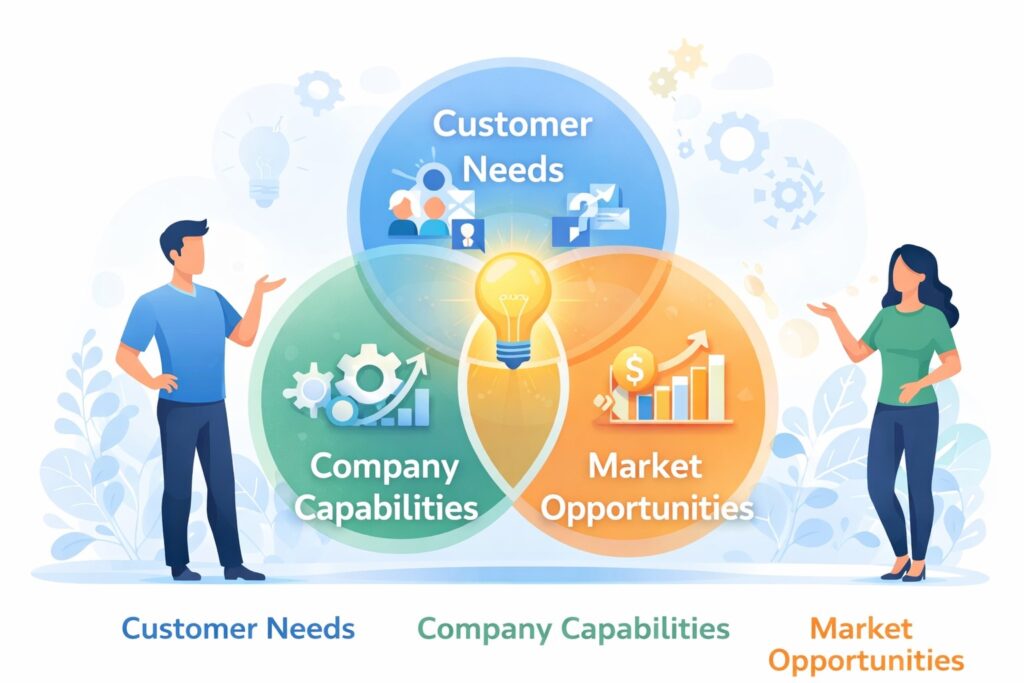
A sustainable digital strategy does not require abandoning paid advertising. It requires understanding how different marketing channels can work together.
Consider a potential customer who first encounters a company through a social advertisement. They may not be ready to buy immediately, but they remember the brand. A few weeks later, they search for information about the service and discover one of the company’s articles. They read customer reviews, return to the website, and eventually submit an enquiry.
Which channel generated that customer?
The answer may be several of them.
This is why businesses should think beyond individual campaigns and consider the entire customer journey.
For companies looking to make organic discovery a stronger part of that journey, working with an experienced seo company in lebanon can help connect technical website improvements, useful content, local relevance, and search visibility with wider marketing objectives.
Email can then help maintain relationships with people who have already interacted with the business. Social platforms can support awareness and engagement. Paid advertising can target immediate opportunities, while useful website content and organic visibility provide additional ways for customers to return.
When these channels reinforce one another, the business becomes less dependent on any single source of traffic.
Measure Marketing by Its Purpose, Not One Universal Metric
A diversified strategy also requires better measurement.
Businesses sometimes compare every marketing channel using the same metric, even though different channels may have completely different purposes.
A social campaign designed to introduce a brand should not necessarily be judged by the same standards as a search campaign targeting customers who are ready to request a quote.
Likewise, an educational article may introduce a potential customer to the company weeks before that person is ready to make a purchase.
Businesses should first decide what each channel is supposed to accomplish.
Paid advertising might be measured through qualified leads and acquisition costs. Organic search can be evaluated through relevant visibility, qualified traffic, enquiries, and assisted conversions. Email may focus on engagement, repeat business, or customer retention.
Looking at how channels assist one another can provide a more realistic picture than assigning every conversion to the customer’s final click.
Create a Digital Presence That Does Not Disappear With the Budget
Paid advertising will continue to be valuable for many businesses. The problem begins when turning off advertising also means becoming almost invisible online.
Building owned digital assets provides another path.
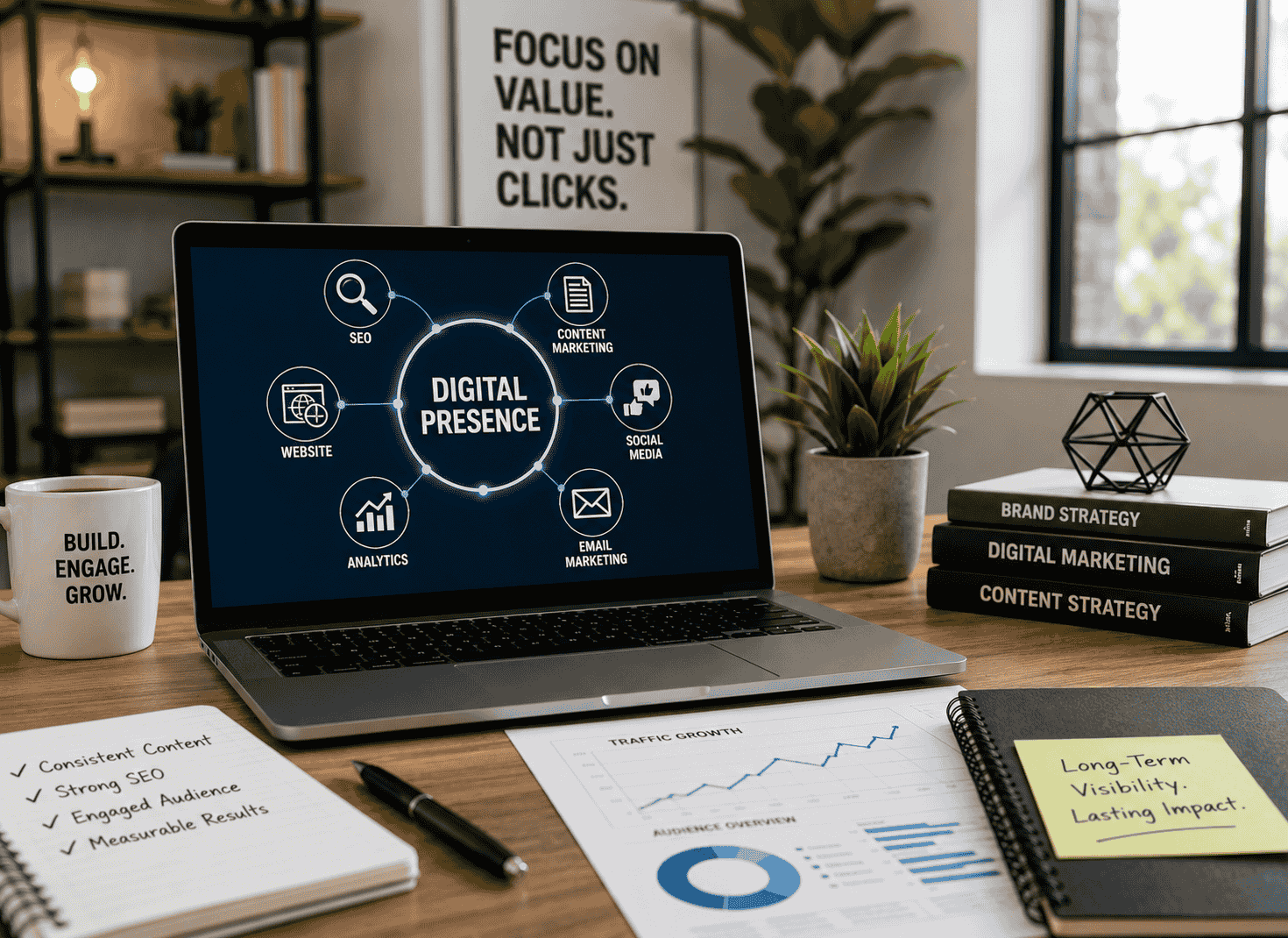
A useful website, detailed service information, authoritative content, customer reviews, an established reputation, organic search visibility, and consistent business information can collectively create a digital presence that continues supporting the company between advertising campaigns.
New discovery methods make that foundation even more important. Whether customers use traditional search, Maps, reviews, social platforms, or AI tools, businesses benefit from presenting a consistent and credible picture of who they are and what they offer.
The goal is not to replace one marketing channel with another. It is to create a system in which each channel has a purpose and strengthens the others.
SEO Yodha helps businesses develop the organic-search side of that system through technical optimisation, content strategy, local relevance, and preparation for evolving AI-powered discovery. Combined with the right broader marketing mix, these efforts can help create a digital presence designed to keep working beyond the lifespan of an individual advertising campaign.