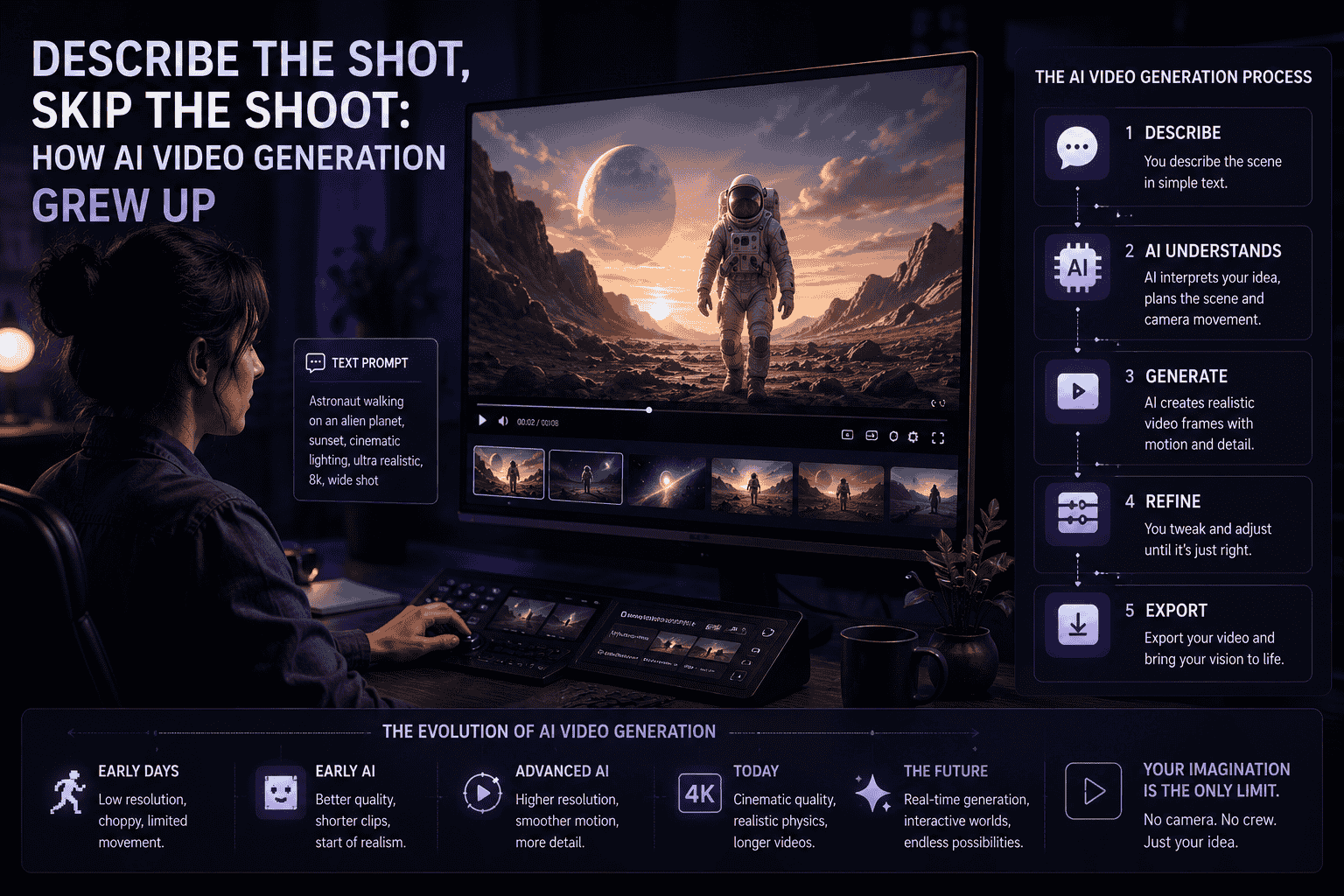
For years, making a short promo clip meant the same slog. You booked the time, set up a camera or hunted for stock footage, then spent an evening in an editor trimming takes that never quite matched. Small teams either paid a freelancer or gave up and posted another static image. The distance between having an idea and having a watchable video was wide enough that most ideas died in it.
That distance is closing. A new wave of AI video tools now builds a clip straight from a written description, and the output has crossed the line from “interesting demo” to something people actually publish.
What Text-to-Video Really Does
The idea is easy to say and hard to build. You type what you want to see: the setting, the subject, the mood, the way the camera moves. Then the model generates the footage. There is no timeline to cut and no B-roll to source. Early versions were rough and short, which is why plenty of people wrote them off. The recent jump in quality is what changed the conversation.
Length Was the Real Ceiling
Ask anyone who tried these tools two years ago and they mention the same wall: you got about five seconds. Five seconds is a loop, not a video. You cannot tell a story with it, walk through a product, or hold anyone’s attention. This is where the newer models earn their keep. Seedance 2.5, ByteDance’s latest generator, produces a single thirty-second clip at native 4K from one prompt. Thirty seconds is a full ad spot. That is the gap between a novelty and something you can build content around.
Keeping Things Consistent
The other old complaint was drift. Faces changed between shots, products morphed, the lighting wandered off. Newer systems let you feed in reference images so the output stays on-model. Seedance 2.5 takes up to fifty reference inputs, which is enough to lock a character, a brand color, or a specific product into the scene instead of hoping the model remembers.
Where It Actually Fits
None of this replaces a film crew on a real production. It fills the enormous middle, where a business needs a steady stream of short clips and has neither the budget nor the hours for it. A local shop testing three versions of an ad. A course creator who needs an intro. A marketer staring down a content calendar every week. For that kind of work, describing a shot and getting a usable clip in minutes changes what one person can get done in an afternoon.
The technology is not finished, and it still rewards people who write clear, specific prompts. But the old excuse that AI video is too short and too strange to use has quietly stopped being true. The tools caught up to the promise, and the people who learn to direct them are the ones who will pull ahead.