Clogged drains can quickly interrupt daily routines, whether the issue appears in a kitchen sink, bathroom drain, shower, laundry line, or main sewer connection. While slow drainage may seem simple, the cause can range from grease buildup to pipe damage, tree roots, trapped debris, or poor pipe slope. Plumbers handle clogged drains efficiently by identifying the source before choosing a repair method. This prevents repeated blockages and reduces unnecessary pressure. On the pipes, a careful approach also protects fixtures, flooring, walls, and wastewater lines from overflow, odor, and hidden moisture problems that can develop when clogs are ignored.
Diagnosis Before Repair
1. Locating the Source of the Blockage
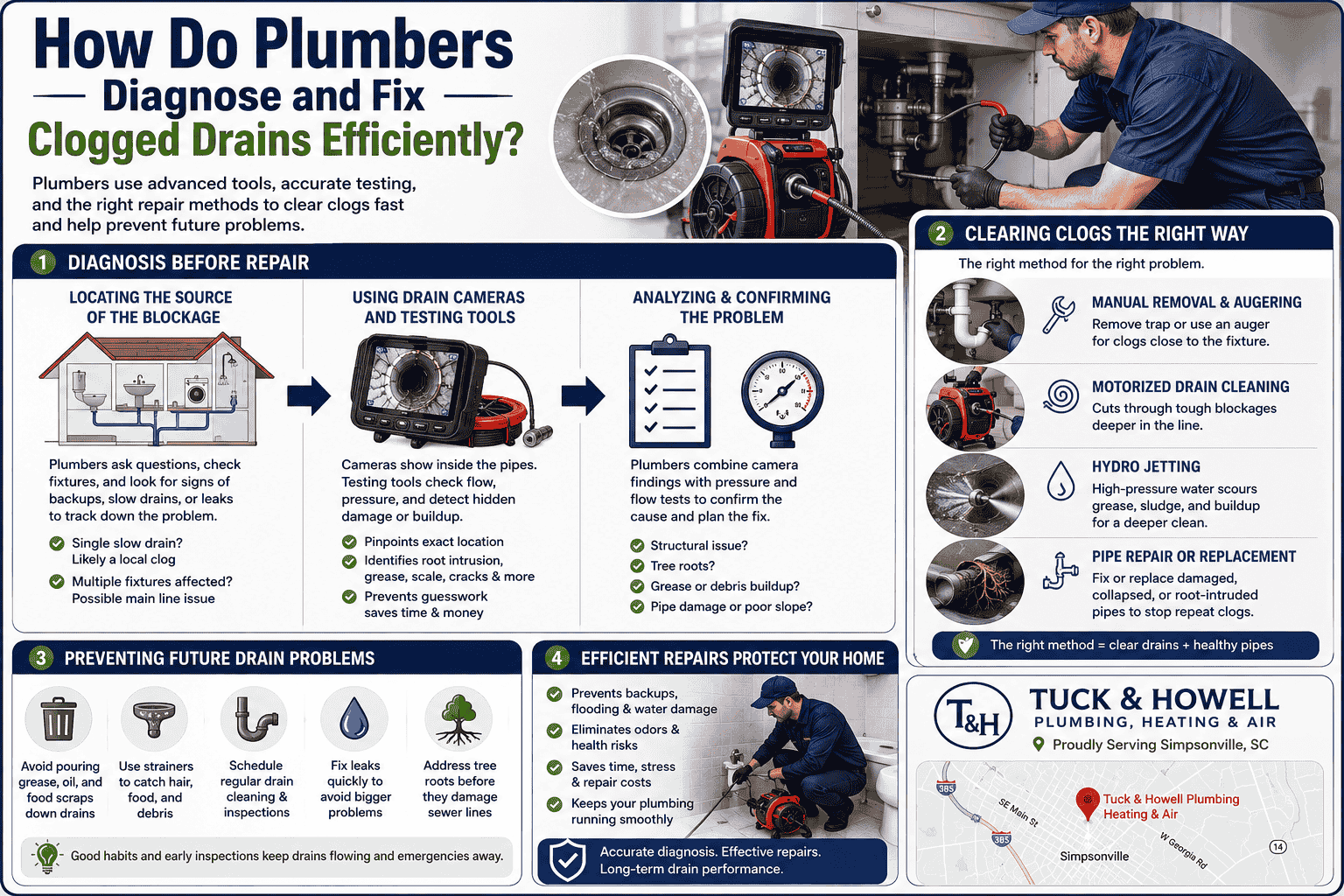
Plumbers begin by learning where the clog is happening and how it affects nearby fixtures. A single slow sink may indicate a local obstruction in the trap or branch line, while several backed-up drains may suggest a deeper blockage in the main line. They may ask when the problem started, whether gurgling sounds are present, and whether water backs up into tubs, toilets, or floor drains. This information helps narrow down the likely location before tools are used. Visual checks around cleanouts, fixture drains, and visible piping can reveal leaks, corrosion, standing water, or improper connections. Local service providers such as Tuck & Howell Plumbing, Heating & Air in Simpsonville, SC, can help homeowners address clogged drains using methods suited to the plumbing layout and type of blockage. Accurate diagnosis saves time because the plumber can choose the right cleaning approach instead of guessing.
2. Using Drain Cameras and Testing Tools
Modern plumbers often use inspection cameras to see inside drain lines without tearing into floors or walls. A small waterproof camera can travel through the pipe and show grease buildup, hair, soap residue, food waste, scale, root intrusion, broken sections, or collapsed areas. This makes the repair more efficient because the plumber can confirm both the location and nature of the blockage. In some cases, water flow tests may also be used to see how quickly drains empty after partial clearing. If a clog keeps recurring, a camera inspection becomes even more useful as it can reveal structural problems that simple cleaning cannot solve. For example, a pipe may have a belly where waste collects, or an older line may have rough interior walls that trap debris. By combining camera footage with pressure and flow observations, plumbers can avoid temporary fixes and recommend solutions that address the actual cause.
3. Clearing Clogs With the Right Method
Once the blockage is identified, plumbers select the clearing method that fits the drain condition. For smaller clogs near a fixture, they may remove the trap, clear the branch line, or use an auger to break through the obstruction. For deeper blockages, a motorized drain machine can cut through packed debris and restore flow through longer pipe runs. Hydro jetting may be used when grease, sludge, or heavy buildup coats the inside of the pipe. This method sends high-pressure water through the line to clean the pipe walls more thoroughly than basic snaking. Plumbers must choose carefully because older or damaged pipes may not withstand aggressive cleaning. Efficient drain repair is not only about speed; it is about clearing the clog without harming the plumbing system. The right method restores drainage, reduces odor, and lowers the chance of another backup soon after service.
4. Preventing Future Drain Problems
Efficient drain service often includes preventive measures because many clogs result from repeated habits or system conditions. Plumbers may explain how grease, coffee grounds, wipes, hair, soap scum, and food scraps contribute to blockages over time. They may also recommend drain strainers, periodic cleaning, better disposal habits, or repairs to sections of pipe that trap waste. If roots are entering a sewer line, cleaning alone may not be enough, and the damaged area may need repair or replacement. If mineral buildup is common, water quality or pipe material may need attention. Preventive guidance helps homeowners reduce emergency calls and protect the full drainage system. Regular inspection can also catch early warning signs such as slow emptying, bubbling sounds, recurring odors, or water backing up after appliance use. When plumbers combine repair with prevention, drains stay clearer, and plumbing systems operate more reliably.
Efficient Drain Repair Protects the Home
Plumbers diagnose and fix clogged drains efficiently by combining observation, testing, camera inspections, and appropriate cleaning methods. They determine whether the issue is local, deep in the line, or connected to pipe damage before beginning repair. This approach prevents unnecessary work and reduces the chance of repeat blockages. Efficient drain service also protects the home from wastewater backups, odors, leaks, and moisture damage. When clogs are cleared properly and future risks are addressed, the plumbing system can move water safely and consistently. A careful repair process keeps daily routines running smoothly while supporting long-term drain performance.