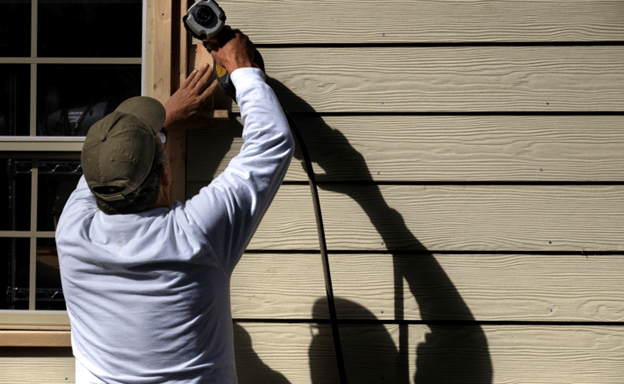
Your home needs new siding when you see cracked or warped panels, soft spots you can press in with a finger, rising energy bills, or siding that has simply reached the end of its expected lifespan for its material. Catching these signs early prevents water damage from spreading behind the walls, where repairs get far more expensive. Homeowners researching Home Siding Replacement Denver CO often start looking for solutions after noticing these warning signs, but identifying the problem early can help prevent more extensive structural damage.
Siding is your home’s main defense against wind, rain, and sun. When it fails, the damage often happens out of sight before it shows up inside your walls.
Here is how to tell the difference between a cosmetic issue and a real replacement need.
How Long Should Your Siding Actually Last?
Lifespan depends entirely on the material, and the range is wide.
Vinyl siding typically lasts 25 to 50 years, averaging around 40, while aluminum runs 25 to 45 years with an average near 35. Wood or composite siding has a shorter life, typically 20 to 40 years, with an average of around 30, mainly because it needs consistent maintenance like repainting and sealing. Fiber cement siding performs better, often lasting 60 years or more, and brick siding can outlast the house itself at 100 years or more.
If you know your home’s siding material and roughly when it was installed, you can estimate where you stand. A 25-year-old vinyl home is approaching the end of its useful life, while the same age fiber cement siding likely has decades left.
The Visual Signs That Signal Trouble
Some damage is easy to spot if you know what to look for.
- Cracking, warping, or buckled panels, which allow moisture to seep behind the siding and encourage mold growth
- Fading that has not responded to washing, which signals that the protective UV coating has broken down
- Bubbling or peeling paint on wood siding is often a sign of trapped moisture underneath
- Visible gaps or loose panels, especially after a storm with high winds
- Increased mold, mildew, or moss growth, particularly on shaded sides of the house
Walk around your home once or twice a year, especially after severe weather, and look closely at these details rather than glancing from a distance.
The Soft Spot Test
One of the simplest checks any homeowner can do is the press test. Push firmly on a section of siding with your palm or a screwdriver handle, not the tip. If the material feels soft, spongy, or gives way, moisture has likely gotten in and started breaking down the material underneath. This is especially common on wood siding and around window and door trim, where water tends to collect.
A soft spot in one area does not always mean the whole house needs new siding, but it is a sign that a professional inspection is worth scheduling before the damage spreads.
Rising Energy Bills Can Be a Siding Problem
Siding does more than protect against the weather. It also plays a role in insulation. If your heating and cooling bills have climbed without an obvious reason, like a rate increase or new appliance, damaged or aging siding could be letting outside air into your walls.
This is easy to overlook because the connection is not obvious. Most homeowners think of siding purely as an exterior finish rather than part of their home’s insulation system. If your siding is original to a home built decades ago and your energy bills have been trending upward, it is worth having it checked alongside your insulation.
Repair or Replace: How to Decide
Not every siding issue requires a full replacement. Here is a general guide for making that call.
Repair usually makes sense when:
- Damage is limited to one or two sections, not spread across the house
- The siding is under 15 years old and otherwise in good condition
- The issue is cosmetic, like a single cracked panel from impact damage
Replacement usually makes sense when:
- Damage covers multiple sides of the house or a large percentage of total area
- The siding has already exceeded or is close to its expected lifespan
- You find soft spots, mold, or signs of moisture damage in more than one location
- Energy bills have risen alongside visible siding wear
If you are unsure which category your home falls into, a professional assessment is worth the cost. Attempting repeated patch repairs on siding near the end of its life often costs more over time than a single replacement.
Does New Siding Actually Increase Home Value?
Yes, and the return is stronger than many interior renovations. According to recent renovation cost data, manufactured stone veneer recovers roughly 150 percent or more of its cost at resale, and fiber cement siding replacement has also become one of the top-performing exterior projects tracked by the industry’s annual cost and value analysis. Exterior projects consistently outperform interior remodels in return on investment, largely because curb appeal has an outsized effect on how buyers judge a home before they even walk through the door.
Climate Considerations for Colorado Homes
Front Range weather puts specific stress on siding that homeowners in milder climates do not deal with. Rapid temperature swings between sunny days and freezing nights cause materials to expand and contract repeatedly, which speeds up wear at seams and fasteners. Hail is also a major factor, since even a single severe storm can crack vinyl panels or dent metal siding.
If you are researching home siding replacement in Denver, CO, it is worth choosing a material rated for impact resistance and asking specifically how a contractor accounts for hail exposure in their installation process, since standard installation practices in milder regions do not always hold up here.
When to Call a Professional
If you notice more than one warning sign from this list, especially soft spots combined with rising energy costs, it is time to schedule a professional inspection rather than wait. Moisture damage behind siding spreads quietly and can affect wall framing, insulation, and even indoor air quality through mold growth long before it becomes visible from the outside.
Frequently Asked Questions
Can I replace just one section of damaged siding instead of the whole house? Yes, if the damage is localized and the rest of the siding is structurally sound. Matching the exact color and profile of older siding can be difficult, so expect some visual difference unless the entire elevation is replaced.
Does moisture behind siding always mean mold? Not always, but prolonged moisture exposure creates the right conditions for mold growth, especially in humid climates or shaded areas. The longer moisture sits undetected, the higher the risk.
How often should siding be professionally inspected? Most professionals recommend an inspection every three to five years, or immediately after a major storm involving high winds or hail.