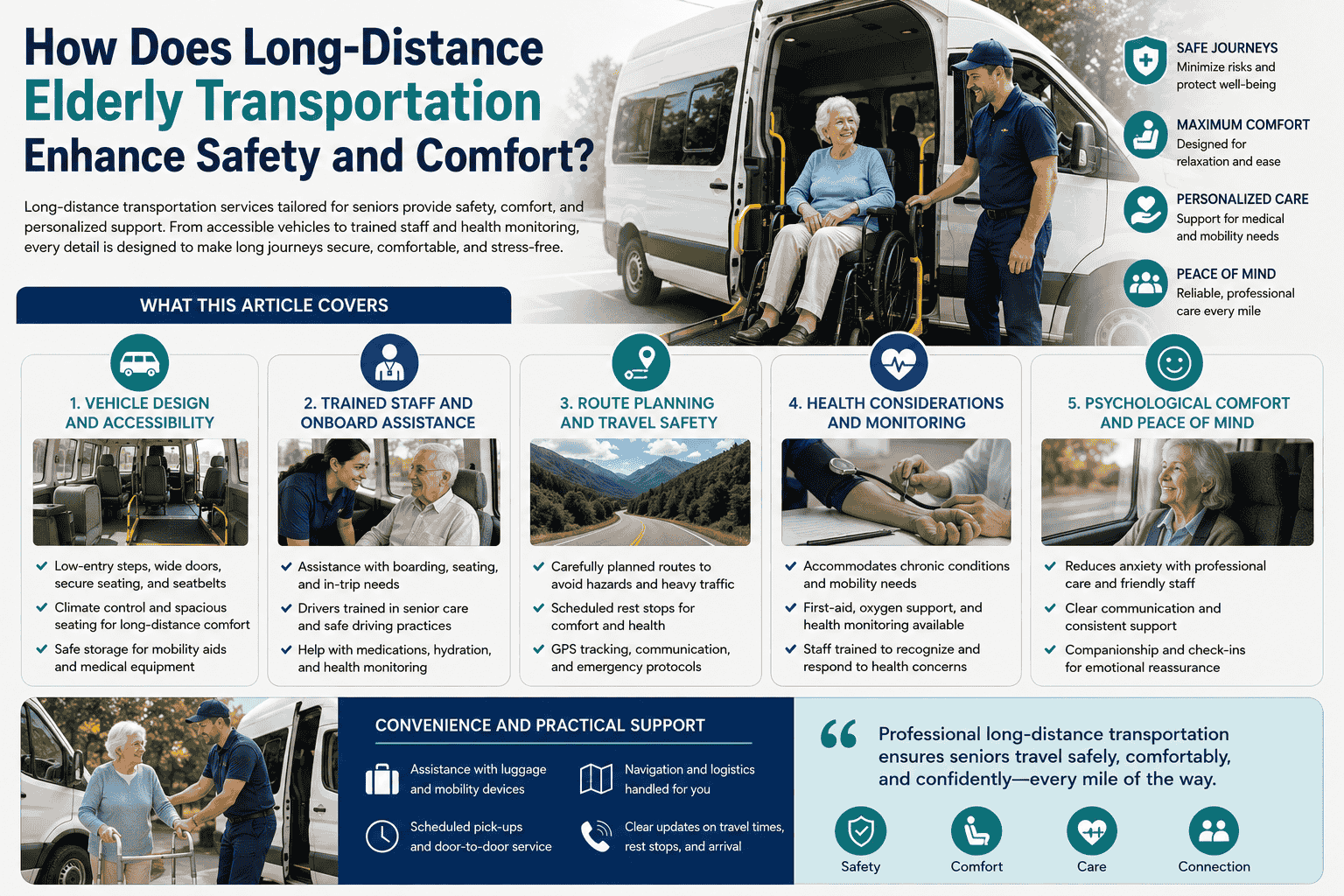
Long-distance travel can be particularly challenging for elderly individuals, as it often involves extended periods of sitting, navigating unfamiliar routes, and managing health needs. Transportation services tailored for seniors provide a combination of safety, comfort, and assistance, ensuring that journeys are less stressful and physically demanding. These services often include trained drivers, accessible vehicles, and accommodations for mobility devices, all designed to support both physical and emotional well-being during travel. By addressing the unique needs of older adults, long-distance transportation for the elderly enhances confidence, reduces the risk of injury, and promotes overall health. Thoughtful planning and professional care transform long-distance trips into manageable and reassuring experiences for seniors.
What This Article Covers
1. Vehicle Design and Accessibility
The design of vehicles used in long-distance elderly transportation plays a crucial role in safety and comfort. Features such as low-entry steps, wide doorways, and secure seating with seatbelts or harnesses help prevent falls and ensure stability during travel. Vehicles are often equipped with climate control systems to maintain a comfortable temperature regardless of external conditions. Adjustable seating, adequate legroom, and easy access to rest areas support physical comfort during extended trips. Vehicles may also provide storage and securement for mobility aids, oxygen tanks, or medical supplies, allowing seniors to travel with their necessary equipment without risk of damage or obstruction. By prioritizing accessibility and comfort in vehicle design, transportation providers reduce fatigue, enhance safety, and ensure a more pleasant travel experience.
2. Trained Staff and Onboard Assistance
Long-distance travel can be stressful and physically challenging for older adults, particularly if they have mobility limitations or chronic health conditions. Services that provide on-board trained personnel offer assistance with boarding, seating, and access to amenities during the trip. Drivers are familiar with the needs of elderly passengers and adjust their speed, driving style, and route planning to minimize discomfort and risk. Support staff may also help with medication reminders, hydration, and monitoring of vital signs during travel. Using long-distance elderly transportation with attentive staff ensures that seniors receive continuous care and oversight, reducing anxiety and the likelihood of accidents. This level of support fosters confidence and independence, allowing older adults to undertake long trips safely and with minimal stress.
3. Route Planning and Travel Safety
Careful route planning is another component that enhances safety in long-distance transportation for seniors. Providers often select routes that minimize exposure to heavy traffic, construction zones, or roads prone to rough conditions. Planned rest stops allow passengers to stretch, use restroom facilities, and access meals, preventing discomfort or medical complications associated with prolonged sitting. Scheduling travel to avoid peak traffic hours reduces stress for passengers and decreases the potential for delays or hazards. Emergency protocols, GPS tracking, and communication systems ensure a rapid response in the event of medical or mechanical issues. By integrating safety-focused route planning, transportation services protect the health of elderly passengers while maintaining comfort, reliability, and peace of mind throughout the journey.
4. Health Considerations and Monitoring
Elderly passengers often have specific medical needs that require attention during long-distance travel. Transportation providers are prepared to accommodate conditions such as cardiovascular issues, respiratory concerns, or mobility limitations. Vehicles may be equipped with basic first-aid supplies, oxygen support, and monitoring devices to respond promptly to potential health concerns. Drivers and support staff are trained to recognize early signs of distress, dehydration, or fatigue, allowing for timely intervention. Proper seating arrangements, climate control, and access to water or light snacks help prevent discomfort or medical complications during extended trips. Attending to these health considerations ensures that seniors can travel safely without compromising their well-being, contributing to a more comfortable and secure experience throughout the journey.
5. Psychological Comfort and Peace of Mind
Long-distance travel can be intimidating for older adults, especially when it involves unfamiliar environments or lengthy trips. Transportation services that provide consistent support and reliable vehicles offer psychological comfort in addition to physical safety. Knowing that professional assistance is available throughout the journey reduces anxiety and enhances confidence. Familiar routines, friendly staff, and clear communication contribute to emotional stability and a sense of security. Companionship or check-in protocols ensure that passengers feel attended to and valued during travel. By addressing psychological comfort, transportation services enhance the overall experience, making long trips less stressful and more enjoyable for elderly passengers and fostering independence and a willingness to travel for social, medical, or personal purposes.
6. Convenience and Practical Support
Long-distance elderly transportation services also improve convenience by managing logistics that might otherwise be difficult for older adults. Assistance with luggage, mobility aids, or navigation reduces the physical strain of travel and ensures that belongings are secure. Scheduled pick-ups and drop-offs, as well as door-to-door service, minimize the need for additional coordination or exposure to challenging environments. Clear communication regarding travel times, rest stops, and expected arrival enhances predictability and reduces stress. By providing practical support throughout the journey, transportation services remove barriers to mobility, allowing seniors to maintain active lifestyles and attend appointments, family visits, or recreational activities safely and comfortably.
Long-distance travel for older adults enhances safety, comfort, and confidence through accessible vehicles, trained staff, and health-focused travel strategies. Careful route planning, health monitoring, and psychological support reduce risks and create a stress-free environment for passengers. Attention to comfort, accessibility, and practical assistance ensures that seniors can travel long distances without physical strain or anxiety. These services protect well-being while promoting independence, enabling older adults to maintain connections, attend important events, and participate in social or recreational activities. Investing in professional long-distance transportation ensures a secure, reliable, and comfortable travel experience, safeguarding both health and peace of mind for elderly passengers.