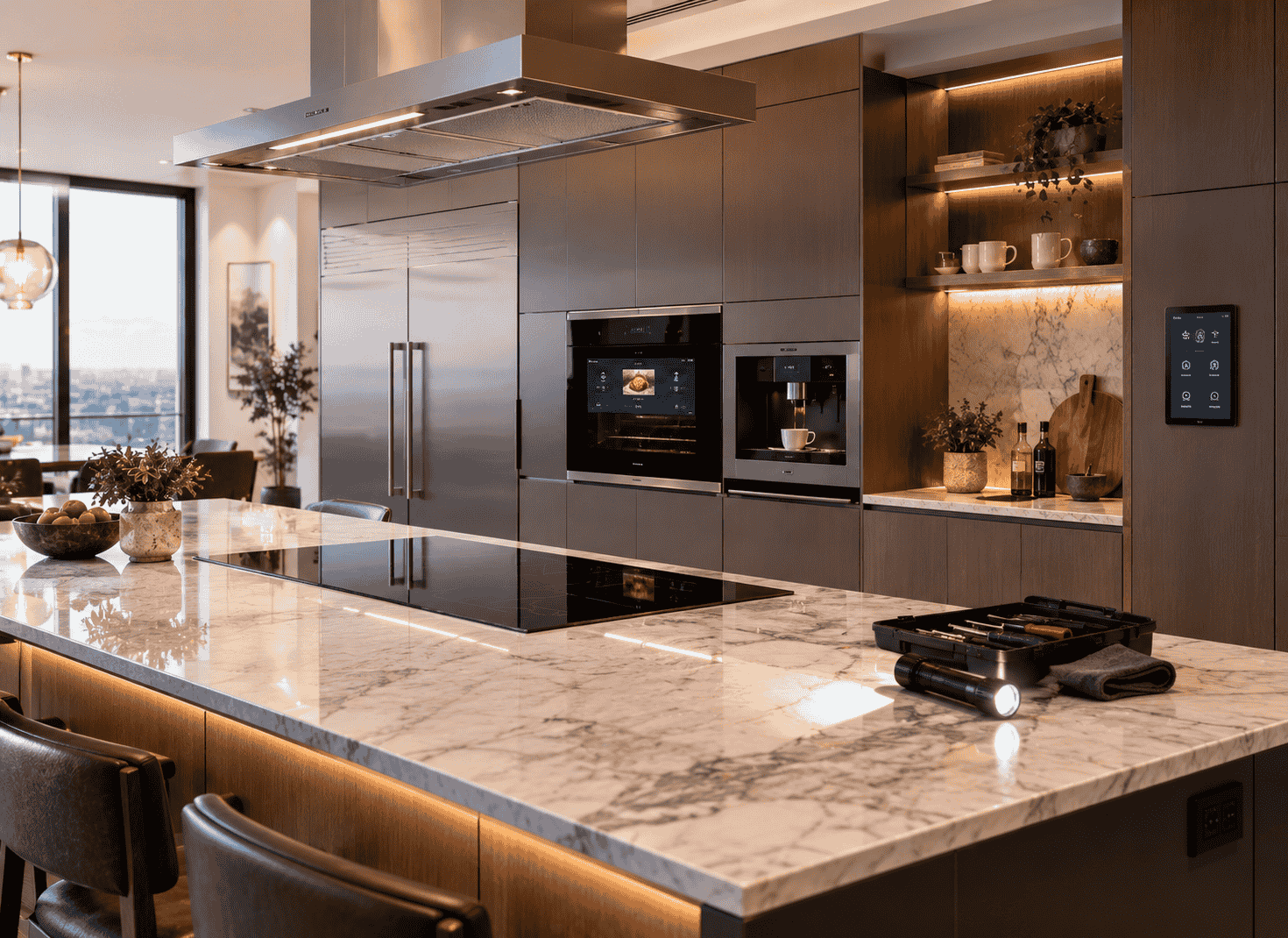
For high-end homeowners, the kitchen is more than just a place to cook, it’s a showcase of design, technology, and craftsmanship. From built-in espresso machines to smart refrigerators that track inventory, luxury kitchens today are packed with appliances that blend convenience with sophistication. But with all that innovation comes a hidden cost: complexity. The more advanced an appliance is, the more specialized its care and repair needs become.
The Rise of Smart, High-End Kitchens
Premium brands like Sub-Zero, Wolf, Miele, Viking, and Thermador have redefined what a kitchen can do. Smart ovens now preheat themselves before you arrive home, refrigerators send alerts when the door is left open, and induction cooktops offer precision once reserved for professional chefs. These appliances aren’t just tools, they’re investments, often costing tens of thousands of dollars as part of a custom kitchen build.
For homeowners, this shift means a few important considerations:
- Integration matters. Smart appliances often connect to home automation systems, so a malfunction in one unit can sometimes affect connected devices.
- Parts are specialized. Unlike standard appliances, luxury brands use proprietary components that aren’t always available at a local hardware store.
- Warranties have fine print. Many high-end brands require certified technicians for repairs, using the wrong service provider can void coverage.
Why Maintenance Is Non-Negotiable
A luxury appliance is only as good as its upkeep. Refrigeration systems in premium units, for example, use more sophisticated cooling technology than standard models, which means a small issue, like a faulty sensor or a refrigerant leak, can escalate quickly if ignored. The same goes for high-performance ranges and ovens, where precision calibration is part of what makes them “luxury” in the first place.
Routine maintenance, cleaning condenser coils, checking door seals, calibrating temperature sensors, and servicing water lines, helps preserve both performance and resale value. Neglecting these small details is one of the most common (and costly) mistakes high-end homeowners make.
Signs Your Luxury Appliance Needs Professional Attention
- Unusual noises during operation (grinding, clicking, or humming)
- Inconsistent temperatures in ovens or refrigerators
- Error codes on smart displays that don’t resolve after a reset
- Water pooling near dishwashers or washing machines
- A noticeable spike in energy bills, which can indicate a failing compressor or motor
Because these appliances are engineered with tighter tolerances and advanced electronics, DIY fixes can sometimes cause more harm than good. A single miscalibration in a smart oven’s sensor, for instance, can throw off cooking precision for months before the issue is even noticed.
Choosing the Right Repair Partner
Not every technician is equipped to handle luxury appliances. High-end brands require specialized training, access to authentic parts, and an understanding of the technology behind smart features. Homeowners investing in premium kitchens should look for technicians with manufacturer certifications and experience specifically with luxury brands, not just general appliance know-how.
For example, homeowners in the Philadelphia area who own premium kitchen appliances often turn to appliance repair Philadelphia experts who are certified to work on high-end brands like Sub-Zero, Miele, and Viking, ensuring repairs don’t compromise the appliance’s performance or warranty.
Final Thoughts
Luxury kitchen appliances are designed to make high-end living easier, but only when they’re properly maintained. Understanding the technology behind these investments, staying ahead of small issues, and partnering with qualified specialists for repairs can mean the difference between decades of flawless performance and a costly replacement. For homeowners who’ve invested in the finest kitchens, protecting that investment starts with knowing who to call before something breaks down.