The history of the ukulele is a story of movement, adaptation, and cultural exchange. What began as a small Portuguese instrument transformed into a global musical icon, deeply rooted in Hawaiian culture yet embraced worldwide.
In this guide, you’ll discover the Ukulele History, how it evolved over time, and why it continues to captivate musicians across the world today.
What Is a Ukulele?
Before diving into history of ukulele, let’s quickly define the instrument.
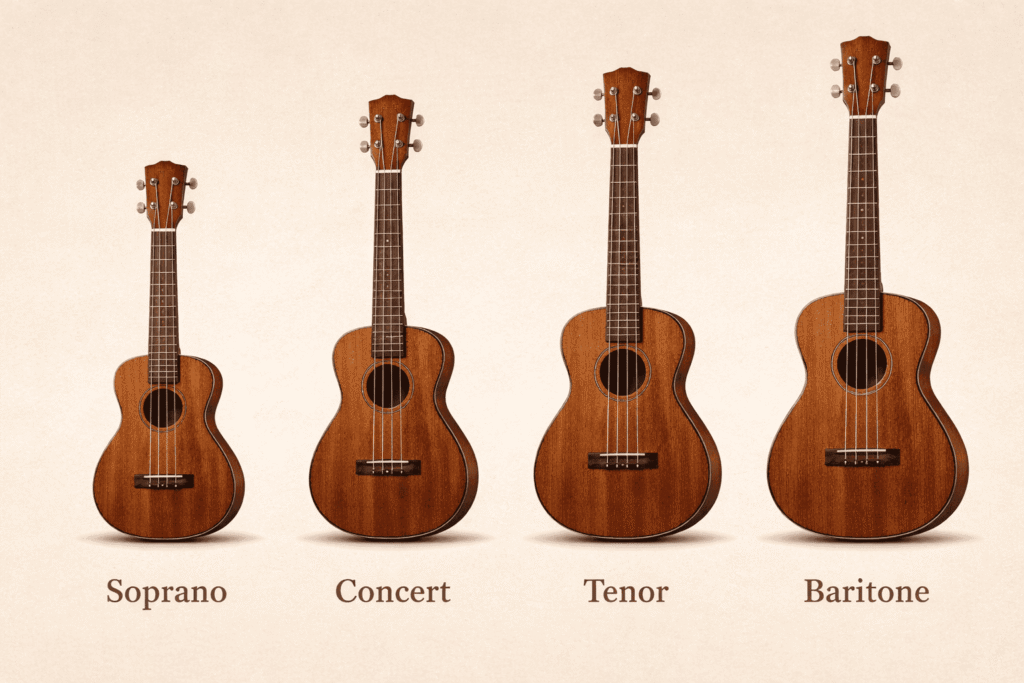
A ukulele is a small, guitar-like instrument with four nylon strings. It typically comes in four main sizes:
- Soprano (smallest and most traditional)
- Concert
- Tenor
- Baritone (largest, deeper tone)
It’s widely associated with Hawaiian music, but its roots stretch far beyond the islands.
The Origins of the Ukulele: It Didn’t Start in Hawaii
Many people assume the ukulele was invented in Hawaii—but that’s only part of the story.
Portuguese Roots
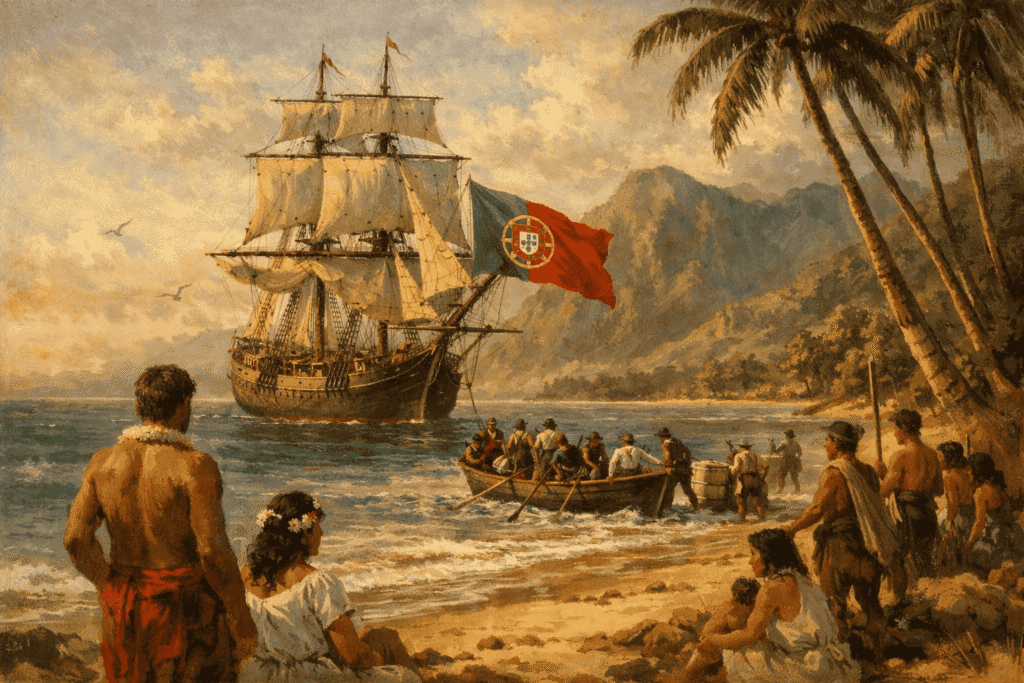
Ukulele history begins from Portugal, specifically with a small instrument called the machete (or braguinha). This instrument originated in the Madeira Islands and had a similar size and sound to the modern ukulele.
In the late 19th century, Portuguese immigrants traveled to Hawaii to work on sugar plantations. They brought their musical traditions—and their instruments—with them.
Arrival in Hawaii (1879)
In 1879, a ship called the SS Ravenscrag arrived in Hawaii carrying Portuguese laborers. Among them were skilled craftsmen and musicians, including:
- Manuel Nunes
- José do Espírito Santo
- Augusto Dias
These artisans began building instruments inspired by the machete, adapting them using local Hawaiian woods like koa.
How the Ukulele Got Its Name
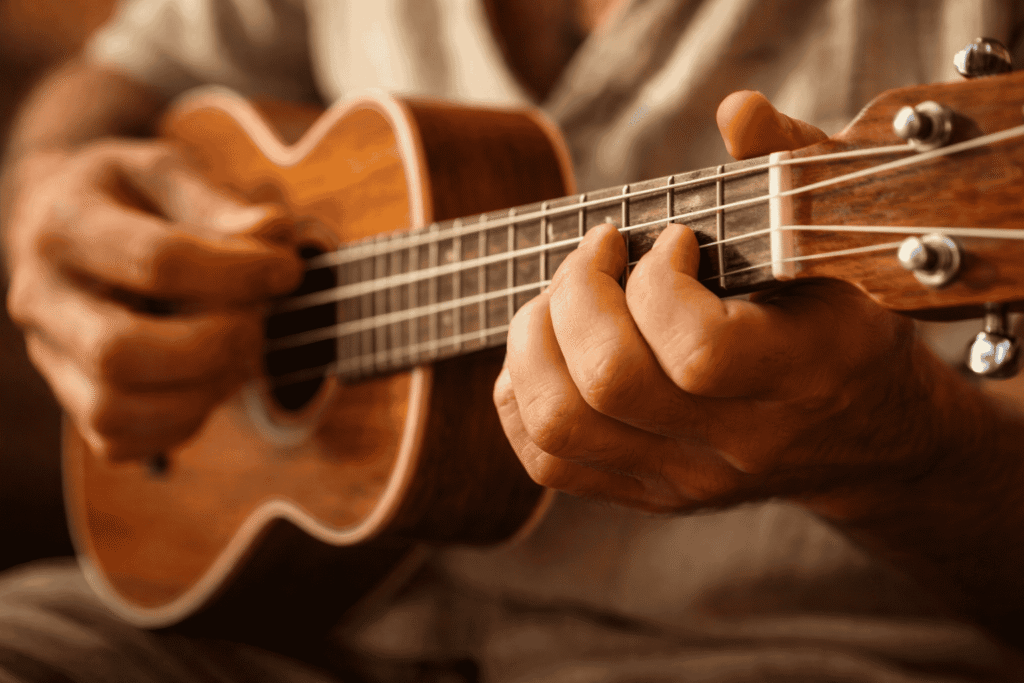
The word “ukulele” is Hawaiian, and it roughly translates to “jumping flea.”
There are two popular explanations:
- It refers to the fast finger movements of players across the strings.
- It may have been a nickname given to a British officer, Edward William Purvis, who played the instrument energetically.
Either way, the name stuck—and became iconic.
Royal Influence: The King Who Popularized the Ukulele
The ukulele might never have gained popularity without royal support.
King Kalākaua’s Role
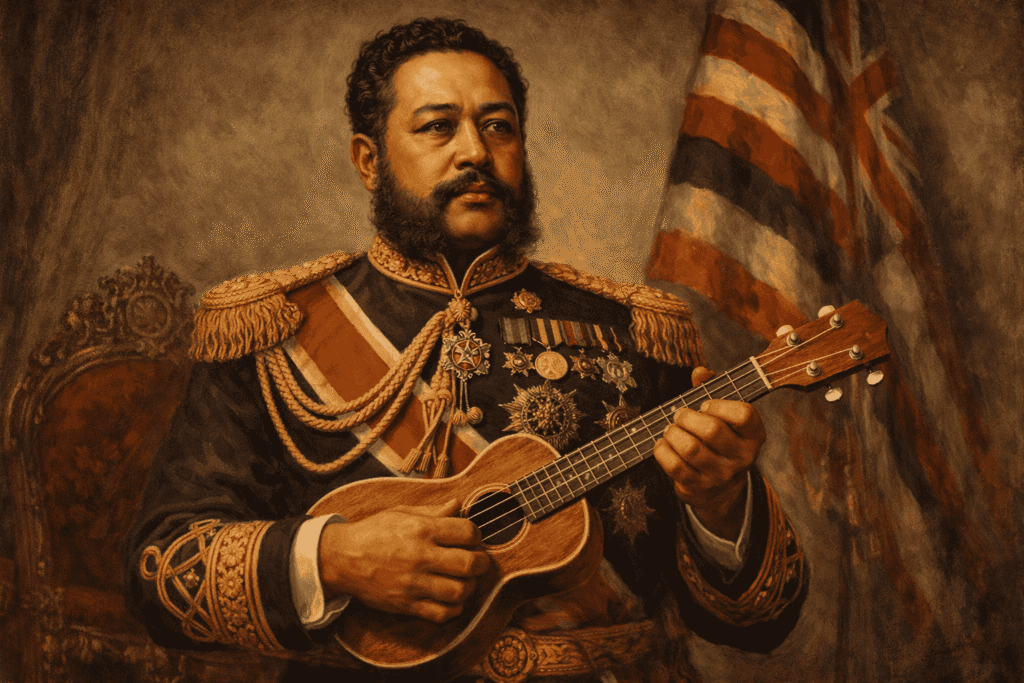
King David Kalākaua, known as the “Merrie Monarch,” played a major role in promoting Hawaiian arts and culture. He embraced the ukulele and included it in royal performances and ceremonies.
Under his influence:
- The ukulele became a symbol of Hawaiian identity
- It was integrated into traditional Hawaiian music
- Local craftsmen refined its design and sound
This royal endorsement helped elevate the ukulele from a folk instrument to a cultural icon.
Early Evolution of the Ukulele
As the ukulele gained popularity in Hawaii, it began to evolve.
Design Improvements
Craftsmen experimented with:
- Different woods (koa became a favorite)
- Body shapes and sizes
- String materials (eventually shifting to nylon)
Standardization
By the early 1900s, the soprano ukulele became the standard form:
- Compact size
- Bright, cheerful tone
- Easy to learn and play
These qualities made it accessible to beginners and appealing to performers.
The Ukulele Goes Global (Early 20th Century)
The ukulele didn’t stay in Hawaii for long.
Panama-Pacific International Exposition (1915)
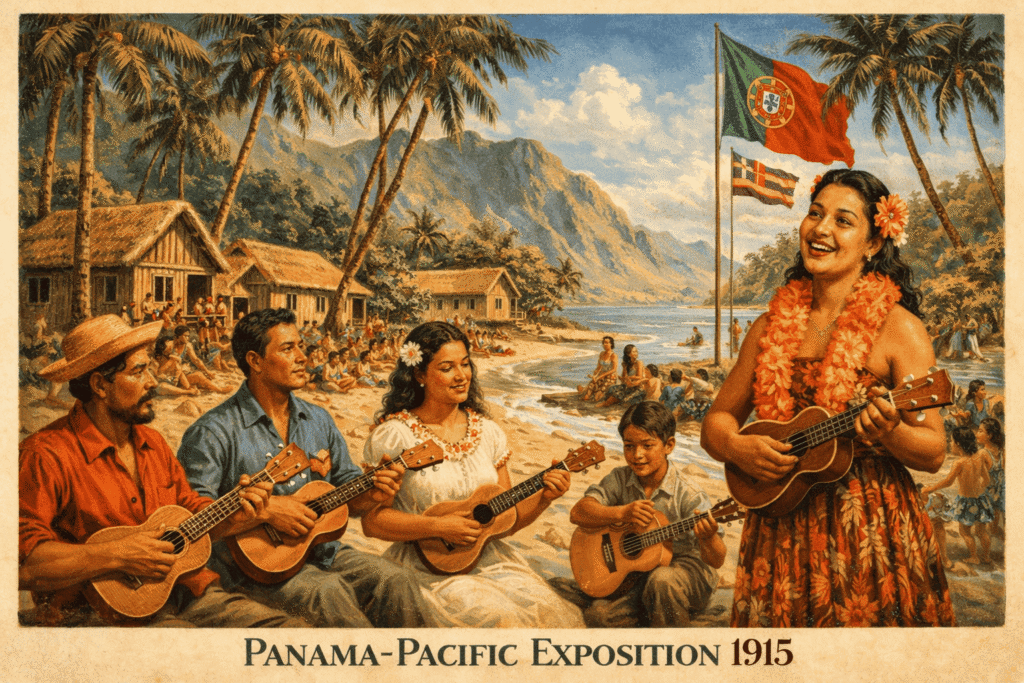
One of the biggest turning points in Ukulele history came in 1915 during the Panama-Pacific International Exposition in San Francisco.
Hawaiian musicians performed there, showcasing:
- Ukulele music
- Hula dancing
- Hawaiian culture
The audience loved it.
This event sparked a mainland American craze for Hawaiian music—and the ukulele quickly became a trend.
The Ukulele Craze of the 1920s
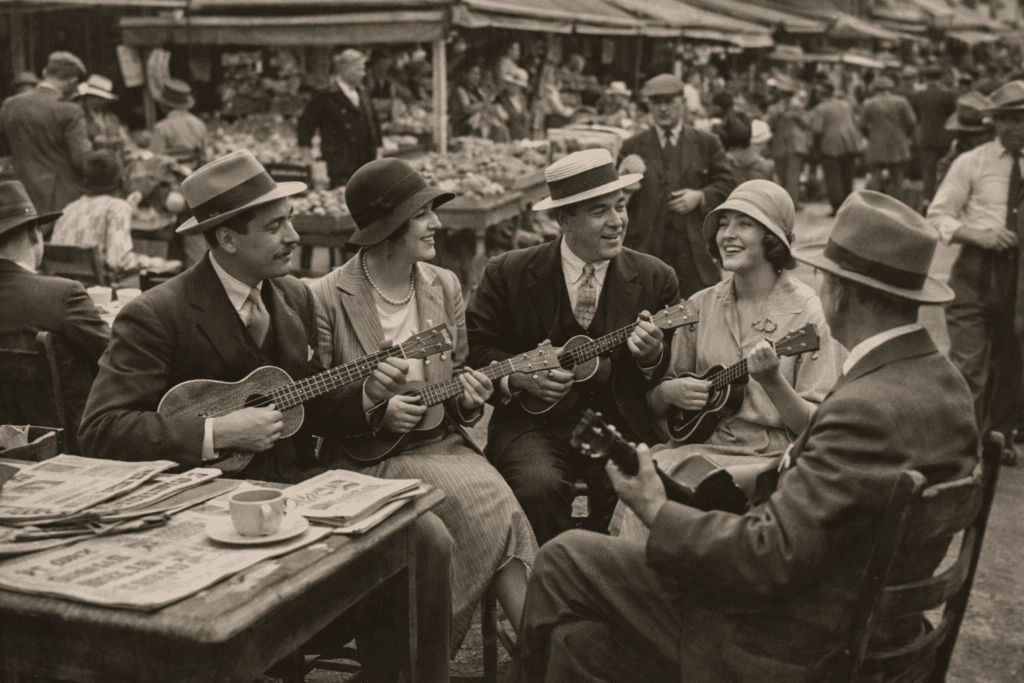
By the 1920s, the ukulele was everywhere in the United States.
Why It Became Popular
- Affordable compared to guitars
- Easy to learn for beginners
- Portable and lightweight
- Perfect for jazz and popular music
Mass Production
Companies began producing ukuleles at scale:
- They were sold in music stores nationwide
- Instruction booklets made learning accessible
- Schools started using them for music education
The ukulele became a household instrument.
Decline in Popularity (1930s–1950s)
Like many trends, the ukulele’s popularity declined.
Reasons for the Decline
- The rise of the guitar in jazz and blues
- Changing musical tastes
- The Great Depression affecting instrument sales
However, the ukulele never disappeared completely.
Television Revival in the 1950s
The ukulele made a comeback thanks to media.
The Arthur Godfrey Effect
Television personality Arthur Godfrey played a major role in reviving interest in the ukulele.
He:
- Regularly performed with a ukulele on TV
- Encouraged audiences to learn the instrument
- Boosted sales dramatically
This revival introduced the ukulele to a new generation.
The Ukulele in Pop Culture (1960s–1990s)
During this period, the ukulele maintained a niche but loyal following.
Notable Appearances
- Used in folk music
- Featured in comedic performances
- Appeared in films and TV shows
Hawaii’s Cultural Identity
The ukulele remained deeply tied to Hawaiian culture:
- Played in traditional songs
- Used in cultural festivals
- Passed down through generations

The Modern Ukulele Revival (2000s–Present)
In the 21st century, the ukulele experienced a massive resurgence.
Why the Ukulele Came Back
- Social Media & YouTube
Tutorials made learning easier than ever. - Indie & Pop Music
Artists began using the ukulele for its unique sound. - Beginner-Friendly Appeal
Perfect for new musicians. - Affordable Price
One of the most accessible instruments.
Famous Ukulele Players Who Shaped Its Popularity
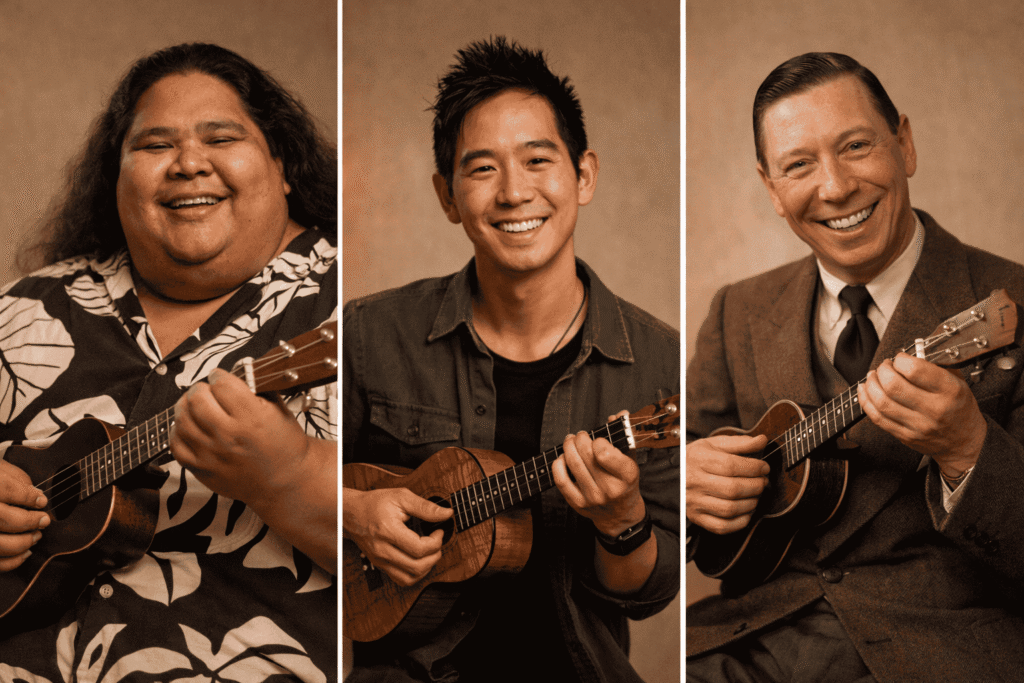
The ukulele’s rise wouldn’t be complete without influential musicians.
Key Figures
- Israel Kamakawiwoʻole
Known for his medley of “Somewhere Over the Rainbow/What a Wonderful World” - Jake Shimabukuro
Revolutionized ukulele playing with complex techniques - George Formby
Popularized the ukulele in British entertainment
These artists showed that the ukulele is more than a beginner instrument—it’s a powerful musical tool.
Types of Ukuleles and Their Evolution
Over time, the ukulele diversified into several types.
Soprano
- Traditional size
- Bright, classic tone
Concert
- Slightly larger
- Fuller sound
Tenor
- Preferred by professionals
- Rich and deep tone
Baritone
- Closest to a guitar
- Tuned differently
Each type reflects the instrument’s evolution and adaptability.

Cultural Impact of the Ukulele
The ukulele is more than just an instrument—it’s a cultural symbol.
In Hawaii
- Represents heritage and identity
- Used in storytelling and tradition
- Central to Hawaiian music
Worldwide
- Associated with joy and relaxation
- Popular in classrooms and communities
- Used in therapy and mental wellness
Why the Ukulele Is So Popular Today
The ukulele’s modern success isn’t accidental.
Key Reasons
- Easy to Learn
Beginners can play songs quickly. - Portable
Perfect for travel and casual play. - Versatile
Works across genres—pop, folk, jazz, and more. - Affordable
Accessible to almost anyone.
Interesting Facts About Ukulele History
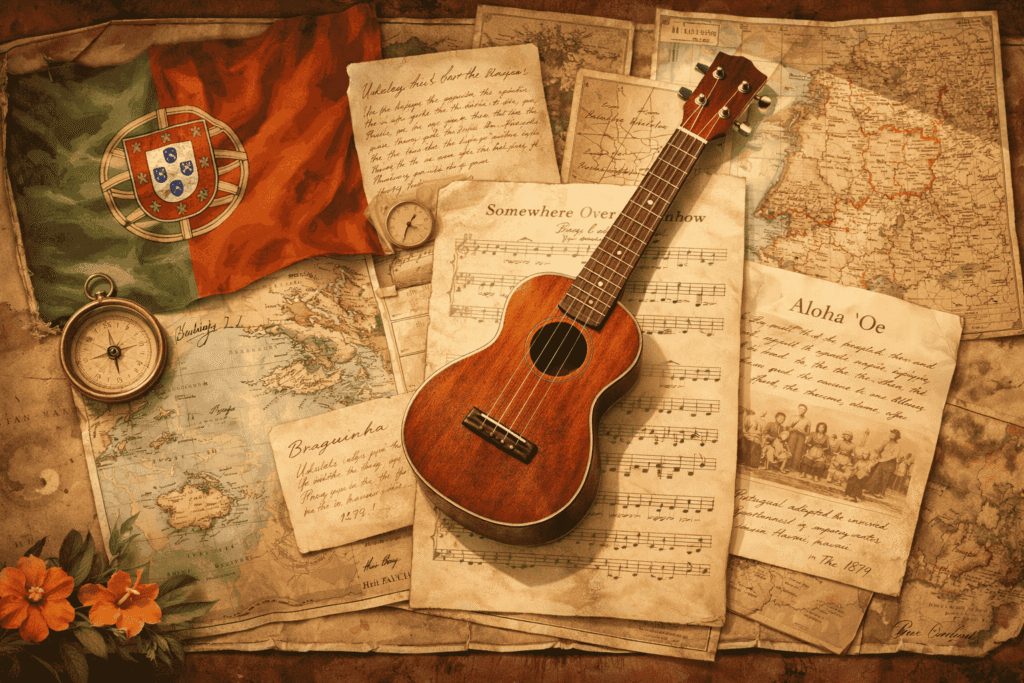
- The ukulele originated from a Portuguese instrument.
- It became popular in Hawaii before spreading globally.
- Its name means “jumping flea.”
- It gained worldwide fame in 1915.
- It has experienced multiple revivals over time.

The Future of the Ukulele
The ukulele shows no signs of slowing down.
Emerging Trends
- Digital learning platforms
- Online ukulele communities
- Fusion with modern music styles
As music continues to evolve, the ukulele adapts—just as it always has.
Final Thoughts
The history of the ukulele is a story of movement, adaptation, and cultural exchange. What began as a small Portuguese instrument transformed into a global musical icon, deeply rooted in Hawaiian culture yet embraced worldwide.
Its journey—from immigrant ships to royal courts, from global exhibitions to YouTube tutorials—proves one thing:
Great things often come in small packages.
Whether you’re a beginner picking up your first instrument or a music lover exploring its past, the ukulele offers something timeless—a simple, joyful connection to music.