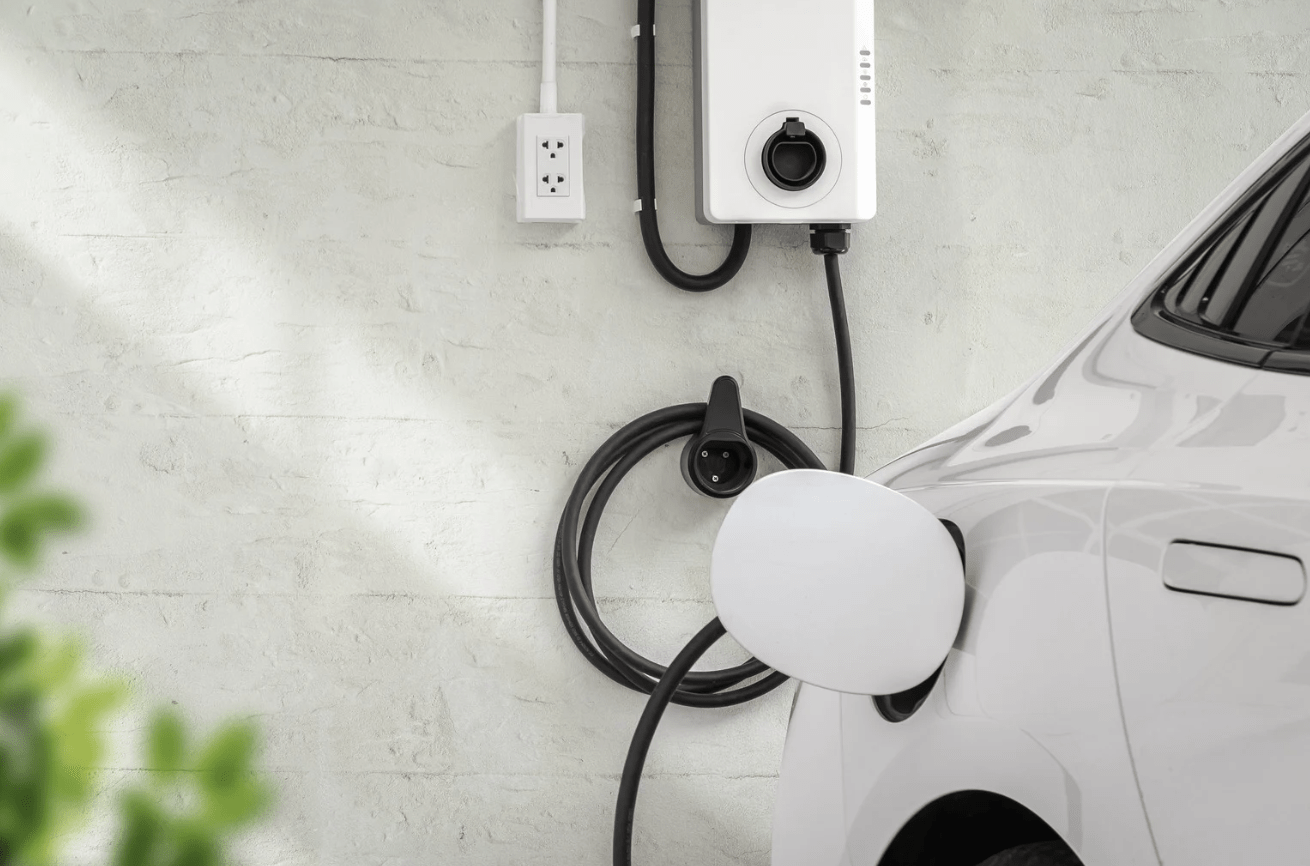
Most EV owners get by on a Level 1 charger for the first few weeks and then realize they need a Level 2. A Level 2 home charger delivers 10 to 30 miles of range per hour versus 3 to 5 miles per hour for a standard outlet. Installation costs between $500 and $1,500, depending on panel capacity and distance from the panel to the garage. The U.S. Department of Energy reported in 2023 that 80% of EV charging in America happens at home.
The most common mistake EV owners make is assuming the included Level 1 charger is a permanent solution. It is not. It is a bridge. A Level 1 charger plugs into a standard 120-volt outlet and adds roughly 40 miles of range overnight. For most driving patterns, that is adequate during the week, but creates real anxiety when the range drops faster than the overnight charge can recover.
Homeowners in Thornton and throughout Adams County who are upgrading to an electric vehicle often need a dedicated home charging system. Positively Charged Electric provides Electric Vehicle Charging Thornton CO installation services, including panel assessments, dedicated circuit installation, and EVSE mounting.
Getting that foundation right from the start determines whether the charging system works reliably for the next 10 to 15 years.
What Is the Difference Between Level 1 and Level 2 Charging?
Level 1 charging uses a standard 120-volt household outlet. The charger that comes with your vehicle plugs directly into the wall. No special installation is needed. Charging speed is approximately 3 to 5 miles of range per hour.
Level 2 charging uses a 240-volt dedicated circuit, the same voltage as a dryer or electric oven. An Electric Vehicle Service Equipment (EVSE) unit mounts on the wall and connects to the dedicated circuit. Charging speed ranges from 10 to 30 miles of range per hour, which relies on the charger’s amperage rating and the vehicle’s onboard charger capacity.
Most EVs have an onboard charger rated between 7.2 kW and 11.5 kW. A 48-amp Level 2 EVSE delivers up to 11.5 kW. A 32-amp EVSE delivers approximately 7.7 kW. For vehicles with onboard chargers rated below 7.7 kW, a 32-amp EVSE is sufficient and costs less to install than a 48-amp unit.
What Panel Work Is Required for a Level 2 Charger?
The most common obstacle to Level 2 installation is panel capacity. A 200-amp residential panel that already serves a fully loaded home may have limited available capacity for a new 40 to 60-amp dedicated circuit. An electrician assesses the existing load and identifies whether a new circuit can be added without a panel upgrade.
Homes with 100-amp service typically require a panel upgrade before a Level 2 circuit is added. A 100-amp service panel supports a basic household but leaves little room for the additional load of an EV charger running simultaneously with a dryer, range, and HVAC system.
Panel upgrades in the Thornton market cost between $2,000 and $4,000. It depends on whether the utility requires a new meter socket. The Inflation Reduction Act’s 25C tax credit provides up to $600 toward panel upgrade costs that are part of an EV charging installation project completed in 2024 or 2025.
How Far Can the Charger Be From the Panel?
The distance from the electrical panel to the garage or parking location determines both the wire gauge required and the labor cost of the installation. Runs under 50 feet use standard 6-gauge wire for a 40-amp circuit. Runs over 50 feet may require a larger gauge wire to prevent a voltage drop that reduces charging speed.
A detached garage adds conduit installation through the exterior and underground if the conduit runs between buildings. Underground conduit in Colorado must be buried at a minimum depth according to NEC Section 300-5, typically 24 inches for conduit carrying 120 to 240-volt circuits. Local inspections verify burial depth.
An electrician measuring the run before quoting prevents the most common source of installation cost surprises.
What EVSE Brand Should You Buy?
The three brands that appear most consistently in installer recommendations and owner reviews are ChargePoint Home Flex, Emporia Vue Level 2, and Enel X JuiceBox 40. All three are compatible with most EV brands, offer Wi-Fi connectivity for charging scheduling, and carry UL listing.
The ChargePoint Home Flex is adjustable from 16 to 50 amps, making it compatible with a range of circuit sizes. The Enel X JuiceBox 40 offers 40-amp output at a mid-range price. The Emporia Vue is the most affordable of the three without sacrificing reliability.
EVSE units sold by the vehicle manufacturer (Ford Connected Charge Station, Tesla Wall Connector, and GM’s dealer-sold option) are optimized for their specific vehicle and produce the fastest charging for compatible vehicles.
What Does the Full Installation Cost?
A straightforward Level 2 installation with existing panel capacity, a circuit run under 50 feet, and a standard wall mount runs $500 to $900 installed in the Thornton market.
An installation requiring a panel upgrade, a long conduit run to a detached garage, or permits in a jurisdiction that requires them (Adams County requires electrical permits for new circuit installations) runs $1,500 to $3,500.
Federal and Colorado state incentives reduce the net cost. The federal Alternative Fuel Vehicle Refueling Property Credit (Form 8911) provides 30% of the installation cost up to $1,000 for residential installations. Xcel Energy, the primary utility in Thornton, offers a $300 rebate for Level 2 EVSE installation under its EV Accelerate At Home program.
Key Takeaways
- The U.S. Department of Energy reported in 2023 that 80% of EV charging occurs at home, making the home charging installation the most important infrastructure decision for most EV owners
- Level 2 charging delivers 10 to 30 miles of range per hour versus 3 to 5 for Level 1, a difference that resolves range anxiety for most daily driving patterns
- Panel capacity assessment by a licensed electrician before purchase prevents the most common and expensive surprise in EV charger installation
- The federal Alternative Fuel Vehicle Refueling Property Credit (Form 8911) covers 30% of the installation cost up to $1,000 for residential Level 2 installations
- Xcel Energy’s EV Accelerate At Home program offers a $300 rebate for qualifying Level 2 installations in its Colorado service territory
- A run under 50 feet from the panel to the garage with adequate panel capacity produces an installed cost of $500 to $900 in the Thornton market
The Level 2 charger converts your EV from a vehicle you manage around its charging limits to one that is simply always ready. That shift in daily experience is what most EV owners say they wish they had set up on day one rather than after three months of slow charging frustration.