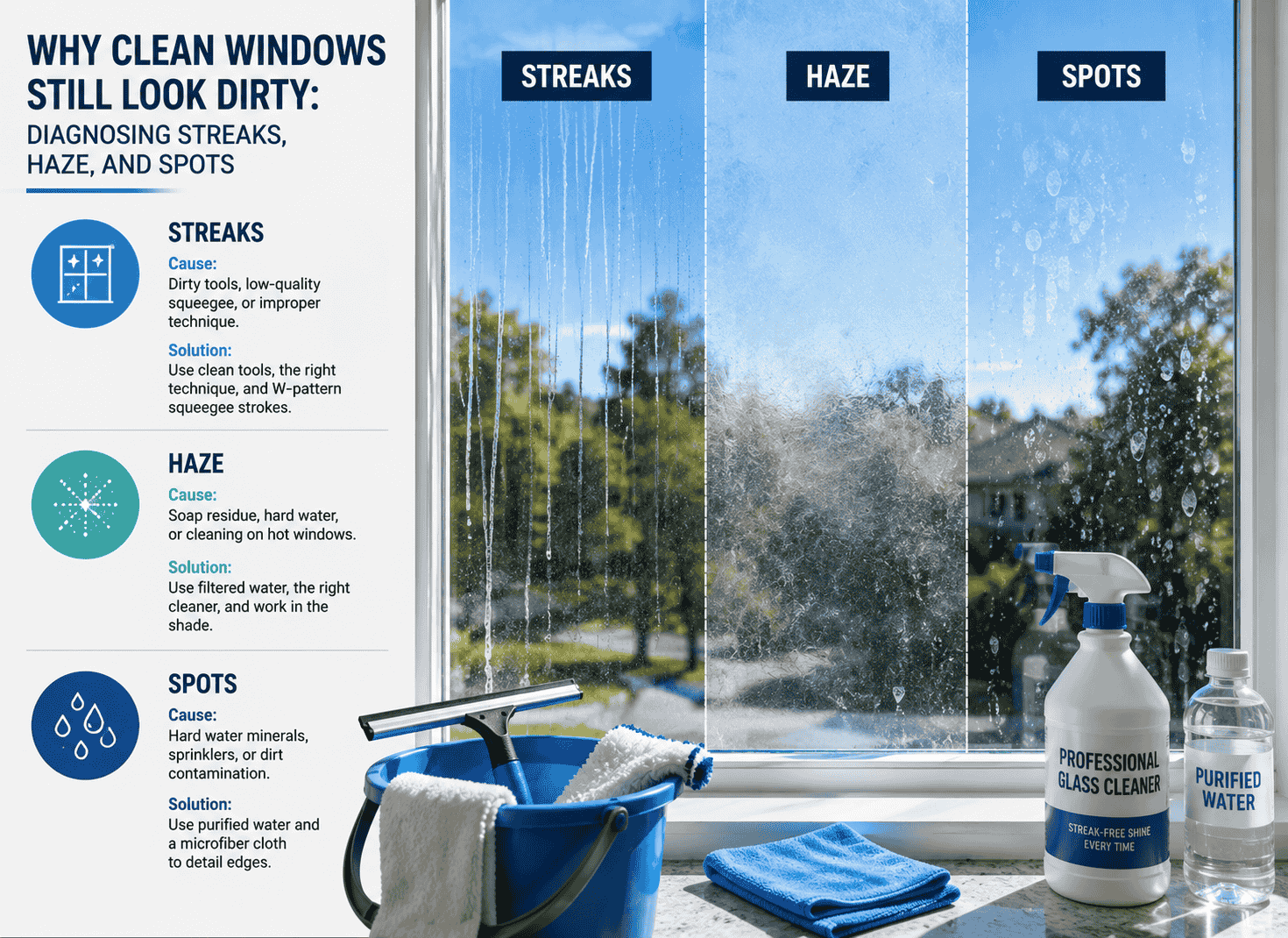
You squeegee, wipe, and step back expecting clear glass. Instead, you see streaks in the sun, a milky haze, or speckled spots that refuse to budge. When glass looks worse right after a clean, the problem is usually not effort but a mismatch between the residue on the window and the technique or chemistry used. Learning to read what you see on the pane can save time, protect coatings, and prevent repeat work. This guide explains what those post-clean blemishes often mean, how to test the cause without guesswork, what fixes actually work on glass, and simple habits that keep deposits from returning.
What Streaks, Haze, and Spots Tell You After a “Clean”
Arced streaks that mirror your squeegee path usually point to too much detergent in the bucket or a blade that was not wiped between pulls, which leaves surfactant film behind. A rainbow sheen under bright light also suggests soap residue. Speckled spots that dry into white freckles are classic hard water deposits from sprinkler overspray or a mineral-laden rinse. A uniformly cloudy, milky veil that returns within hours may be oxidation dust transferred from an aged insect screen or fogging between double-pane glass if it never wipes off. Local pros, including Glide Window Cleaning of Plano, often diagnose these patterns by sight because the blemish type usually matches a specific source and response.
Common Causes: Soap Film, Mineral Deposits, and Screen Oxidation
Overusing detergent makes glass look clean while wet but leaves a sticky surfactant layer that grabs airborne dust as it dries. Skipping a thorough rinse around frames and mullions can also send dirty runoff back onto the pane, forming vertical drip lines after you put your tools away. Hard water, loaded with calcium and magnesium, dries into hard mineral scale that standard glass cleaner cannot dissolve. That is why a window sprayed by a lawn sprinkler will spot up again, even after careful squeegeeing, unless you remove or neutralize the mineral.
Screen oxidation creates its own film. Sun-baked aluminum or fiberglass screens shed a gray powder that transfers to the glass when you wash. If you clean the pane but not the screen, the next rain lays that powder back onto the surface. Construction debris like fine paint specks or silicone smear can create a rough feel that catches the squeegee rubber and leaves micro-lines. Finally, persistent haze that seems trapped inside the pane often indicates a failed seal in a double-pane unit, which cleaning can’t fix because the condensation or deposit is between the glass. layers
Simple Tests to Pinpoint the Problem on the Glass
Start with the breath test. Fog a small spot and wipe. If the blemish changes on one side but not the other, you have found which surface needs attention. Dab a cotton pad with plain white vinegar and touch a spot. If it softens or clears, minerals are likely involved because acids dissolve calcium better than ammonia-based cleaners. For suspected soap film, wipe with distilled water, then follow with a clean microfiber cloth, since distilled water contains no minerals to redeposit.
Check screens and frames before re-cleaning. Rub a fingertip on an older screen and look for gray residue. If your finger turns dark, oxidation is likely migrating to glass. Inspect sprinklers while they run and look for arcs that hit lower panes or wind drift that carries mist. To distinguish stuck-on debris from glass defects, glide a lubricated plastic scraper or a white non-scratch pad over a damp test area. If you feel nibs but see tiny dots, you are likely dealing with paint specks. Avoid razors on tempered glass with unknown history, since fabricating debris can scratch when shaved.
Corrective Fixes That Remove Residue Without Damaging the Pane
For soap film, reduce detergent to a drop or two per gallon, flood-rinse with clean water, and detail with a sharp squeegee, wiping the rubber between pulls. A neutral-pH glass cleaner and a fresh microfiber towel finish can remove the last surfactant trace. Hard water scale responds to a controlled acid wash. Use a mild acid cleaner or diluted white vinegar, keep the area wet, and agitate with a non-abrasive pad, then rinse thoroughly. For stubborn mineral freckles, a fine-grade polishing pad designed for glass or 0000 steel wool used gently on wet glass can help, but test discreetly and avoid low-E coated sides per the window manufacturer’s guidance.
Screen oxidation requires treating the source. Wash or replace powdery screens, then re-clean the glass with a bucket-and-squeegee or a pure water system. Deionized water delivered by a water-fed pole leaves fewer spots because it removes dissolved solids. For oily or nicotine films, isopropyl alcohol diluted in water can cut residues that standard cleaners smear. Construction specks respond to patient mechanical removal with a lubricated plastic scraper, followed by a rinse. The trade-off is always speed versus safety: stronger chemistry and aggressive pads work faster but increase the risk to coatings, seals, and soft metals. When panes are high, large, or sunbaked, time the work for shade and use extension poles to reduce ladder risk.
Preventing Future Buildup: Water, Weather, and Hardware Habits
Prevention starts with the water that touches your glass. Redirect or adjust sprinkler heads that throw arcs onto windows, and water early or late when wind is calmer to reduce drift. Rinse frames and weep holes before you clean panes so dirty channel water does not bleed back as the sun warms the assembly. Wash screens with a soft brush and mild soap, let them dry, and reinstall only after the glass is clear. Clean on cool glass whenever possible; fast evaporation in full sun leaves streaks, and rainbow sheens even with perfect technique.
Two realistic examples show how these choices matter. In a suburban home, lower panes near shrubs often freckle because sprinklers mist them every morning. A one-time acid clean followed by sprinkler adjustment and quarterly rinses with DI water keeps the problem from returning. At a street-facing storefront, exhaust film builds during a dry spell and smears when wiped with a dry towel. A simple routine using a neutral cleaner, a scrub sleeve, and a sharp squeegee every few weeks prevents haze and reduces the need for heavy chemistry later. Across both, small habits like wiping the squeegee rubber, laundering microfiber without fabric softener, and keeping tracks clear support consistent results.
When glass still looks dirty after a clean, the pattern on the pane usually points to a specific cause and fix. Streaks trace back to technique and soap ratios, speckles to minerals, haze to screens or between-pane failure, and drip lines to frame runoff. A few simple tests help you choose the right approach so you don’t scrub unthinkingly. Address sources like sprinklers and oxidized screens, work in cooler parts of the day, and match chemistry to the residue. If windows are high, the film is persistent, or coatings are uncertain, it is reasonable to consult a qualified window cleaning professional for a safe assessment.