As we move through 2026, the beauty industry is undergoing a massive cultural shift. The era of “disposable glamour”—characterized by cheap, synthetic products that last for a single weekend—is being replaced by a more conscious, value-driven approach. Today’s consumers are increasingly aware of “Cost Per Wear” and the environmental footprint of their vanity. This movement has given rise to the “Slow Beauty” trend. Where the focus is on investing in high-quality staples that stand the test of time.
Nowhere is this shift more evident than in the world of hair. While “Fast Hair” (low-quality synthetic or poorly sourced extensions) might offer a tempting price point. It often results in a cycle of frequent replacement and frustration.
Investing in premium clip in hair extensions is not just a style choice. It is a sustainable financial and environmental decision. Here is why high-quality hair is the smarter, more ethical path for the modern consumer.
The Environmental Cost of “Fast Hair”
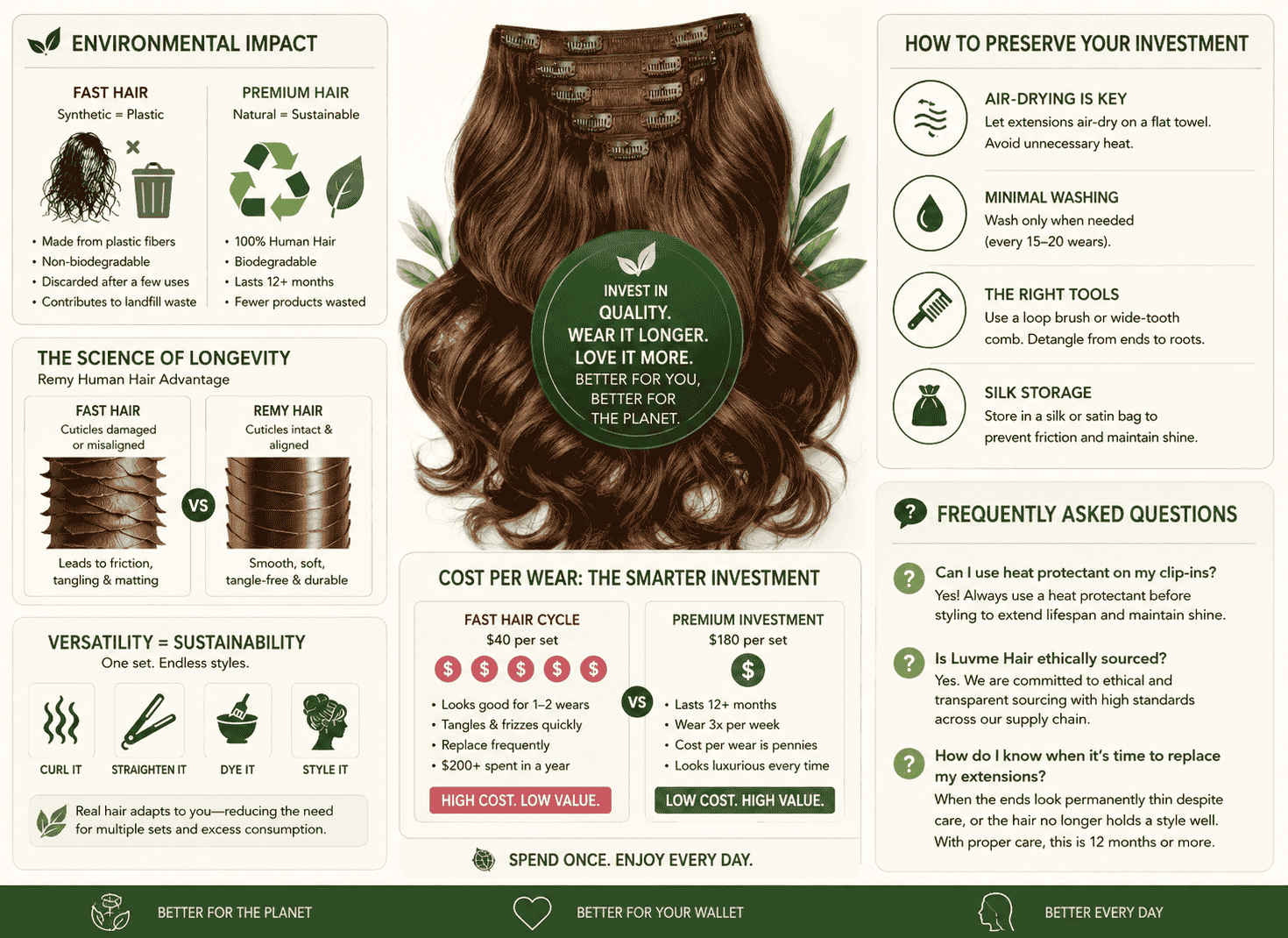
Synthetic hair extensions are essentially made of plastic fibers, such as kanekalon or polyester. These materials are non-biodegradable and, due to their low heat tolerance and tendency to tangle, they are often discarded after only a few uses. This creates a significant amount of “beauty waste” that ends up in landfills.
By contrast, high-quality human hair extensions from Luvme Hair are a natural product. Because they are durable and can be styled, washed, and revived for a year or longer with proper care, they break the cycle of “buy-and-toss.” Choosing quality means fewer products are manufactured, shipped, and eventually thrown away, making it the most eco-friendly way to enjoy a voluminous look.
The Science of Longevity: Remy Human Hair
The secret to the longevity of premium clip-ins lies in the anatomy of the hair itself. High-end extensions are made of Remy Human Hair, which means the cuticles (the outer “scales” of the hair) are kept intact and aligned in the same direction.
In cheaper “Fast Hair,” the cuticles are often stripped or haphazardly aligned, leading to friction, matting, and “bird’s-nesting” within days. Remy hair remains smooth, soft, and tangle-free because the hair strands aren’t fighting against each other. This structural integrity allows the hair to withstand daily brushing and styling, ensuring that your investment looks as good on day 200 as it did on day one.
Cost Per Wear: The Financial Reality
When looking at the price tag, a premium set of extensions might seem like a splurge compared to a $40 synthetic set. However, a “Cost Per Wear” analysis tells a different story:
- The “Fast Hair” Cycle: You buy a $40 synthetic set for a party. By the second wear, it’s frizzy. By the third, it’s matted. You throw it away and buy another. Over a year, you’ve spent $200+ on hair that looked “okay” at best.
- The Premium Investment: You spend $180 on a high-quality set of Luvme Hair clip in hair extensions. You wear them three times a week for a year. The cost per wear drops to pennies, and your hair looks luxurious every single time.
Investing in quality isn’t about spending more; it’s about spending once and reaping the rewards of a superior product for months on end.
Versatility as a Form of Sustainability
A major benefit of high-quality human hair is its versatility. Because it is real hair, it can be treated like your own. You can curl it for a wedding, straighten it for the office, and even have a professional stylist dye it to match your changing hair color.
“Fast Hair” is rigid. If you buy a curly synthetic set, it must stay curly. If you try to heat-style it, you risk melting the fibers. This lack of versatility forces consumers to buy multiple sets for different occasions. With one high-quality set of clip-ins, you have a “wardrobe” of styles in a single box, reducing the need for excessive consumption.
How to Preserve Your Investment
To ensure your clip-in extensions reach their maximum lifespan, follow these sustainability-focused maintenance tips:
- Air-Drying is Key: Avoid unnecessary heat by letting your extensions air-dry on a flat towel after washing. This preserves the moisture in the hair shaft.
- Minimal Washing: Unlike your natural hair, extensions don’t receive oils from your scalp. You only need to wash them when there is significant product buildup (usually every 15–20 wears).
- The Right Tools: Use a loop brush or a wide-tooth comb to detangle, starting from the ends and working your way up to prevent shedding.
- Silk Storage: Store your extensions in a silk or satin bag. This prevents friction and keeps the hair hydrated while not in use.
Frequently Asked Questions
Can I use heat protectant on my clip-ins?
Yes! In fact, it is highly recommended. Just like your natural hair, using a heat protectant spray before curling or straightening your extensions will significantly extend their lifespan and maintain their shine.
Is Luvme Hair ethically sourced?
Yes. A key part of the sustainability movement is ensuring that the hair is collected ethically and transparently. Luvme Hair prides itself on maintaining high standards for hair sourcing, ensuring that the entire supply chain is respected.
How do I know when it’s finally time to replace my extensions?
With premium hair, you’ll know it’s time for a new set when the ends begin to look permanently thin despite deep conditioning, or if the hair no longer holds a style as well as it used to. However, with good care, this shouldn’t happen for 12 months or more.
Conclusion
Sustainability in beauty is about making choices that benefit both the individual and the world. By choosing high-quality clip in hair extensions, you are rejecting the “fast fashion” mentality of the hair industry. You are choosing a product that offers superior blending, better styling, and a significantly longer life. In the long run, investing in quality is the ultimate “beauty hack”—it saves you money, saves the planet from unnecessary plastic waste, and ensures that every day is a “great hair day.”