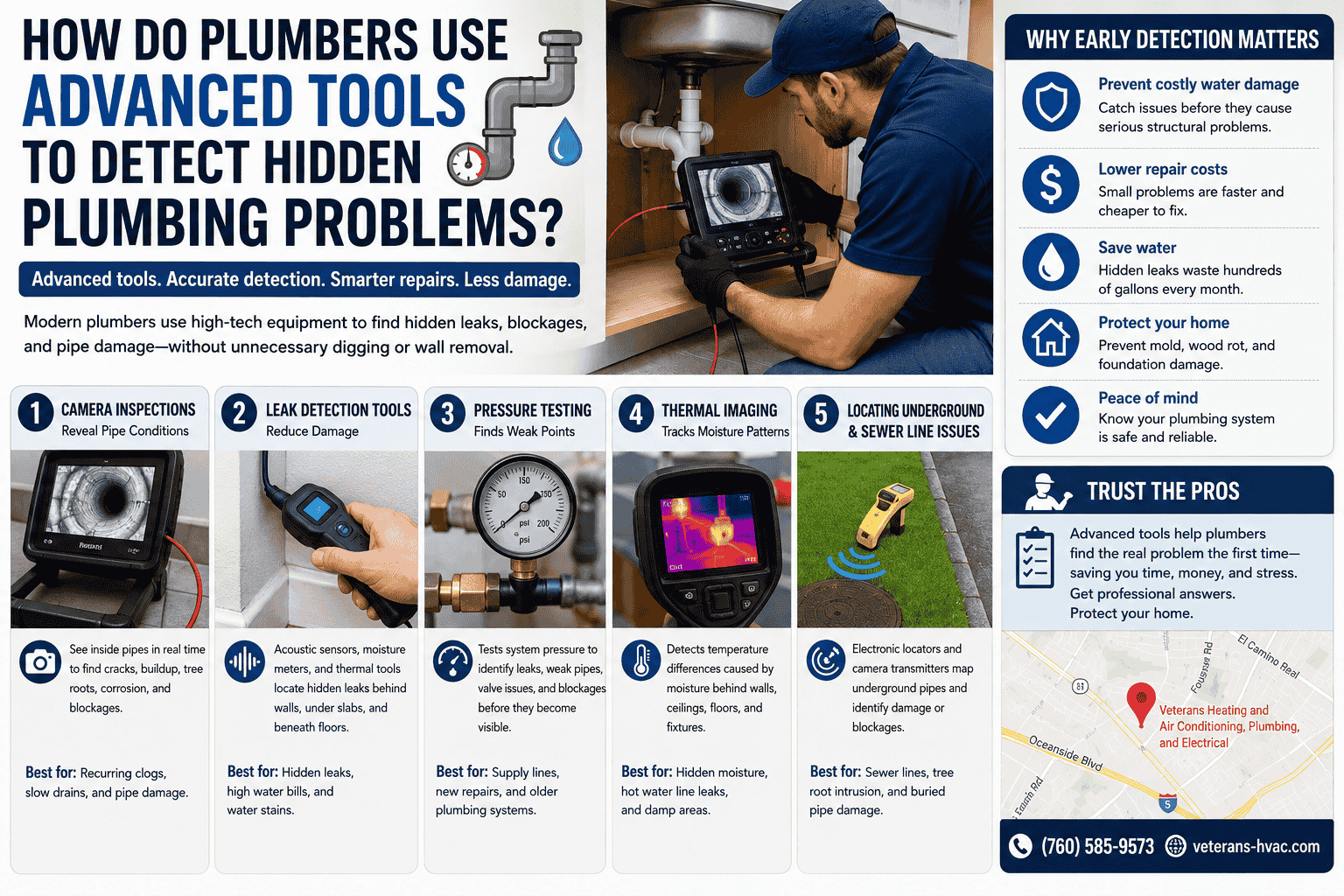
Hidden plumbing problems can cause serious damage before homeowners notice visible signs. A small leak behind a wall, a slow drain blockage, or a cracked underground pipe may stay unnoticed until moisture, odor, stains, or high water bills appear. Modern plumbers use advanced tools to locate these issues without unnecessary digging or wall removal. These tools help identify leaks, blockages, pressure changes, pipe damage, and drainage issues more quickly and accurately. By using cameras, sensors, listening devices, and pressure-testing equipment, plumbers can identify the source of the problem early and recommend repairs that protect the home.
Smarter Plumbing Detection
1. Camera Inspections Reveal Pipe Conditions
Video camera inspections allow plumbers to see inside pipes that would otherwise remain hidden beneath floors, behind walls, or underground. A small waterproof camera is guided through the plumbing line, sending live footage to a monitor. This helps plumbers identify cracks, buildup, tree root intrusion, collapsed sections, corrosion, grease, and objects lodged inside the pipe. Instead of guessing where a blockage or break may be, they can see the exact condition of the line and pinpoint the problem. This is especially helpful when repeated clogs keep returning after basic cleaning. Homeowners who schedule drain cleaning in Oceanside may benefit from a camera inspection, as it can reveal whether the issue is simple buildup or a deeper structural concern. By viewing the inside of the pipe, plumbers can choose a repair method that addresses the actual problem rather than relying on surface symptoms alone.
2. Leak Detection Tools Reduce Damage
Hidden leaks are difficult to find because water can travel far from the source before it becomes visible. Plumbers use electronic leak detection tools, acoustic listening devices, and moisture meters to locate leaks behind walls, under slabs, and beneath flooring. Acoustic tools detect the sound of escaping water, even when the leak is too small to hear without equipment. Moisture meters measure moisture within building materials, helping plumbers pinpoint the affected area without opening large sections of the home. Thermal imaging cameras can also reveal temperature changes caused by water movement or damp surfaces. These tools reduce the need for destructive searching and help repairs begin sooner. Finding a leak early can prevent mold growth, wood rot, drywall damage, flooring problems, and rising water bills. Accurate leak detection protects both the plumbing system and the surrounding structure.
3. Pressure Testing Finds Weak Points
Pressure testing is another method plumbers use to detect hidden plumbing problems. When water pressure drops suddenly or fluctuates without a clear reason, there may be a leak, a blockage, a valve issue, or a weak pipe in the system. Plumbers use gauges and testing equipment to measure pressure levels and compare them with normal operating ranges. If pressure fails to hold during testing, it may suggest water is escaping somewhere in the line. This method is useful for supply lines, drain systems, and newly repaired plumbing because it confirms whether the system can hold steady pressure. Pressure testing can also reveal problems before they become visible, especially in homes with older pipes. When combined with other tools, it gives plumbers a clearer picture of system health. This helps them decide whether a pipe needs sealing, replacement, cleaning, or further inspection.
4. Thermal Imaging Tracks Moisture Patterns
Thermal imaging helps plumbers detect hidden moisture by showing temperature differences across walls, ceilings, floors, and other surfaces. Water often changes the temperature of nearby materials, creating patterns that may not be visible. A thermal camera can highlight these areas, allowing plumbers to narrow down where moisture may be collecting. This tool is useful when a leak is hidden behind tile, drywall, cabinets, or flooring. It can also help detect hot water line leaks because warm water creates a stronger temperature contrast. While thermal imaging does not always show the leak itself, it directs plumbers to the area that needs closer inspection. This reduces unnecessary cutting and helps protect finished surfaces. When used with moisture meters or acoustic tools, thermal imaging becomes part of a careful detection process that identifies hidden problems with less disruption.
5. Locating Underground and Sewer Line Issues
Underground plumbing problems can be costly when the exact location is unknown. Plumbers use locating equipment with camera transmitters, electronic sensors, and line-tracing tools to map pipe paths and identify problem spots. These tools help determine where a sewer line runs, how deep it is, and where damage or blockage may exist. This is important for issues such as root intrusion, pipe shifting, bellied lines, or breaks caused by soil movement. Without locating equipment, repairs may require unnecessary digging across large areas. With accurate location data, plumbers can focus on the affected section and reduce property disruption. This approach is valuable for driveways, yards, landscaping, and slab areas where access is limited. Advanced locating tools allow plumbers to diagnose underground problems with more confidence and plan repairs more efficiently.
Plumbers use advanced tools to detect hidden plumbing problems with greater accuracy, less disruption, and faster results. Camera inspections reveal pipe interiors, leak detection tools locate hidden water movement, pressure testing exposes weak points, thermal imaging tracks moisture patterns, and locating equipment identifies underground issues. These methods help uncover problems before they lead to severe damage or expensive repairs. Instead of relying solely on visible signs, plumbers can inspect the system both inside and outside. Early detection protects walls, floors, foundations, and water quality while helping homeowners make informed repair decisions. Modern plumbing tools make hidden problems easier to find and resolve.