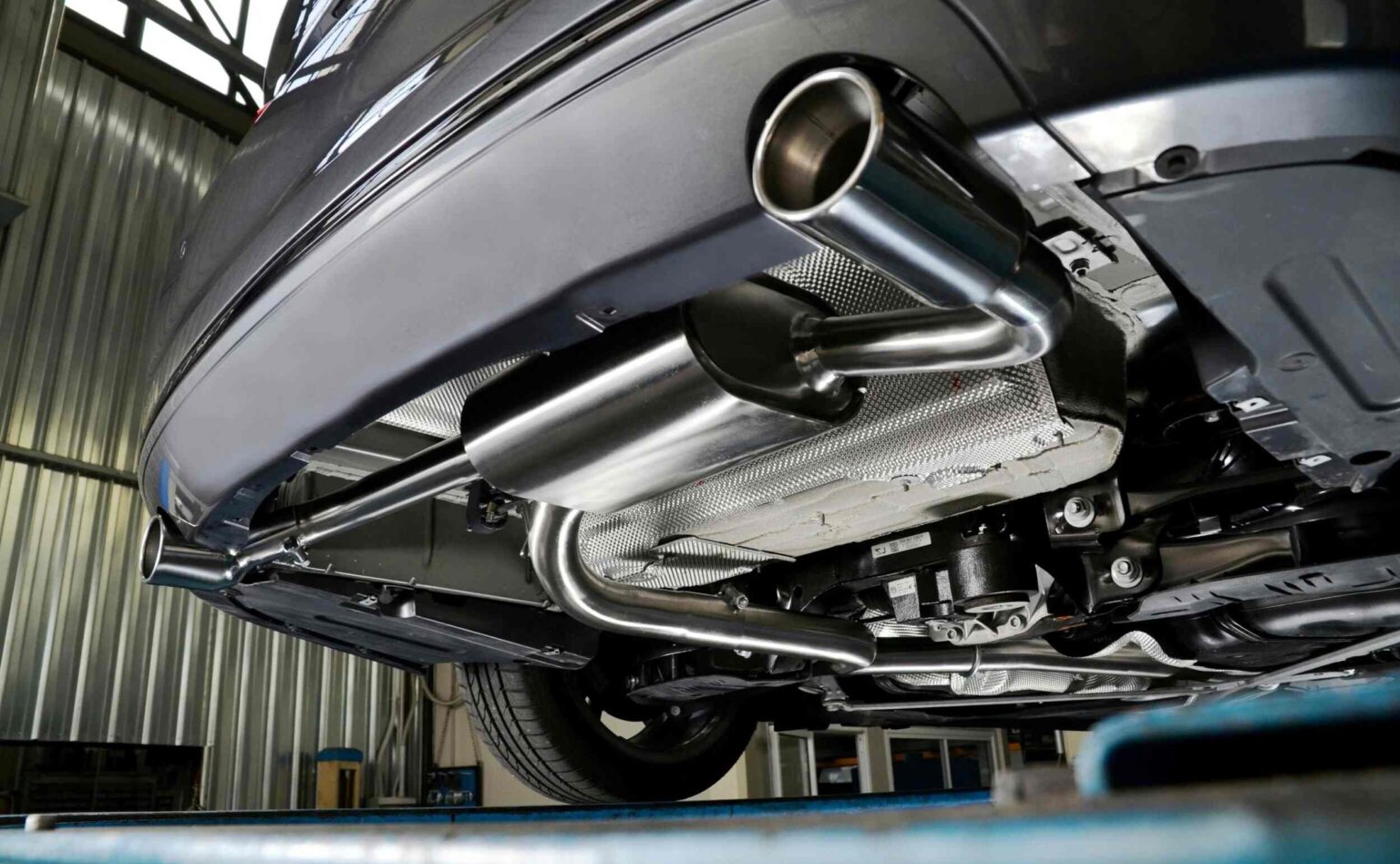
Why does your car sound like a growling beast every time you press the pedal in Dubai traffic?
That rattling, rumbling, or hissing from underneath isn’t just noise; it could be a hidden exhaust leak waiting to snowball into engine damage or worse. With Dubai’s heat, sandy roads, and daily grind, car exhaust noise in Dubai isn’t rare; it’s a warning. Is it the flex pipe? The muffler? Or maybe a crack near the manifold? Don’t ignore it. A noisy exhaust might mean fumes are creeping into your cabin… and that’s not just annoying; it’s risky.
You don’t need stress or surprises. You need a place that understands how exhaust leak Dubai issues behave in real UAE conditions. Book your inspection with Car Garage Dubai; we’ll find the leak and fix it properly.
What Makes a Car Exhaust Noisy in Dubai?
Let’s not sugarcoat it; driving in Dubai isn’t exactly easy on your car’s underbelly. Between scorching roads and floating sandstorms, your exhaust system ends up doing a lot more than just redirecting fumes. If your ride sounds louder than it should, here’s a closer look at the real reasons behind that annoying car exhaust noise in Dubai.
A noisy exhaust isn’t just a sound problem. It’s a warning, one that gets louder in Dubai’s heat and sand. Small leaks cause huge Car Repair in Dubai when they’re ignored, and every crack affects power, fuel use, and even the air inside your cabin. If your car feels louder, smells different, or vibrates more than usual, that’s your sign to act before the damage spreads.
Heat Impact
The heat in Dubai isn’t just uncomfortable; it’s mechanical sabotage. Every time you start the engine, your exhaust pipes expand. Every time it cools down, they shrink. Over weeks, months, and traffic-filled years, this constant thermal expansion weakens the connections.
- Gaps start forming at the joints and flanges, especially where the metal meets the manifold or flex pipe.
- With each heat cycle, those gaps turn into tiny leaks. And you hear it, that ticking, hissing, or growling sound when you hit the gas.
- Dubai’s brutal climate speeds up this wear, especially if you’re parking outdoors most days.
Think of it like bending a paperclip over and over. It doesn’t snap right away, but it will, and your exhaust is no different.
And once the gaps form? That’s when the noise gets real, and repair becomes urgent.
Sand Build-Up in Dubai Car Exhaust Systems
Now let’s talk about the enemy you don’t see, sand.[Text Wrapping Break] It’s not just in the air. It’s in your joints, gaskets, and pipe connections, slowly grinding away at your exhaust like invisible sandpaper.
- Fine dust blows under the car and creeps into exhaust couplings, especially during sandstorms or after desert drives.
- That sand builds up inside seams, scraping metal, loosening bolts, and slowly eating through your exhaust pipe walls.
- Left unchecked, the erosion turns into full-blown holes, rattles, and leaks.
Fact: A single sandstorm can force your car to breathe in thousands of abrasive particles, and your undercarriage doesn’t wear a face mask.
If your exhaust sounds like its gargling gravel, Dubai’s dust might already be inside it.
Loose Exhaust Mounts & Hangers Causing the Noise
Even if your pipes are fine, what’s holding them up might not be.[Text Wrapping Break] Your exhaust system relies on rubber mounts, metal hangers, and bolted brackets to stay in place. And over time, they give up.
- Heat dries out rubber hangers, making them crack or snap, especially after years under Dubai’s sun.
- Loose brackets allow the system to sway and bang into other components, causing sharp knocking or vibration sounds.
- Add in a few years of bouncing over speed bumps in Sharjah or tight U-turns on Sheikh Zayed, and the metal itself starts to fatigue.
If the noise gets louder when turning or going over bumps, chances are your mounts are toast.
And when mounts fail, even a perfect exhaust starts sounding like a disaster waiting to happen.
In Dubai, your car’s exhaust isn’t just up against heat and mileage; it’s battling an entire environment. From sand invasions to metal fatigue, that strange noise under your car is trying to tell you something. Don’t wait for it to get louder. Listen early, and fix smart.
Hidden Exhaust Leak Spots Most Drivers Miss
Most exhaust leaks in Dubai don’t sit in plain sight. They hide in tight corners, behind shields, and inside joints you’d never check unless the noise becomes impossible to ignore. And with Dubai heat, sand, and stop-and-go traffic, these weak spots fail much faster than drivers expect.
Flex Pipe Leak | the First Source of Car Exhaust Noise
This section of your exhaust takes constant movement, so it breaks before anything else.
- The engine twists under load, pulling the flex pipe until tiny cracks appear.
- Heat in Dubai dries the inner layers and weakens the metal braid.
- Sand creeps inside the mesh and slowly grinds the metal.
- Once the damage starts, the structure loses strength rapidly.
A failing flex pipe doesn’t stay quiet for long; it gets louder with every drive.
What Drivers Actually Feel
Your car gives you hints… but only if you’re listening.
- A sharp, raspy exhaust tone when accelerating.
- A strong exhaust smell rising near the bonnet.
- Rough idle, like the engine is struggling to breathe.
- Cabin fumes creeping in during slow traffic.
If the smell and sound hit you at the same time, the flex pipe is almost always the culprit.
Why Delaying Repairs Gets Risky
A small tear becomes a big bill faster in UAE heat.
- Cracks expand until the pipe splits completely.
- Hot gases melt nearby wires, shields, or sensors.
- Fumes enter the cabin during daily commutes.
- Fuel efficiency drops due to pressure imbalance.
Ignoring a flex pipe leak is like driving with a warning light you can’t switch off.
Manifold Leakage behind Noisy Exhaust
This joint sits at the hottest point of the engine, so it fails early.
- Seals weaken after thousands of heat cycles.
- Bolts loosen as the metal expands and contracts.
- Gaps form where the manifold meets the cylinder head.
- Excess heat accelerates the leak every day.
Once the manifold starts leaking, the ticking sound becomes constant.
The Sounds & Side Effects
A manifold leak doesn’t hum; it snaps and ticks.
- A fast ticking noise on cold starts.
- Heat escaping into the engine bay.
- Reduced exhaust flow reaching the catalytic converter.
- A faint burning smell during long drives.
[Text Wrapping Break] If the ticking speeds up with RPM, the manifold is almost always the reason.
Muffler Holes That Create Exhaust Rattle Dubai
Weak or Damaged Muffler Creating the Rattle
The muffler sits low, facing sand, stones, and heat; it gets punished daily.
- Sand sticks to damp spots and accelerates corrosion.
- Road debris dents the muffler shell.
- Constant vibration cracks internal baffles.
- Moisture pockets wear the metal from inside.
When the muffler weakens, the rattle doesn’t stay quiet; it grows louder with time.
How the Noise Changes
A damaged muffler changes your entire exhaust tone.
- A hollow roar from the rear section.
- Metallic rattling over bumps or uneven roads.
- Internal baffles clanking inside the chamber.
- Rust patches signaling thin metal.
If your car sounds louder from behind than upfront, the muffler is telling the truth.
Heat-Damaged Catalytic Converter Breaking Down Internally
The converter’s internal structure is fragile; Dubai heat tears it down slowly.
- Honeycomb pieces break loose and bounce inside the shell.
- Weld points weaken under extreme temperature.
- Sand buildup damages the outer layer.
- Internal cracks restrict exhaust flow.
A rattling converter is more than noise; it’s the start of reduced engine efficiency.
Failing Catalytic Converter Making Hollow Rattle Sounds
This failure has a very distinct sound, metallic and hollow.
- A rolling or rattling noise at idle.
- A deeper roar during acceleration.
- Strong exhaust smell near the cabin.
- Extra heat under the car.
If it sounds like a stone bouncing in a metal box, the converter is breaking down.
In Dubai’s climate, hidden exhaust leaks don’t stay hidden for long; they grow, spread, and eventually turn simple noise into costly damage. Catching these weak points early protects your engine, your cabin air, and your wallet.
Step-by-Step Diagnosis for Exhaust Leak
A noisy exhaust always has a source. It’s not random. In Dubai, where heat and sand punish the underbody, a proper exhaust leak diagnosis needs a clear process, not guesswork. Here’s how a professional garage in Dubai usually tracks down car exhaust noise in Dubai in a structured way.
- Initial sound check on start-up[Text Wrapping Break]the technician listens from a cold start. A sharp tick, hiss, or puff points to leaks near the manifold or flex pipe. A deeper tone or roar suggests issues further down the system. Narrow down which section of the exhaust is likely leaking.
- Targeted visual inspection under the car[Text Wrapping Break]with the car lifted, they scan the pipes, joints, flex pipe, muffler, and catalytic converter. They look for black soot marks, fresh rust, broken brackets, or hanging sections. Spot obvious cracks, gaps, or damaged mounts causing exhaust leak Dubai problems.
- Smoke test for hidden exhaust leaks [Text Wrapping Break]a smoke machine feeds vapor into the exhaust system. Wherever smoke seeps out, there’s a leak, even if it’s tiny or under a shield. Find small or covered leaks that normal inspection can’t see, especially in flex joints and flanges.
- Pressure & back-pressure checks[Text Wrapping Break]the system is checked for flow restriction and pressure loss. Unstable pressure often means a leak before the muffler or damage inside the catalytic converter. Confirm whether the leak is affecting engine breathing and fuel control.
- Heat-cycle inspection after a short drive[Text Wrapping Break]after the engine is warmed, the same areas are rechecked. Some leaks only open up once the metal expands under Dubai heat. Catch heat-dependent leaks that stay quiet when the exhaust is cold.
A proper exhaust inspection Dubai isn’t just about finding noise. It’s about locating every weak point before it turns into a bigger noisy exhaust repair Dubai job and starts hurting engine performance, fuel use, and cabin air quality.
Effective Fixes for Exhaust Leaks That Restore Quiet & Performance
When a car exhaust leak shows up in Dubai, the focus is simple: stop the noise, close the gaps, and restore proper exhaust flow. No gimmicks. No unnecessary steps. Just the repairs that actually fix exhaust leak Dubai issues and prevent further engine strain.
- Tightening loose clamps & joints[Text Wrapping Break] Sometimes the noise comes from a loose connection rather than a broken pipe. A technician checks every clamp and joint, especially around the muffler, mid-pipe, and resonator, and tightens anything that has shifted from heat or vibration. A firm seal restores pressure and reduces the harsh exhaust tone.
- Replacing a damaged flex pipe[Text Wrapping Break] the flex pipe handles engine movement, so it’s usually the first part to fail. If it’s cracked or split, replacing it stops the raspy exhaust noise and prevents fumes from escaping near the engine bay. Flex pipe replacement immediately stabilizes the sound and prevents pressure loss.
- Sealing minor exhaust gaps[Text Wrapping Break] Small gaps in flanges or pipe joints can create loud car exhaust noise in Dubai even before the damage becomes visible. High-temperature sealing compounds or fresh gaskets help close these spaces. It prevents heat leaks, fumes, and early wear on nearby components.
- Repairing or replacing a rusty muffler[Text Wrapping Break] Rust, sand, and vibration often create holes in the muffler. If the metal is still strong, a technician repairs the weak section. If it’s too thin, a replacement is safer. A solid muffler restores smoother sound flow and removes the hollow rattle.
- Fixing catalytic converter weld points[Text Wrapping Break] when welds on the catalytic converter weaken from heat or road impact, small leaks from around the shell. Reinforcing or re-welding the affected area stops the sharp exhaust noise and stabilizes pressure. A secure converter protects engine efficiency and keeps emissions controlled.
- Replacing worn exhaust mounts[Text Wrapping Break] a noisy exhaust often comes from broken rubber mounts or loose brackets rather than a cracked pipe. Replacing these stops the shaking and prevents the system from hitting the underbody. Stable mounts reduce vibration and protect the entire exhaust line.
Exhaust leaks in Dubai don’t fix themselves. The heat, traffic, and sand make even minor gaps grow quickly. The right repair, done early, keeps the engine running smoothly, reduces cabin fumes, and prevents bigger costs later.
Prevent Future Car Exhaust Noise | Simple Maintenance Steps
In Dubai, exhaust leaks don’t appear overnight; they build up from heat, sand, and vibration. A few small habits can save your pipes, your fuel, and your wallet.
- Get quick underbody checks[Text Wrapping Break] Heat and sand weaken pipes faster here. A quick look catches cracks, soot marks, or loose clamps early. Early leaks stay small when found on time.
- Check exhaust after sandy routes[Text Wrapping Break] Desert dust slips into joints and eats metal slowly. Removing trapped grit stops long-term damage.
- Watch engine vibration[Text Wrapping Break] when mounts get weak, the whole exhaust shifts and hits the floor. Less movement means fewer cracks and fewer leaks.
- Replace small seals before they fail[Text Wrapping Break] Gaskets, clamps, and flanges take daily heat cycles. They lose strength fast in Dubai. A fresh seal keeps the system airtight.
- Clean early rust spots[Text Wrapping Break] Dust plus moisture equals corrosion, especially around mufflers. Stopping rust now prevents holes later.
- Listen for tiny sound changes[Text Wrapping Break] a faint hiss or deeper tone is often the first sign of an exhaust leak forming in Dubai. The first sound is always the cheapest repair.
A little attention goes a long way. In Dubai’s climate, protecting your exhaust system means smoother drives, cleaner cabin air, and fewer expensive surprises.