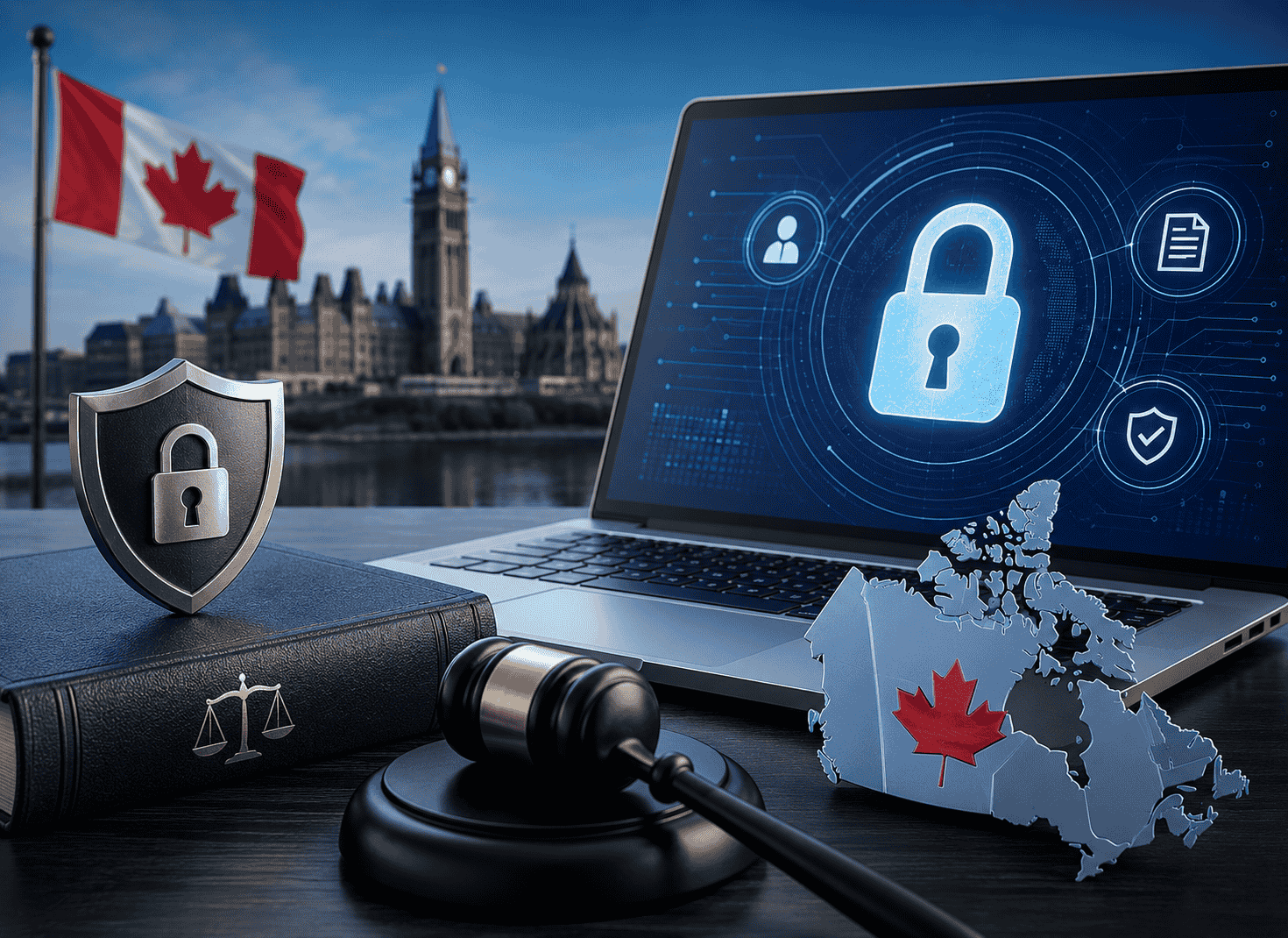
Privacy law continues to evolve rapidly across Canada. In 2026, businesses face increasing scrutiny regarding how they collect, use, disclose, store, and safeguard personal information. Regulatory expectations are rising, enforcement activity continues to increase, and emerging technologies such as artificial intelligence are creating new privacy compliance challenges.
Whether you operate an e-commerce business, software company, healthcare organization, payment service provider, retailer, or professional practice, staying informed about privacy law developments is becoming increasingly important.
Privacy Compliance Is Becoming More Complex
Canadian privacy compliance is no longer limited to maintaining a basic privacy policy and obtaining customer consent.
Organizations are increasingly expected to implement comprehensive privacy governance programs that address:
- data collection practices
- cybersecurity safeguards
- breach response procedures
- vendor management
- cross-border data transfers
- employee privacy
- artificial intelligence systems
- privacy impact assessments
Businesses that fail to keep pace with evolving expectations may face regulatory investigations, reputational damage, and potential liability.
Quebec’s Law 25 Continues to Influence Canadian Privacy Compliance
One of the most significant developments affecting Canadian businesses remains Quebec’s Law 25.
Law 25 substantially modernized Quebec’s private-sector privacy framework and introduced requirements that are significantly more robust than many organizations previously encountered. Businesses handling information relating to Quebec residents must comply with obligations regarding privacy governance, breach management, privacy impact assessments, and cross-border data transfers.
Importantly, Law 25 can apply to organizations located outside Quebec if they collect or process personal information relating to Quebec residents.
Privacy Impact Assessments Are Becoming More Important
Privacy Impact Assessments (PIAs) have become a major focus area.
Quebec’s legislation requires organizations to conduct privacy impact assessments before implementing certain information systems and before transferring personal information outside Quebec.
As privacy expectations continue to evolve, many organizations are voluntarily adopting PIAs as a best practice even when not explicitly required by law.
Privacy impact assessments can help businesses identify risks before launching:
- new software platforms
- mobile applications
- customer databases
- AI systems
- cloud-based services
- cross-border processing arrangements
Increased Focus on Artificial Intelligence and Privacy
Artificial intelligence has emerged as one of the most important privacy topics in Canada.
The Office of the Privacy Commissioner of Canada has emphasized the importance of protecting privacy rights in the age of AI and continues to focus significant attention on how organizations collect and use personal information in connection with automated decision-making systems.
At the federal level, discussions regarding privacy modernization and AI regulation continue to influence compliance expectations. Proposed reforms have included the Consumer Privacy Protection Act (CPPA) and the Artificial Intelligence and Data Act (AIDA), both of which seek to modernize Canada’s approach to privacy and emerging technologies.
Organizations deploying AI tools should carefully evaluate:
- training data practices
- consent mechanisms
- transparency obligations
- automated decision-making risks
- bias mitigation measures
- governance frameworks
Data Breach Preparedness Is More Critical Than Ever
Cybersecurity incidents continue to affect organizations of all sizes.
Regulators increasingly expect businesses to maintain documented incident response procedures and breach management protocols.
Privacy laws may require organizations to:
- investigate breaches
- assess risks
- notify affected individuals
- notify regulators
- maintain breach records
Quebec’s legislation specifically requires organizations to maintain registers of confidentiality incidents and notify regulators when certain risk thresholds are met.
Organizations that wait until a breach occurs before developing response procedures often face significantly greater operational and legal challenges.
Cross-Border Data Transfers Remain a Key Risk Area
Many Canadian businesses rely on international vendors and cloud service providers.
As privacy regulation becomes more sophisticated, organizations are increasingly expected to understand:
- where personal information is stored
- who can access it
- what safeguards are in place
- what contractual protections exist
Cross-border transfers have become a significant area of regulatory focus, particularly under Quebec’s privacy framework.
Businesses should review their vendor relationships and data flows to ensure compliance with applicable privacy obligations.
Greater Accountability for Organizations
Privacy laws increasingly emphasize accountability.
Organizations are expected to implement governance structures that include:
- designated privacy officers
- written privacy policies
- employee training
- risk management procedures
- breach response frameworks
- vendor oversight
Many privacy regulators now expect businesses to demonstrate active privacy management rather than merely reacting to issues as they arise.
Federal Privacy Reform Remains on the Horizon
Although comprehensive federal privacy reform has not yet replaced PIPEDA, discussions regarding modernization continue.
The proposed Consumer Privacy Protection Act (CPPA) has been widely viewed as the likely successor to PIPEDA and would introduce stronger enforcement mechanisms, expanded consumer rights, and significantly increased compliance obligations.
Businesses should monitor developments closely and prepare for a future federal privacy regime that may be considerably more demanding than the current framework.
Why Businesses Should Pay Attention Now
Privacy compliance is no longer solely a concern for large technology companies.
Organizations of all sizes increasingly collect:
- customer information
- employee information
- payment information
- behavioural analytics
- marketing data
- location data
As regulatory expectations continue to evolve, privacy compliance is becoming an essential component of corporate governance and risk management.
Businesses that proactively address privacy obligations are generally better positioned to:
- avoid regulatory investigations
- reduce breach risks
- strengthen customer trust
- support commercial growth
- prepare for future reforms
Privacy Lawyers Can Help Navigate a Changing Landscape
As privacy laws continue to evolve, many organizations seek legal guidance to better understand their obligations and manage risk.
If your organization is collecting personal information, implementing new technologies, responding to a data breach, or preparing for future privacy reforms, working with a lawyer for privacy matters in Canada can help identify compliance risks and develop practical privacy strategies.
Conclusion
Privacy law developments in 2026 reflect a broader trend toward stronger accountability, greater transparency, enhanced individual rights, and increased regulatory oversight.
From Quebec’s Law 25 obligations to emerging AI governance concerns and ongoing federal reform discussions, Canadian businesses face a rapidly changing privacy landscape.
Organizations that proactively invest in privacy compliance today will often be better positioned to navigate future regulatory developments and maintain the trust of customers, employees, and business partners.