TLDR: A professional exterior painting project follows a defined sequence: assessment and quote, surface preparation, priming, painting, and final walkthrough. The preparation phase takes as long or longer than the painting itself. Most professional exterior projects on a standard home take 3 to 7 days from start to finish. The quote should be itemized. The contract should specify materials, coat count, and what happens if weather delays the schedule.
Hiring an exterior painting contractor for the first time produces a lot of questions about what is actually going to happen at your house for the next week. What do they do first? When is the painting done? What should you look for when they are finished? A clear understanding of the process makes the project less stressful.
If you know what happens before the first coat of paint is applied helps homeowners avoid misunderstandings later in the project. Orus Painting Solutions provides Exterior Painting Contractors Broomfield CO, services that include an initial walkthrough, surface evaluation, project scheduling, and a clear explanation of each stage so homeowners understand exactly what to expect from start to finish.
What Happens During the Quote and Assessment?
A professional contractor visits the property to assess the surface conditions before providing a price. They look at the current paint condition, the type of siding (wood, fiber cement, vinyl, stucco), the presence of mildew or rot, the condition of caulk at joints and windows, and the accessibility of the surfaces.
This assessment determines the scope of preparation work, which drives the labor component of the quote. A house with significant peeling, mildew, and failed caulk requires more preparation time than one in good condition with a recent prior paint job.
The quote should separate preparation labor, painting labor, and materials. A single number with no line-item breakdown does not tell you what you are paying for and prevents meaningful comparison between competing quotes.
Ask the contractor to specify the paint brand and product line. A quote built around Sherwin-Williams Duration Exterior is a different specification than one built around an unnamed “premium latex” product.
What Does Surface Preparation Look Like?
The crew arrives on the first day with pressure washing equipment. The entire exterior is washed to remove dirt, chalk, and mildew. This process uses a diluted bleach-water solution on areas with visible mildew to kill the biological growth before painting.
After washing and drying (typically overnight), the crew scrapes and sands all areas where existing paint is peeling, lifting, or cracking. This is the most labor-intensive phase of the project and the most important determinant of how long the new paint will last.
Caulk at every joint is inspected. Joints where the existing caulk has cracked, shrunk away from the surface, or become brittle are re-caulked with a paintable exterior caulk. Bare wood areas exposed by scraping are primed before painting begins.
In a quality preparation phase, the house looks worse before it looks better. Scraped areas, filled spots, and primer patches are all visible before the finish coat covers them. That intermediate stage is evidence that the preparation is being done correctly, not a sign that something is wrong.
What Does the Painting Phase Look Like?
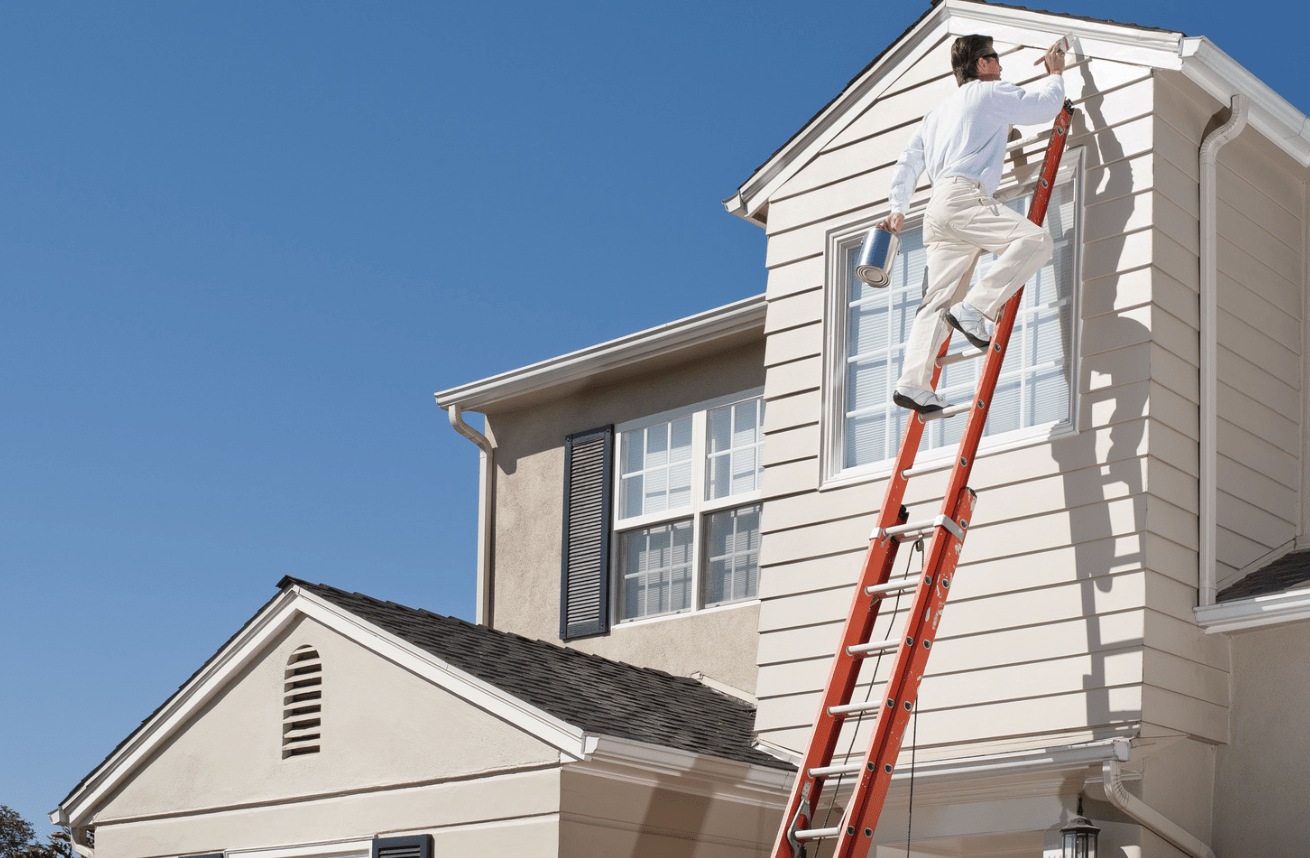
After preparation is complete and the spot primer has dried, the finish coats are applied. Professional exterior painters apply paint by spray, brush, back-roll, or brush-and-roll, depending on the surface type and the contractor’s standard practice.
Spray application produces the most uniform coverage on smooth surfaces. Brush-and-roll produces better penetration on rough surfaces like T1-11 siding and rough-sawn wood. Most professional contractors use spray application followed by rolling to ensure the paint is worked into the surface rather than sitting on top of it.
Two coats are the standard for a full repaint. The first coat is applied and allowed to dry (typically 4 to 6 hours between coats in Colorado’s dry climate). The second coat is applied in the opposite direction to produce even coverage.
A single coat on a properly prepared surface technically covers the substrate but does not provide the film thickness that delivers the documented service life of the product. Ask the contractor to confirm that two coats are included in the scope.
What Should the Final Walkthrough Cover?
Before the crew leaves for the last time, walk the perimeter of the house with the project supervisor. Look for thin spots where the color appears lighter than surrounding areas, missed spots at siding overlaps, paint runs or drips on trim, and any areas where caulk was not applied that should have been addressed.
Also, check that windows, fixtures, and landscaping were adequately protected during spraying. A well-run project has no paint overspray on windows, no damaged plants from drips, and no paint on concrete that was not intended to be painted.
Address any items from the walkthrough before the crew leaves or before final payment is made. A contractor who resists a final walkthrough or pushes back on documented incomplete items is not operating with a warranty commitment behind their work.
What Warranty Should You Expect?
A professional exterior painting contractor provides a labor warranty of one to three years. This covers adhesion failures, peeling, and visible application defects that appear within the warranty period.
Paint manufacturers provide separate material warranties of 15 to 25 years on premium products, covering manufacturing defects in the paint itself. The manufacturer’s warranty does not cover improper application.
A contractor who does not offer any labor warranty has not committed to standing behind their preparation quality. The warranty period is evidence of that commitment.
Key Takeaways
- The preparation phase, including pressure washing, scraping, caulking, and priming, takes as long or longer than the painting itself and is the primary determinant of how long the finished job lasts
- An itemized quote that separates preparation labor, painting labor, and specified materials by brand and product line is the only quote that allows meaningful comparison between competing contractors
- Two finish coats are the standard for a complete exterior repaint; a single coat does not build the film thickness required for the paint’s documented service life
- A final walkthrough conducted with the project supervisor before final payment identifies thin spots, missed areas, overspray on fixtures and windows, and any open caulk work
- Labor warranties of one to three years from the contractor, separate from the manufacturer’s material warranty, are a commitment that indicates the contractor is accountable for their preparation quality
- Colorado’s dry climate allows 4 to 6 hours between coats on most exterior projects, meaning a full two-coat application is achievable in a single day for smaller wall sections
Knowing what the process looks like takes the mystery out of having a crew at your house for a week. The phases are logical, the milestones are visible, and the final walkthrough is the moment to raise anything that does not meet the standard you were quoted.