Nobody gets excited about rebuilding a website from scratch.
It’s expensive. It takes time. There are endless rounds of feedback, content changes, technical fixes, and those “one tiny adjustment” requests that somehow turn into three more weeks of work.
Yet businesses often find themselves doing exactly that every few years. But here’s the thing: your website shouldn’t have to start from square one every time the digital world changes.
A well-planned website should be able to grow, adapt, and evolve without needing a complete makeover every few years. That’s what future-proof design is all about.
Good website design in Melbourne isn’t simply about creating something that looks modern on launch day. It’s about building a flexible digital foundation that can handle new technology, changing customer expectations, expanding services, and shifting business goals without constantly tearing everything apart.
So, how do you build a website that stays useful for the long haul? Let’s get into it.
Stop Chasing Every New Design Trend
Every few months, there’s another “must-have” web design trend.
One day it’s huge typography. Then it’s 3D animations, then glass effects, and then AI-generated visuals. Then something else comes along before you’ve even had time to figure out what the previous trend was.
Trying to keep up with everything is a bit like chasing a moving target. You’ll wear yourself out.
Some trends are genuinely useful. Others look impressive for five minutes and then quickly become yesterday’s news.
A future-proof website doesn’t ignore trends completely. It simply chooses them carefully.
Ask yourself: Does this feature improve the visitor experience?
If yes, great.
If it’s there purely because everyone else is doing it, think twice.
Timeless design usually wins the long game.
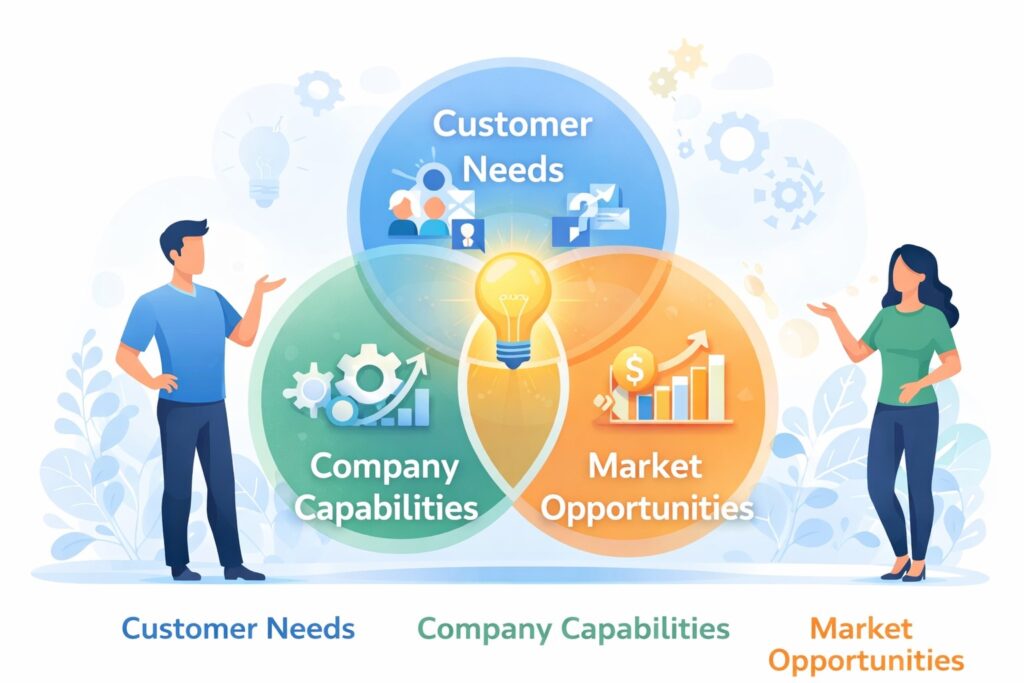
Build Around Your Customers, Not Fads
Your customers aren’t visiting your website to admire the latest design trend. They’re looking for answers. They want to know what you offer, whether you can solve their problem, how much it might cost, and what they should do next.
That’s it.
A future-proof website keeps those needs at the centre of the experience.
- Clear navigation.
- Readable content.
- Simple forms.
- Obvious calls to action.
- Fast-loading pages.
- Mobile-friendly layouts.
These things might not sound particularly glamorous, but they have staying power.
That’s why professional website design in Melbourne focuses on usability and customer behaviour rather than simply following whatever happens to be fashionable.
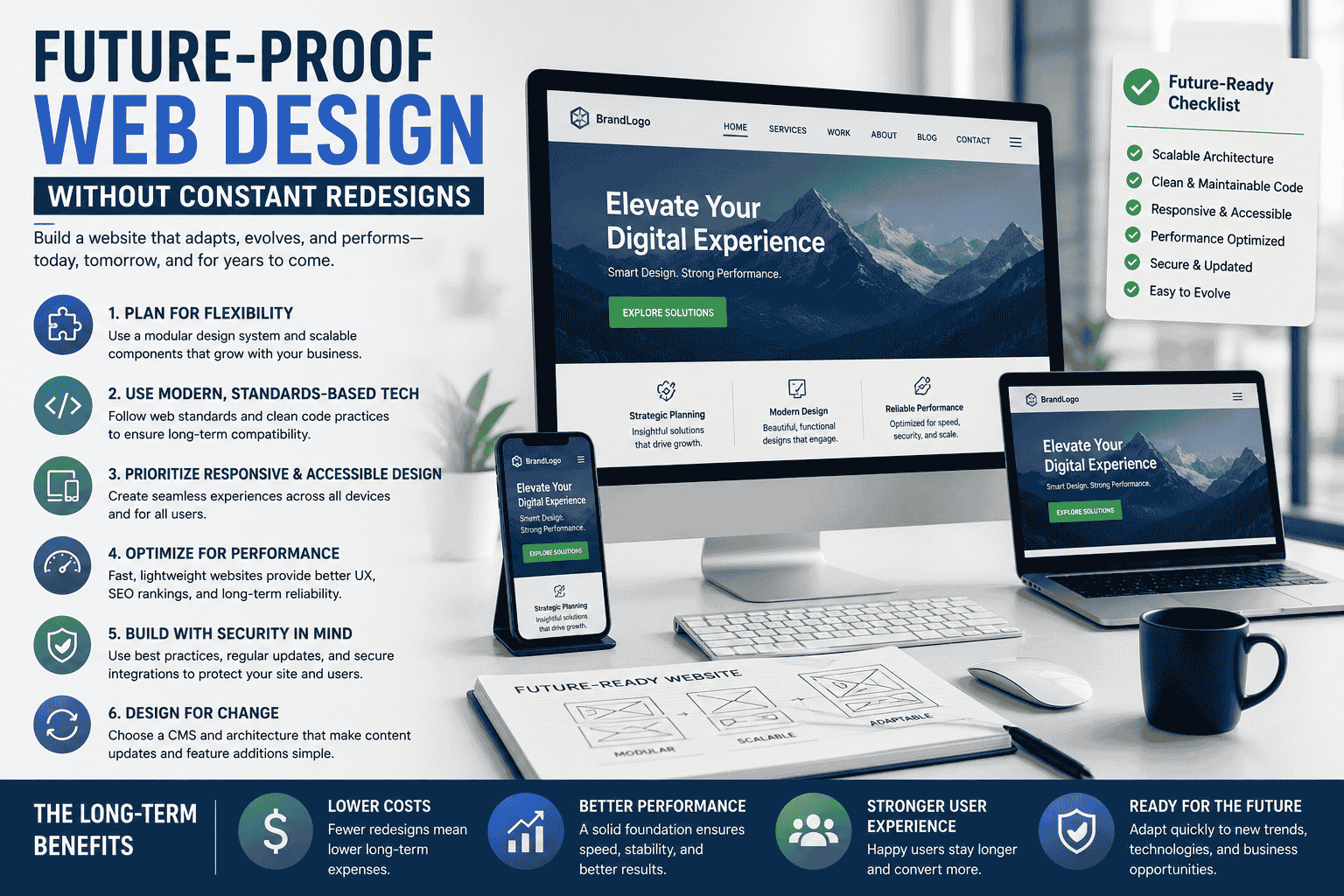
Choose a Flexible Website Structure
Here’s where the technical side starts to matter.
Imagine building a house where every room is permanently fixed in place. Want to add another bedroom? Tough luck. Want to knock down a wall? Good luck with that.
Websites can end up the same way. A rigid structure makes even small changes unnecessarily difficult. Instead, build flexible page templates and reusable components. This makes it easier to add new services, locations, blog posts, landing pages, or features later.
For example, if you launch a new service next year, you shouldn’t need a developer to reinvent the wheel just to create another service page.
A flexible structure gives you room to grow.
And that’s exactly what you want.
Don’t Build Only for Today’s Business
Businesses design their website around what they offer right now. Fair enough, but what happens when things change?
- Maybe you add five new services.
- Maybe you expand into another city.
- Maybe you start selling online.
- Maybe you decide to target a completely new customer group.
A future-proof website leaves some breathing room for these possibilities.
That doesn’t mean you need to predict the future like a fortune teller. You simply need to avoid making decisions that unnecessarily box you in.
Think ahead without overcomplicating things.
Keep Content Easy to Update
Your website shouldn’t require a computer science degree to update a paragraph.
If every little content change means calling a developer, waiting for an update, and paying another bill, your website will quickly become a burden.
A good content management system makes routine updates much easier.
Need to add a blog post? No problem.
Update a service description? Easy.
Change a team member’s details? Done.
This matters because fresh, accurate content helps keep your website useful and trustworthy.
It also means your website can evolve naturally instead of becoming frozen in time.
Mobile-Friendly Design Is Here to Stay
Some trends disappear, but mobile browsing isn’t one of them. People use smartphones for practically everything these days. They search, compare, book, shop, call, read reviews, etc.
If your website doesn’t work properly on a small screen, you’re already putting obstacles in someone’s way.
- Buttons need to be easy to tap.
- Text needs to be readable.
- Menus need to make sense.
- Pages should load quickly.
- Forms shouldn’t feel like an obstacle course.
Good website design in Melbourne treats mobile usability as a basic requirement rather than a fancy extra.
And that’s exactly how it should be.
Performance Will Always Matter
Here’s another thing that’s unlikely to go out of style: Speed.
Nobody likes waiting for a website to load. So, a future-proof website should be built with performance in mind from day one.
- Optimised images.
- Efficient code.
- Reliable hosting.
- Minimal unnecessary scripts.
- Good caching.
These behind-the-scenes choices can make a huge difference.
You might not notice them when everything is working perfectly.
That’s the point.
The best technical decisions often go unnoticed.
Build with SEO in Mind
SEO isn’t something you should slap onto a website after it’s finished. It should be considered during the planning stage.
- Logical navigation.
- Clean URLs.
- Proper heading structures.
- Fast loading speeds.
- Mobile responsiveness.
- Useful content.
- Internal linking.
These foundations make it easier for search engines to understand your website. They also make it easier for visitors to use.
That’s a win-win.
And while SEO practices will continue to evolve, having a well-organised website gives you a much stronger foundation for adapting to those changes.
Wrapping It Up
A website shouldn’t come with an expiry date.
Unfortunately, websites built around rigid structures, short-lived trends, poor performance, or outdated technology can quickly become difficult and expensive to maintain.
The better approach is to think long-term from the beginning.
Build a flexible structure. Keep content easy to update. Prioritise mobile usability, speed, SEO, accessibility, and security. Avoid unnecessary features, and keep improving the website based on real visitor behaviour.
That’s what makes website design in Melbourne genuinely future-ready. It isn’t about predicting every technological change that’s coming down the road. Nobody can do that. It’s about creating a strong enough foundation to adapt when change inevitably arrives.
And honestly, that’s the whole point.
You don’t need to build a website that never changes.
You need to build one that can change without falling to pieces.
For more specific insights or support, feel free to rely on the expertise of Make My Website.