In the quest for longevity and peak performance, we often look toward the latest technological gadgets or complex dietary regimens. We track our macros, monitor our sleep stages with rings, and invest in high-end ergonomic chairs. Yet, amidst this high-tech approach to health. One of the most fundamental pillars of human wellness remains rooted in the ancient practice of tactile therapy.
Today, the integration of professional bodywork into a weekly routine is no longer viewed as an occasional indulgence for a special occasion. It is being recognized as a critical component of a proactive health strategy.
The Physiology of Prevention
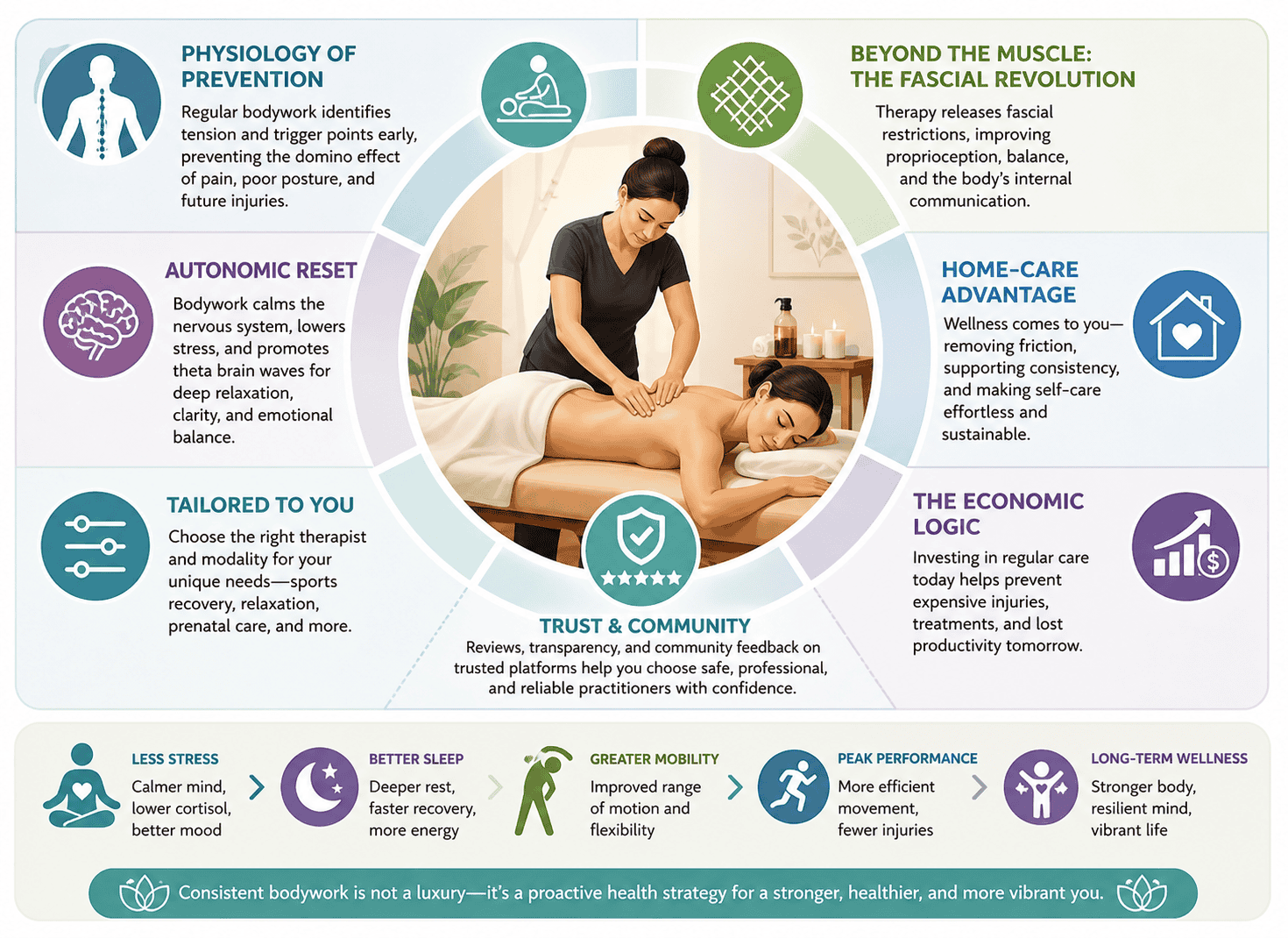
The human body is an incredible machine designed for movement, but it is also a master of compensation. When one muscle group is tight or inhibited, other muscles overwork to pick up the slack. Over weeks and months, these minor compensations crystallize into “postural “sets”—patterns of movement that lead to chronic pain, reduced range of motion, and eventual injury.
This is where the role of a consistent 마사지 (massage) program becomes invaluable. Unlike reactive medicine, which seeks to treat pain once it has already become debilitating. Regular bodywork acts as a diagnostic and preventative tool. A skilled therapist can identify “trigger points” or areas of fascial restriction before the client even realizes they are there. By releasing these tensions early, we prevent the “domino effect” of compensation. That leads to hip misalignment, shoulder impingement, or chronic tension headaches.
Beyond the Muscle: The Fascial Revolution
For a long time, the focus of manual therapy was almost exclusively on the muscles. However, modern sports science has shifted its gaze toward the fascia—the connective tissue. That wraps around every muscle, bone, nerve, and organ in the body. Think of fascia as the “architectural webbing” of the human frame. When fascia becomes dehydrated or restricted due to inactivity or repetitive stress, it acts like a suit of armor that is two sizes too small.
Professional therapy, particularly when delivered in the relaxed environment of one’s home. Allows for the slow, sustained pressure needed to melt these fascial restrictions. This isn’t just about feeling “loose”; it’s about improving the body’s internal communication system. Fascia is rich with sensory nerves. When it is healthy and fluid, your proprioception—your brain’s awareness of your body in space—improves. This leads to better balance, more efficient movement patterns. And a significant reduction in the risk of accidental falls or strains.
The Autonomic Reset: Navigating the Modern “Polycrisis”
We live in an age of “information overload”. Our brains are processing more data in a single day than our ancestors did in an entire year. This constant cognitive demand keeps the brain’s “amygdala”—the fear center—in a state of low-level chronic activation. When the amygdala is active, the prefrontal cortex (the area responsible for logical thinking and emotional regulation) is partially inhibited.
A professional home-care session serves as a hard reset for the autonomic nervous system. By utilizing specialized techniques like the Swedish flow, a therapist can induce a state of “hypnagogia”—that blissful borderland between wakefulness and sleep.
In this state, the brain produces theta waves, which are associated with deep healing, creativity, and emotional processing. It is often during these moments of physical stillness that our most difficult problems find solutions, simply because the “noise” of the nervous system has been silenced.
The Home-Care Advantage: Sustainability and Consistency
The biggest obstacle to any health habit is friction. If a task is difficult to start or requires too much logistical planning, we eventually abandon it. This is why the mobile wellness model, championed by platforms like ForumUO, is so revolutionary. It removes the friction from the wellness equation.
When the spa is your own bedroom, the “barrier to entry” vanishes. You can schedule a session for 9:00 PM on a Tuesday, knowing that the moment the therapist leaves, you can drift into the best sleep of your week. This level of convenience makes consistency possible. And in the world of health, consistency is the only thing that produces results. A single session once a year is a treat; a session every two weeks is a life-changing health intervention.
Tailoring the Experience: The Power of Choice
The modern consumer is more educated than ever before. We no longer want a “standard” experience; we want one that is calibrated to our specific biology. The home-care ecosystem allows for a level of customization that commercial spas struggle to match.
Through the curated listings on https://forumuo.org, users can find therapists who specialize in various modalities, from deep tissue and sports recovery to the gentle, rhythmic strokes of a Swedish session. This allows the user to play the role of “Health Director.” You can choose a therapist based on your needs for that specific day:
- Need to recover from a marathon? Seek out a sports specialist.
- Need to decompress after a high-stakes board meeting? Choose an aroma-focused Swedish practitioner.
- Dealing with pregnancy-related back pain? Find a prenatal expert.
The home becomes the theater for this personalized healing, ensuring that every minute of the session is optimized for your current state of being.
The Economic Logic of Wellness
While some may look at the cost of regular home-care services as an expense, a more accurate view is to see it as a “high-yield investment.” The cost of a professional session is a fraction of the cost of physical therapy for a ruptured disc, surgery for carpal tunnel, or the lost productivity caused by chronic burnout.
By investing in maintenance today, you are avoiding the “catastrophic repairs” of tomorrow. This is the essence of the “well-care” movement—shifting our financial and mental resources from fixing what is broken to maintaining what is functioning. In a world where healthcare costs are spiraling, taking ownership of your physical maintenance in your own space is one of the smartest financial moves you can make.
Trust, Privacy, and the Digital Community
The transition of wellness services into the private home requires a high degree of trust. This is why the role of digital communities and review platforms is so vital. ForumUO provides the transparency needed for this model to flourish. By allowing users to share their honest experiences, the community creates a self-regulating market where excellence is rewarded and substandard service is quickly identified.
This digital “word-of-mouth” gives the consumer peace of mind. You aren’t just inviting a stranger into your home; you are inviting a professional whose reputation has been vetted by a community of like-minded individuals who value quality, safety, and discretion as much as you do.
Conclusion
Ultimately, our quality of life is determined by the state of our physical “vessel.” We can have all the success in the world, but if our bodies are stiff, our minds are stressed, and our sleep is shallow, we cannot enjoy the fruits of our labor.
The move toward home-based, professional bodywork is a sign of a maturing society—one that understands that true health is an integrated, everyday practice. It is about creating a “sanctuary of one”—a place where the stresses of the world are barred at the door and the focus is entirely on restoration.
As you navigate the challenges of your professional and personal life, remember that you are your most important project. Use the tools available to you. Explore the curated options on ForumUO. Create a schedule that prioritizes your recovery. By bringing the highest level of professional care into your most personal space, you are not just relaxing; you are building a stronger, more resilient, and more vibrant version of yourself for the years to come.