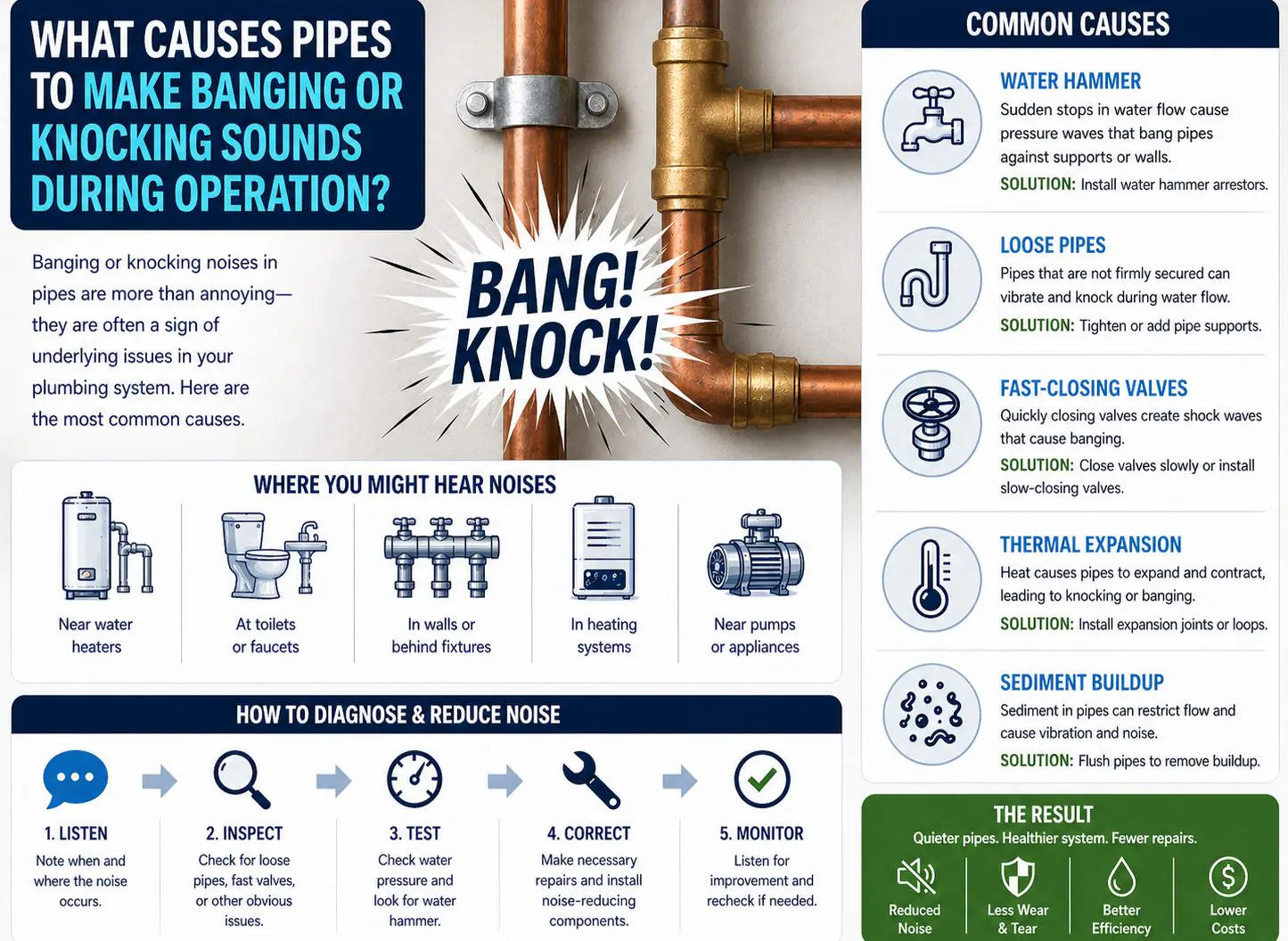
A plumbing system does not have to leak to signal trouble. Sometimes the warning comes through sound first. A sharp bang when a valve closes, a knocking noise behind a wall, or repeated pipe movement during normal water use can all indicate stress within the system that should not be ignored.
For property managers, facility managers, and building owners, these noises matter because they often reflect pressure changes, poor pipe support, expansion movement, or fixture-related control issues. Pipes are supposed to carry water quietly under controlled conditions. When they start making banging or knocking sounds, the system is usually reacting to force, movement, or interruption in a way that deserves closer attention. The sound is not the root problem. It is the clue that leads to it.
Where Pipe Movement Starts
Noise Usually Means Force In Motion
Banging or knocking noises in plumbing systems are typically caused by movement or pressure shock. Water does not make those sounds on its own. The noise occurs when flowing water changes direction too quickly, stops suddenly, or shifts piping against framing, hangers, or nearby materials. In other words, the sound is created when energy inside the system is no longer being controlled smoothly.
That distinction matters because the noise may seem random to an occupant, but it usually follows a repeatable event. A toilet fills and shuts off, a washing machine valve closes, a faucet is quickly turned off, or hot water starts moving through a line that has not yet expanded. Once the triggering condition is identified, the contractor can work backward to determine whether the issue is due to pressure, support, velocity, or thermal movement.
Looking Beyond The Noise Itself
A contractor from Trust 1 Heating, Cooling, Plumbing would not treat a banging pipe as a simple annoyance or a vague sign of “old plumbing.” The more useful question is which specific event causes the noise and where the piping reacts when that event occurs. A sharp knock right after a fixture closes often points to one cause, while slower creaking or tapping during hot water flow points to another.
That is why diagnosis starts with timing and location. Does the sound happen only when the washing machine stops filling? Only when hot water is first used in the morning? Only on upper floors or only near one bathroom group? Those details help narrow whether the system is reacting to sudden pressure change, thermal expansion, loose support, or a fixture control problem. The sound is useful because it follows a pattern, not because it is loud.
Water Hammer Is A Common Cause
One of the most common causes of banging pipes is water hammer. This happens when fast-moving water is suddenly stopped, creating a pressure shock wave that travels through the piping system. The result is often a sharp bang or thud inside walls, ceilings, or mechanical spaces. Appliances and fixtures with quick-closing valves, such as washing machines, dishwashers, ice makers, and some toilets, are frequent triggers.
Water hammer is not just a noise issue. It can place repeated stress on fittings, valves, joints, and pipe supports over time. A system that experiences repeated pressure shocks may eventually develop loose connections or premature wear. That is why a plumbing contractor does not stop at identifying the sound as water hammer. The next step is determining why the pressure spike is occurring with enough force to move the piping or strike nearby materials.
Loose Pipe Support Amplifies Impact
Even when pressure changes are present, properly supported piping is less likely to produce dramatic banging sounds. Pipes that are loosely fastened, poorly strapped, or allowed to move excessively within walls and ceilings. Much more likely to crack when water flow changes. In these cases, the sound comes not only from pressure shock but also from the pipe physically shifting due to inadequate restraint.
This is why contractors pay close attention to pipes support conditions during diagnosis. A moderate hydraulic event can sound much worse if the line is free to move. Support problems are especially common in older buildings, in previously remodeled areas. Or in sections where repairs were made without restoring the original restraint. The plumbing system may be carrying water adequately, but the structure around the pipe is no longer keeping movement in check.
Repeated Noise Deserves Real Diagnosis
Pipes banging or knocking sounds during operation because something in the plumbing system is allowing pressure shock. Thermal movement, or unsupported pipe motion to translate into audible impact. Water hammer, loose supports, high pressure, thermal expansion, abrupt valve action, and missing cushioning devices are among the most common causes. The sound itself is only the visible part of the issue. The real problem is the force or movement that the system is no longer managing quietly.
For property managers and building owners, that means recurring pipe noise should not be treated as a harmless background disturbance. It may not indicate an immediate leak, but it often reflects stress. That can shorten component life or point to a growing control issue. A proper plumbing diagnosis identifies what event causes the noise, which section of piping is reacting. And what condition is allowing the system to strike, shift, or surge instead of operating smoothly.