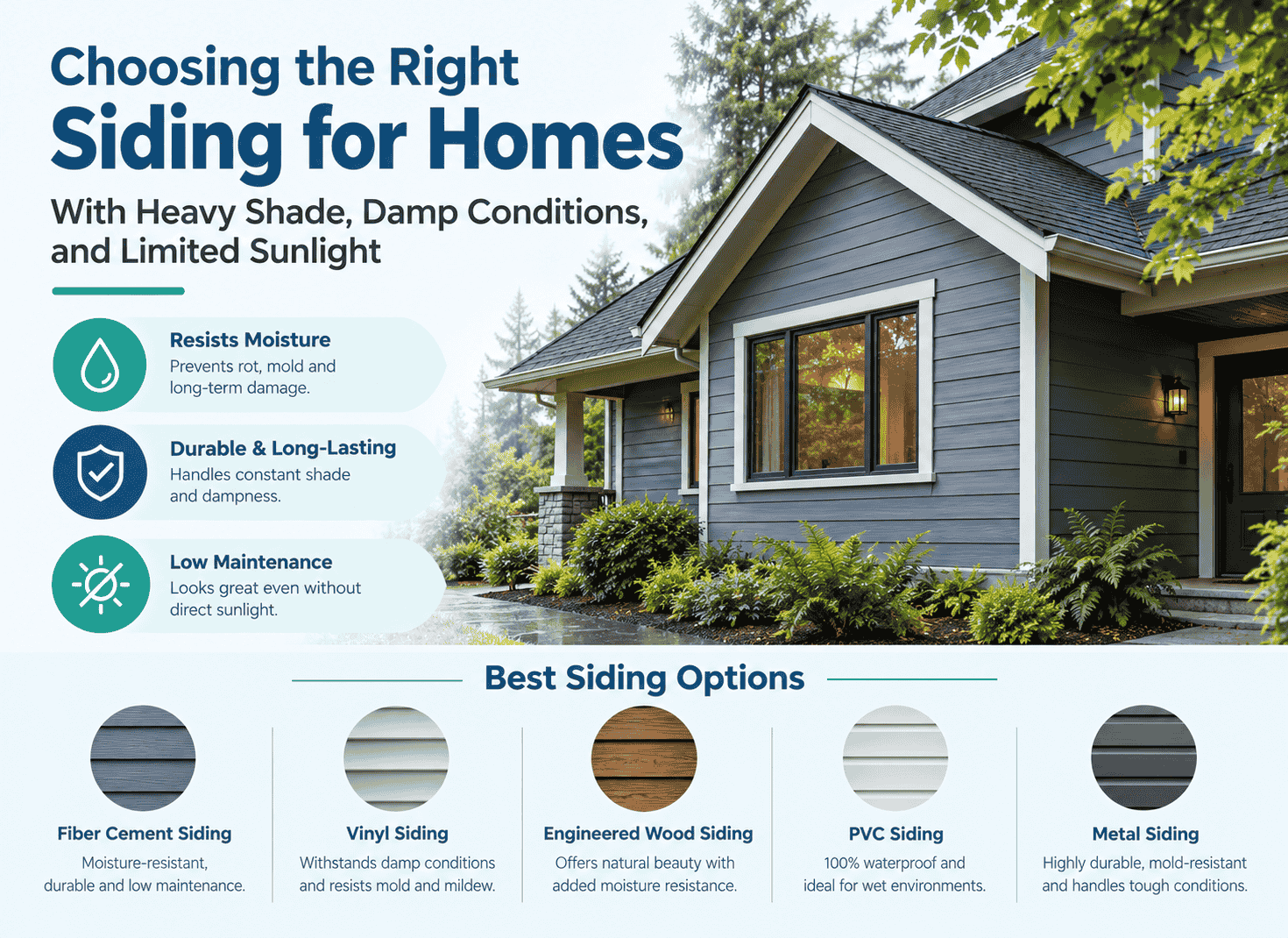
Homes surrounded by mature trees or neighboring buildings often experience different exterior conditions from properties exposed to direct sunlight. Shaded walls may remain damp longer after rainfall, while nearby vegetation can contribute to debris accumulation and restricted airflow. These conditions deserve attention when homeowners evaluate exterior materials and maintenance requirements.
Persistent shade does not automatically mean an exterior wall has a moisture problem. However, slower drying can encourage surface growth, discoloration, and deterioration where drainage or maintenance is inadequate. Understanding these differences helps homeowners distinguish ordinary environmental effects from warning signs that require professional investigation.
Selecting appropriate siding involves evaluating exposure, material characteristics, and the condition of the underlying wall. Speaks Custom Windows and Doors can help homeowners consider exterior improvement options while coordinating relevant installation details. A practical approach focuses on long-term durability rather than choosing materials exclusively for their appearance.
Understanding How Shade Changes Exterior Conditions
Shade influences how quickly exterior surfaces dry after exposure to moisture. Its effects vary according to orientation, vegetation, and surrounding construction.
Why Shaded Walls Stay Damp
Direct sunlight can accelerate surface drying after rain. Walls receiving limited sunlight may retain moisture longer, particularly when surrounding air movement is restricted.
Homeowners should compare different elevations after rainfall. Noticeable differences can help identify areas requiring closer maintenance attention.
Recognizing Seasonal Exposure Changes
Trees create changing shade patterns throughout the year. Deciduous branches may block summer sunlight while allowing greater exposure during winter.
Nearby structures can produce more consistent shade. Understanding these patterns provides useful context before selecting exterior finishes.
Identifying Moisture Concerns Before Renovation
A shaded appearance alone does not establish hidden deterioration. Homeowners should look for physical changes alongside environmental conditions.
Distinguishing Staining From Damage
Dark streaks or surface discoloration may result from accumulated dirt or biological growth. These conditions do not necessarily indicate structural damage.
Loose panels, swelling, softness, or persistent dampness deserve additional attention. Qualified assessment can identify whether underlying materials require repair.
Checking Areas Near the Foundation
Lower wall sections may receive splashback from rainfall or irrigation. Poor grading and nearby landscaping can increase moisture exposure.
Homeowners should observe how water moves around the property. Correcting drainage concerns may be necessary before exterior improvements begin.
Comparing Materials for Shaded Exteriors
Different exterior materials have distinct maintenance and installation requirements. Their suitability depends on the complete construction system.
Evaluating Fiber Cement Products
Fiber cement is available in several profiles and finishes. Appropriate installation and maintenance are necessary for satisfactory long-term performance.
Homeowners should review manufacturer requirements for clearances, coatings, and fastening. Material characteristics alone cannot compensate for improper construction.
Considering Vinyl Cladding
Vinyl products offer various colors and profiles. Their performance depends on correct installation, suitable detailing, and ongoing maintenance.
Shaded conditions may still allow dirt or surface growth to accumulate. Routine cleaning remains important regardless of material selection.
Understanding the Role of Nearby Vegetation
Landscaping influences moisture exposure, airflow, and maintenance access. Attractive planting arrangements can sometimes create unintended exterior challenges.
Managing Overhanging Branches
Branches may deposit leaves, pollen, and other debris against walls. Repeated contact can also affect exterior finishes during windy conditions.
Appropriate pruning may reduce these concerns. Tree maintenance should consider plant health and property safety.
Keeping Shrubs Away From Walls
Dense shrubs can restrict airflow and conceal developing exterior problems. Their proximity may also complicate inspection and cleaning.
Speaks Custom Windows and Doors can help homeowners consider exterior project requirements, while landscaping professionals can address vegetation concerns. Coordinated planning protects both building materials and established plantings.
Planning Drainage Around Shaded Walls
Water management becomes especially important where surfaces dry slowly. Several surrounding features influence moisture exposure.
Reviewing Gutters and Downspouts
Blocked gutters can overflow and direct water against exterior walls. Downspouts should carry runoff toward appropriate drainage locations.
Homeowners should inspect accessible components after storms. Recurring overflow deserves prompt attention.
Considering Ground Surface Conditions
Mulch, soil, and paved areas influence how moisture behaves near lower wall sections. Their relationship with exterior materials should follow applicable installation requirements.
Improper clearances can increase deterioration risks. Professional guidance helps establish suitable arrangements.
Choosing Exterior Colors Thoughtfully
Shade affects how colors appear throughout the day. Material samples should be evaluated under realistic conditions.
Understanding Color in Indirect Light
Colors can appear cooler or darker when direct sunlight is absent. A sample that looks balanced in a showroom may appear different outdoors.
Homeowners should compare selections against permanent architectural features. Existing roofing, masonry, and trim provide useful references.
Considering Surface Appearance Over Time
Dirt and biological growth may become more visible on certain finishes. However, color alone does not determine maintenance performance.
Surface texture and environmental exposure also matter. Product care instructions should guide cleaning expectations.
Maintaining Exterior Surfaces Safely
Regular maintenance helps homeowners identify developing concerns before they become extensive. Cleaning methods should suit the installed material.
Removing Surface Debris
Leaves, dust, and pollen can accumulate on protected exterior surfaces. Gentle cleaning may help maintain appearance.
Homeowners should follow manufacturer recommendations. Aggressive cleaning methods can damage finishes or force water into vulnerable locations.
Monitoring Recurring Growth
Repeated discoloration may indicate persistent moisture or limited drying. Cleaning visible growth without addressing contributing conditions may provide only temporary improvement.
Homeowners should document affected locations. Recurring problems may justify professional evaluation.
Coordinating Installation With Existing Features
Exterior renovations must account for windows, doors, trim, and other building components. Their connections influence both appearance and performance.
Reviewing Existing Openings
Window and door openings create transitions requiring appropriate installation details. Surrounding deterioration should be identified before new materials conceal it.
Replacement work should coordinate with the broader exterior project. Clear responsibilities reduce installation conflicts.
Protecting Ventilation Openings
Some exterior assemblies include intentional ventilation or drainage features. These should not be blocked during renovations.
Homeowners should ask contractors to explain unfamiliar openings. Proper function depends on the intended construction design.
Preparing for Long-Term Exterior Care
Shaded properties benefit from maintenance plans based on actual exposure. Regular observation can reveal changing conditions.
Scheduling Seasonal Inspections
Spring and autumn inspections can identify accumulated debris and visible deterioration. Homeowners should prioritize accessible areas.
Unsafe climbing should be avoided. Qualified professionals can evaluate difficult locations.
Documenting Changes Over Time
Photographs provide a useful record of exterior conditions. Comparing images may reveal developing stains or physical changes.
This information supports informed maintenance decisions. It also helps distinguish recurring concerns from isolated events.
Creating a Durable Exterior for Shaded Properties
Successful exterior planning recognizes that shaded walls experience different drying conditions from sunlit surfaces. Material selection should reflect these differences without assuming shade automatically causes damage.
Speaks Custom Windows and Doors can help homeowners evaluate siding options within broader exterior improvement plans. Understanding existing conditions supports appropriate installation and maintenance expectations.
Long-term performance depends on coordinated drainage, suitable materials, vegetation management, and regular observation. By addressing the specific conditions surrounding their homes, homeowners can create attractive exteriors that remain practical to maintain through changing seasons.