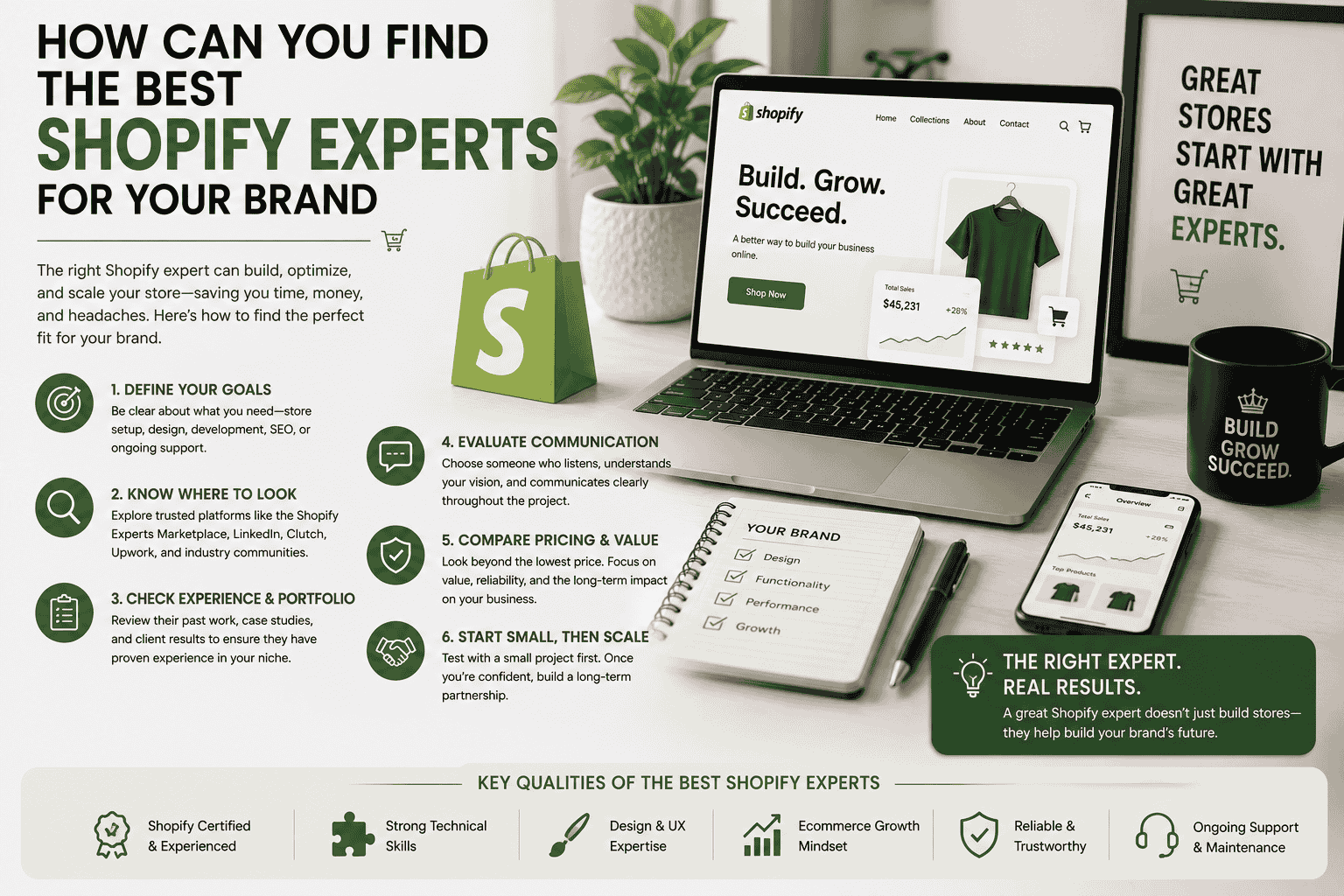
The word “expert” does a lot of unearned work in the Shopify ecosystem. Understanding what it currently means, and what it used to mean, is the fastest way to filter a crowded market.
The Terminology Has Changed, And Most People Have Not Caught Up
Shopify retired the Shopify Experts Marketplace brand in December 2023, and folded the legacy Plus Partner designation into a unified Shopify Partner Program on 31 December 2024. The Plus Certified App Program was sunset in December 2025.
What exists now is a single Partner Program with five tiers: Registered, Select, Plus, Premier, and Platinum.
| Tier | What it signals |
| Registered | Free to join, no vetting, no minimum project count, not listed in the Partner Directory |
| Select | First earned tier, credential thresholds around three team members with Verified Skills, directory listed |
| Plus | Requires demonstrated Shopify Plus client engagements and higher credential thresholds |
| Premier | Substantially smaller group, significant enterprise track record |
| Platinum | The smallest group globally |
The distribution matters more than the labels. Industry analysis of the 2026 program counts roughly 1,443 Select Partners, 838 Plus Partners, and 148 Premier Partners globally, with only around 86 agencies holding Platinum status, against a total partner population above 100,000. In other words, the overwhelming majority of people describing themselves as Shopify Partners sit in the unvetted Registered tier.
One useful nuance: reporting on the 2026 program indicates Shopify waived credential requirements for the year, evaluating partners on commercial activity instead. Tier is a signal, not a guarantee, and it should inform your shortlist rather than decide it.
So when someone markets themselves as a “Shopify Expert,” the practical question is simple. Ask which tier they hold and which Verified Skills their team members have. A specific answer is a good sign. A vague one tells you they are trading on retired terminology.
Match The Specialist To The Problem
As per www.best-shopify-seo-agency.com case studies, the most common hiring mistake is selecting for general Shopify competence rather than for the specific discipline you need. These are genuinely different jobs:
Theme and front-end development. Liquid, Online Store 2.0 sections, custom components, performance work.
Store build and migration. Data mapping, URL redirect planning, launch sequencing. Migrations in particular are where SEO value is most often destroyed.
SEO and organic growth. Technical fixes, collection and product content, structured data, authority building.
Conversion rate optimisation. Product page structure, checkout experience, testing programmes.
Backend and integrations. ERP, PIM, subscription logic, B2B, custom apps.
Shopify Plus and enterprise architecture. Checkout extensibility, Functions, multi-store and multi-market setups.
Very few individuals or small agencies do more than two of these well. An agency claiming all six is either large enough to genuinely have separate teams, which you can verify by asking who specifically does what, or is overstating.
Where To Actually Look
The Shopify Partner Directory. The official starting point, listing partners from Select tier upward. You can filter by service type, location, language, and tier. Its limitation is that it tells you a partner cleared a threshold, not whether they are right for your brief.
Referrals from merchants in your category. Consistently the highest-quality source. Someone selling a comparable product at a comparable scale has already stress-tested the relationship.
App and tool vendor recommendations. Klaviyo, Gorgias, review platforms, and similar vendors maintain partner lists. Useful, though weighted toward agencies that push their software.
Reverse-engineering stores you admire. Find Shopify stores in adjacent categories that are clearly well built, then find out who built them. This selects for demonstrated output rather than marketing.
Treat listicles of “top Shopify agencies” with appropriate caution. Most are written by agencies who rank themselves first.
What Shopify Work Costs
Rates vary enormously by geography and seniority. Current market data puts freelance Shopify specialists anywhere from around $15 per hour at the entry end of offshore markets to $250 per hour for senior specialists at established agencies, with most mid-market stores realistically budgeting $50 to $150 per hour. For Shopify Plus projects, expect project costs starting around $15,000 and running well past $50,000 depending on scope.
Price is not a quality signal in either direction, but a quote far outside these bands deserves an explanation. Very low rates usually mean junior execution or a template-driven process. Very high rates should come with a correspondingly specific plan.
The Vetting Process That Actually Works
Look at live stores, not portfolio mockups
Ask for URLs of stores currently in production, ideally ones the partner has worked on for more than a year. Then examine them directly. How fast do they load on mobile? Is the navigation coherent at your catalogue size? Do collection pages have real content? Is Product schema complete?
A portfolio full of beautiful screenshots and no live URLs is a portfolio of concepts.
Ask what they inherited
For each reference store, ask what state it was in when they took it over and what specifically changed. Partners who did genuine work can answer this in detail. Partners who inherited a healthy store and maintained it will struggle to distinguish their contribution from the baseline.
Ask about the failures
Ask about a project that did not go well and what they changed as a result. Anyone who has done this work for several years has one. A partner who claims otherwise is either inexperienced or not being straight with you.
Speak to at least one former client
Current clients are selected for satisfaction. A former client will tell you how the relationship ended and whether the handover was clean, which is the single most useful piece of information you can gather.
Confirm who is actually assigned
Get names, seniority, and time allocation in writing. Ask directly whether any work is subcontracted, and to whom. The gap between the team that sells and the team that delivers is the most common source of disappointment in agency relationships.
Contract Terms Worth Insisting On
Ask for collaborator access rather than handing over full admin credentials, since collaborator accounts have granular permissions and a clear audit trail. Require theme edits to be made in a duplicate theme and approved before publishing. Establish that you own all code, content, and documentation produced, and that any custom app or integration built for you remains yours.
Ask what happens at the end. A good partner will describe a documented handover: theme documentation, a change log, access transfer, and a briefing for whoever comes next. A partner who has not thought about this is a partner you will find hard to leave.
The Test That Cuts Through Everything
The best Shopify partners ask more questions than they answer during a first call. They want to know your margin structure, your catalogue complexity, your fulfilment constraints, your current tech stack, and what you have already tried.
Partners who arrive with a solution before understanding the problem are selling a package. Partners who need to diagnose before they quote are doing the job.