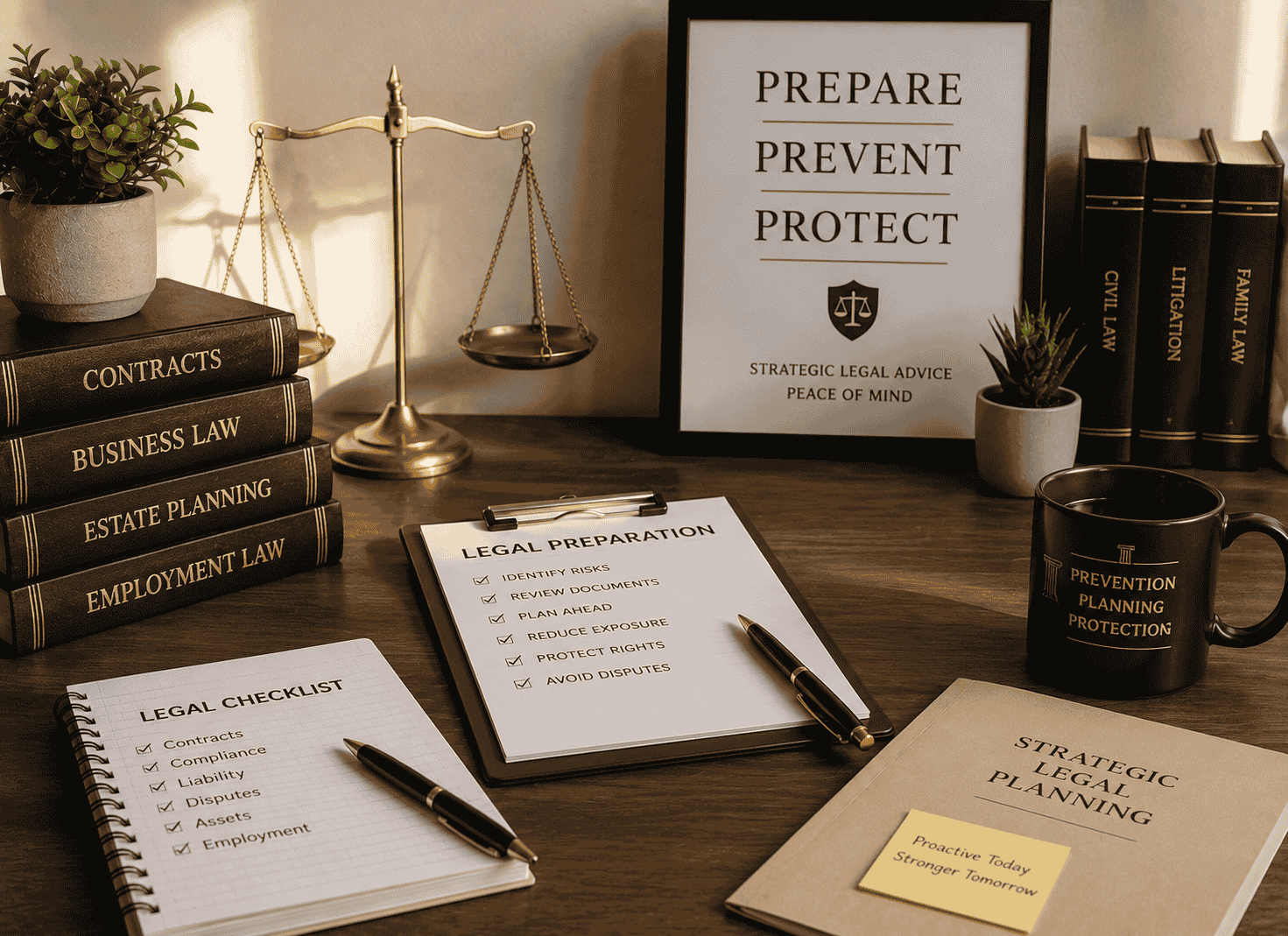
Legal issues often become harder to manage when people wait until a dispute, accusation, or financial complication has already grown into something urgent. Many problems begin with small misunderstandings, missing paperwork, ignored deadlines, or informal agreements that were never properly reviewed. Law offices help clients prepare before matters reach that stage by offering guidance, reviewing risks, and creating a clearer plan for what should be done early. That preparation can reduce confusion, protect rights, and support better decisions during stressful situations. When clients understand their position sooner, they are often in a stronger place to respond calmly, avoid preventable mistakes, and handle legal concerns with more confidence and control.
Before Problems Grow
1. Understanding Risk Before It Turns Into Conflict
One of the main ways law offices help clients prepare is by identifying legal risk before it becomes a dispute that affects finances, reputation, or peace of mind. Many people do not realize that a problem is forming until they receive a formal complaint, a demand letter, or notice of legal action. By meeting with clients early, a law office can examine contracts, communications, business arrangements, family matters, property concerns, or workplace issues to see where misunderstandings may develop. This early review allows clients to understand which actions may create exposure and which steps can reduce that exposure before tensions rise. It also gives them a chance to gather records, organize timelines, and correct weak points while the matter is still manageable. Instead of reacting under pressure, clients can prepare with purpose. That difference matters because a person who understands possible consequences in advance is often far better equipped to protect their interests than someone who waits until the situation becomes urgent.
2. Reviewing Documents and Building a Clear Record
Law offices also help clients prepare by reviewing the documents that often shape the outcome of a legal issue long before a case reaches court or formal negotiation. Agreements, notices, payment records, emails, letters, leases, policies, and written statements can all become important when a dispute grows. A law office can help a client understand which records should be preserved, which terms may create future trouble, and whether any language in a document should be corrected or clarified. This process is useful because many legal problems become harder to resolve when the written record is incomplete or inconsistent. Careful review helps clients avoid signing terms they do not fully understand and helps them respond more thoughtfully when another party presents paperwork with legal consequences. In some situations, people seeking guidance from the Law Offices of Norman Gershon of White Plains may value this kind of document review because it can help bring clarity to an issue before emotions, missed deadlines, or conflicting claims make the problem more difficult to contain.
3. Guiding Clients on What to Say and Do Next
Preparation is not only about paperwork. It also involves helping clients respond appropriately once a concern appears. Law offices can guide people on what to say, what not to say, when to reply, when to pause, and how to avoid actions that may unintentionally worsen a situation. A client dealing with a business disagreement, family conflict, property concern, injury matter, or employment issue may feel pressure to answer quickly or defend themselves in ways that create new complications. Legal guidance can reduce that risk by helping the client choose a response strategy grounded in the facts rather than emotion. This may include advising someone to communicate only in writing, keep conversations brief, avoid admissions, preserve evidence, or stop informal side agreements that could blur the facts later. These steps may seem small, but they often shape how manageable the issue remains. When clients receive direction at the right time, they are less likely to make avoidable errors that strengthen the other side’s position or weaken their own.
4. Creating a Plan That Prevents Escalation
Another important role of law offices is helping clients build a practical plan before a legal concern reaches a more damaging stage. Preparation can include setting response timelines, outlining possible outcomes, identifying negotiation options, and deciding when formal action may or may not be necessary. This kind of planning helps clients think beyond the immediate problem and consider how to protect their broader interests. For a business owner, that may involve tightening internal procedures, updating contracts, or documenting payment expectations more clearly. For an individual, it may involve understanding personal obligations, preparing for meetings, or taking steps to avoid repeating the same issue in the future. The value of this planning is that it reduces uncertainty. Rather than feeling pulled along by events, the client has a structure for how to respond if the issue grows. Law offices help turn vague worry into organized action, which can often prevent a legal matter from becoming more expensive, more public, or more disruptive than it needed to be.
Long-Term Legal Readiness Supports Better Outcomes
Law offices matter because they help clients prepare before legal problems gather momentum and become harder to control. Through early risk review, document analysis, communication guidance, and practical planning, they help people take informed steps while there is still time to reduce confusion and avoid unnecessary harm. That preparation does not remove every challenge, but it can make a serious difference in how a matter develops. Clients who act early are often better positioned to protect their rights, preserve useful records, and respond in a way that supports stronger outcomes. When legal concerns are addressed before they escalate, the path forward is usually clearer, steadier, and far less overwhelming.