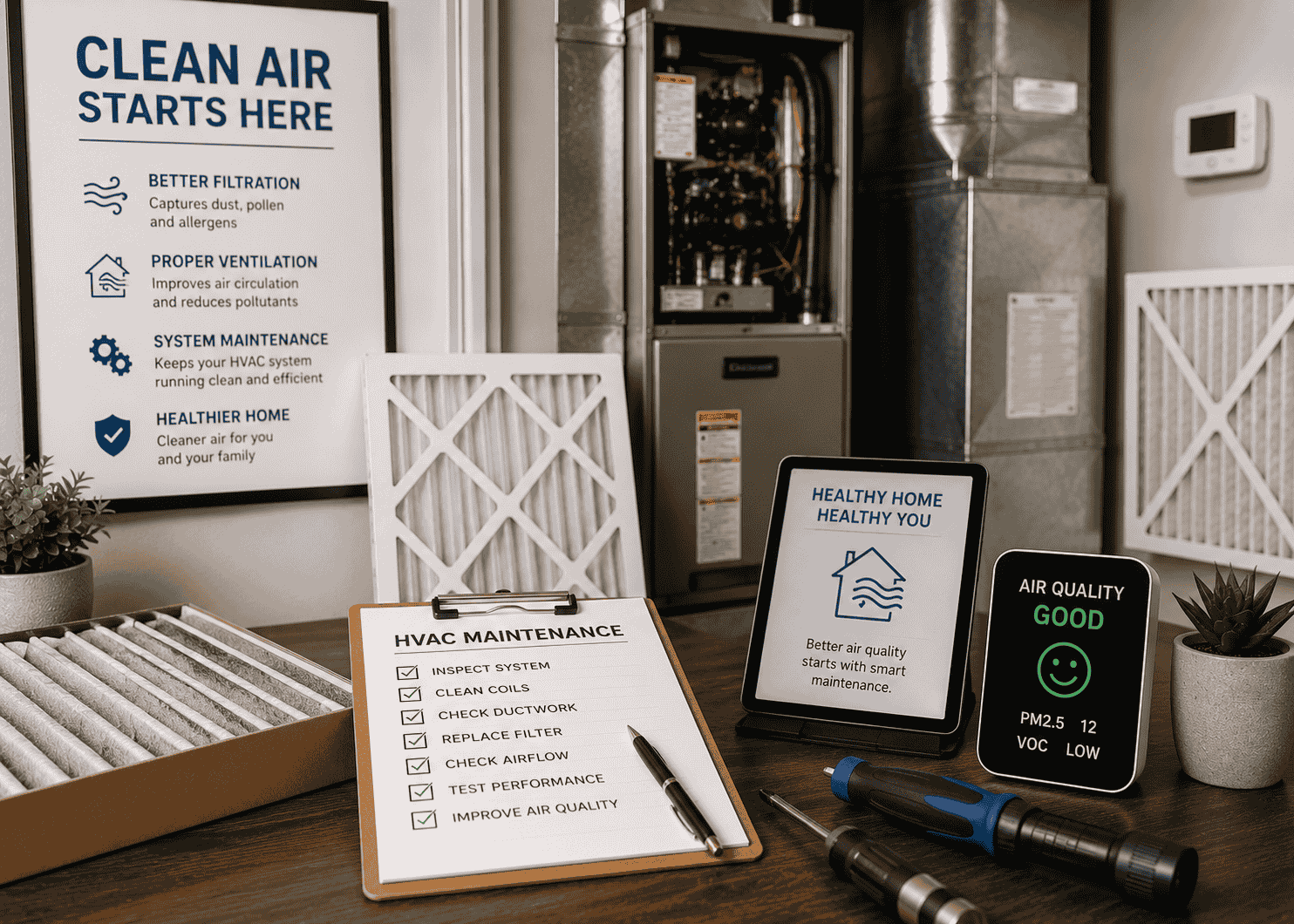
Indoor air quality is shaped by more than open windows or occasional dusting. In most homes and commercial spaces, the heating and cooling system plays a major role in how air moves, how particles circulate, and how moisture is controlled from room to room. When maintenance decisions are delayed or handled without enough planning, the system can begin spreading dust, trapping humidity, and allowing buildup to affect daily comfort. An HVAC contractor helps support cleaner indoor air by guiding maintenance choices that keep air pathways cleaner, components functioning properly, and filtration working more effectively. That steady attention can influence the feel of every occupied space.
Cleaner Air Needs Planning
1. Airflow Problems Often Begin With Overlooked Maintenance
Cleaner indoor air depends heavily on how well the HVAC system moves and conditions air over time. When maintenance is delayed, several small issues can combine to reduce air quality without creating an immediate system failure. Dust can build around return vents, filters can become overloaded, evaporator coils can collect residue, and blower components can begin moving contaminated air through the duct system more frequently. Even when the unit is still heating or cooling, indoor air may start to feel stale, dusty, or uneven from one room to another. An HVAC contractor helps support better maintenance decisions by identifying these developing issues before they affect the entire space more noticeably. Instead of waiting for comfort complaints to become severe, the contractor can recommend timely filter changes, coil cleaning, airflow checks, and inspection of areas where dirt and moisture tend to collect. These decisions matter because the system does not simply control temperature. It also influences what kind of air continues circulating through shared living and working environments every day.
2. Maintenance Choices Affect Filtration, Moisture, and Air Quality
One of the most important ways an HVAC contractor supports cleaner indoor air is by helping property owners understand that maintenance is not limited to keeping equipment running. The condition of the system affects how well airborne particles are captured, how excess humidity is managed, and whether air continues moving through the building in a balanced way. If filters are the wrong type, changed too late, or installed poorly, the system may allow more dust and fine debris to pass through. If drain lines are neglected or coils stay damp, moisture problems can develop that affect freshness and comfort indoors. A contractor helps connect these conditions to practical maintenance decisions rather than treating them as unrelated problems. In many discussions about air quality and system upkeep, homeowners searching for a Tarzana HVAC contractor are often trying to address comfort issues that are actually tied to maintenance habits affecting indoor air. With the right guidance, decisions about cleaning, inspection timing, and filter performance become part of a broader plan to support healthier airflow throughout the property.
3. Contractors Help Prevent Buildup From Spreading Through the System
Dust and airborne particles do not stay in one place for long when an HVAC system is running regularly. Once buildup forms inside certain parts of the system, airflow can continue distributing that material through vents and occupied rooms, especially if maintenance has been inconsistent. An HVAC contractor helps support cleaner air by recognizing where buildup is likely to form and by recommending service decisions that reduce circulation of contaminants before the problem becomes more noticeable. This may involve checking return air areas, evaluating blower cleanliness, examining accessible duct connections, and identifying whether neglected components are reducing the quality of circulated air. These choices are important because indoor air problems often build gradually. People may notice more dust on surfaces, a stale smell, or uneven comfort before they realize the HVAC system is contributing to the issue. By guiding timely maintenance, a contractor helps reduce the chance that dust, residue, or moisture-related buildup will continue moving through the system unchecked. That creates a cleaner indoor environment not by masking symptoms but by improving the condition of the equipment responsible for air movement.
4. Better Maintenance Decisions Support Long-Term Indoor Comfort
Cleaner indoor air is not usually the result of one repair visit or one filter replacement. It comes from maintenance decisions that keep the system operating in a cleaner, more balanced way across changing seasons. An HVAC contractor supports that long-term result by helping property owners decide when service is needed, which parts of the system deserve more attention, and how routine upkeep can prevent recurring air quality concerns. This is valuable because indoor comfort is affected by several connected factors at once, including airflow strength, humidity control, filtration effectiveness, and component cleanliness. When these areas are maintained consistently, indoor spaces often feel fresher and more comfortable without requiring constant adjustments. Contractors also help reduce guesswork. Instead of choosing maintenance actions only after odors, dust, or airflow complaints become obvious, property owners can rely on a clearer service plan that supports cleaner conditions throughout the year. Those decisions protect both system performance and the quality of the air people breathe, which makes maintenance an important part of daily comfort rather than a task that only matters when the equipment stops working.
Better Decisions Lead to Better Air
An HVAC contractor supports cleaner indoor air by helping property owners make maintenance decisions that protect airflow, filtration, and moisture control over time. That guidance matters because indoor air quality can decline long before the heating or cooling system shows obvious signs of failure. Through regular inspections, timely cleaning, and practical recommendations, contractors help reduce the buildup and circulation of unwanted particles throughout the property. Cleaner air is often the result of many small decisions made at the right time. When those decisions are handled well, the system does more than manage temperature. It helps create a more comfortable and fresher indoor environment.