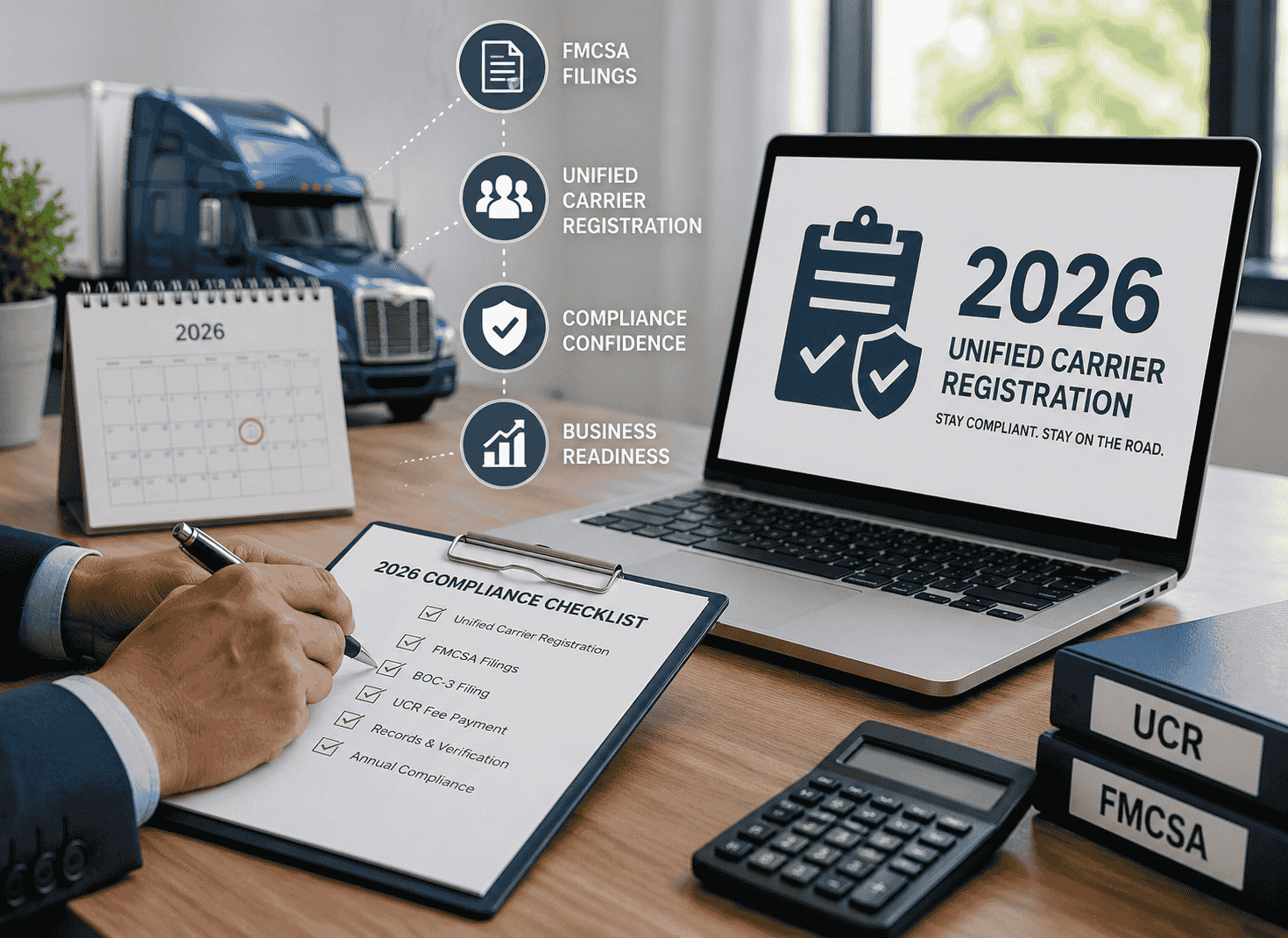
Annual compliance can feel demanding for transportation businesses because records, deadlines, vehicle counts, and operating details must remain accurate before enforcement begins. Unified Carrier Registration helps companies operating across state lines keep their registration status aligned with yearly requirements. For 2026, preparation is even more important because businesses need to review fleet size, confirm USDOT details, and file before delays create avoidable pressure. The official UCR system is online, and 2026 enforcement was recommended to begin on January 1, 2026. Timely planning helps carriers, brokers, freight forwarders, and leasing companies stay organized.
Help Businesses Prepare
1. Annual Compliance Readiness
Businesses prepare better when annual registration is handled as part of a wider compliance routine instead of a last-minute form. Unified Carrier Registration applies to many interstate transportation operations, including motor carriers, private property carriers, brokers, freight forwarders, and leasing companies, so each business must know whether its activity falls within the program before the filing year begins. 2026 Unified Carrier Registration with FMCA Filings can help companies approach the process with clearer document review, vehicle-count checking, and deadline awareness before annual compliance issues interrupt operations. Since UCR fees are tied to fleet size for many entities, reviewing the number of commercial motor vehicles early can reduce filing mistakes and help office staff keep payment records aligned with internal accounting. The Federal Register noted that 2026 UCR fees remained the same as the 2025 registration year, which makes planning easier for companies comparing prior-year costs.
2. Reducing Filing Mistakes
One major way UCR preparation supports annual compliance is by forcing businesses to compare their current records with what is already connected to their USDOT number. A company may have added vehicles, removed units, changed a business address, adjusted ownership details, or shifted its operating structure during the year. When these changes are not reviewed before filing, the registration may reflect outdated information, which can create confusion during audits, roadside checks, or internal compliance reviews. Preparing early gives managers time to confirm entity type, contact details, fleet numbers, and prior registration history before submission. It also helps companies gather payment proof and confirmation records in one place, so they are not searching through emails or accounting files after enforcement begins. The UCR Plan also provides guidance connected to compliance verification during roadside inspection activity, which shows why accurate annual filing records matter beyond the office.
3. Supporting Better Deadline Management
Annual compliance depends heavily on timing, and UCR filing gives businesses a clear reason to build a calendar around transportation obligations. The 2026 registration period opened on October 1, 2025, according to state transportation guidance, giving companies time to complete filing before January enforcement activity began. This preparation window allows office teams to assign responsibility, confirm login access, review the official online registration system, and complete payment before the business faces renewal pressure. For companies with multiple trucks, separate locations, or changing operating needs, early filing also creates room to fix account access issues or identify missing data. Waiting until the final days can place compliance staff under stress, especially when they also manage permits, insurance renewals, driver files, and safety documentation. Treating UCR as an annual checkpoint helps transportation businesses create a more predictable rhythm for recordkeeping and renewal tasks.
4. Improving Internal Compliance Records
Unified Carrier Registration can also improve internal documentation because it encourages businesses to keep proof of registration, payment receipts, vehicle-count notes, and renewal confirmations together. These records may be useful when management reviews annual costs, when a compliance officer checks whether filings were completed, or when a company needs to show that its registration was handled for the correct year. Internal records are often overlooked until a question appears, yet organized filing makes it easier to respond calmly and accurately. Businesses can create a folder for each registration year, save confirmations, note the staff member who completed the filing, and compare the current fleet count with the previous year. This approach reduces repeated research and helps future renewals move faster. It also supports communication between operations, accounting, and compliance staff because everyone can trace what was filed, when it was paid, and which business details were used.
5. Helping Businesses Avoid Operational Disruptions
Compliance preparation matters because transportation companies rely on steady movement, customer schedules, and reliable dispatch planning. If registration is missed or handled incorrectly, the issue may affect roadside interactions, customer confidence, or the company’s ability to maintain smooth operations during busy seasons. UCR filing does not replace other safety, insurance, permit, or authority obligations, but it is one annual requirement that businesses can control with early planning. For growing companies, the registration process can also reveal whether fleet expansion has changed fee brackets or whether record updates are needed before other filings are reviewed. Smaller businesses benefit as well because a simple annual checklist can prevent missed renewal steps. When UCR preparation is connected with broader compliance habits, businesses gain a clearer view of their yearly obligations and reduce the chance of avoidable disruption.
Preparing for annual compliance becomes easier when businesses treat UCR filing as a planned yearly responsibility rather than a rushed task. The 2026 registration year gives carriers, brokers, freight forwarders, and leasing companies a clear opportunity to review records, confirm vehicle counts, save payment proof, and align filing details before enforcement concerns arise. Early preparation also supports cleaner office systems, stronger deadline control, and better communication between departments. With organized records and timely filing, businesses can approach annual compliance with more confidence and fewer avoidable mistakes, allowing daily transportation work to continue with less administrative pressure.