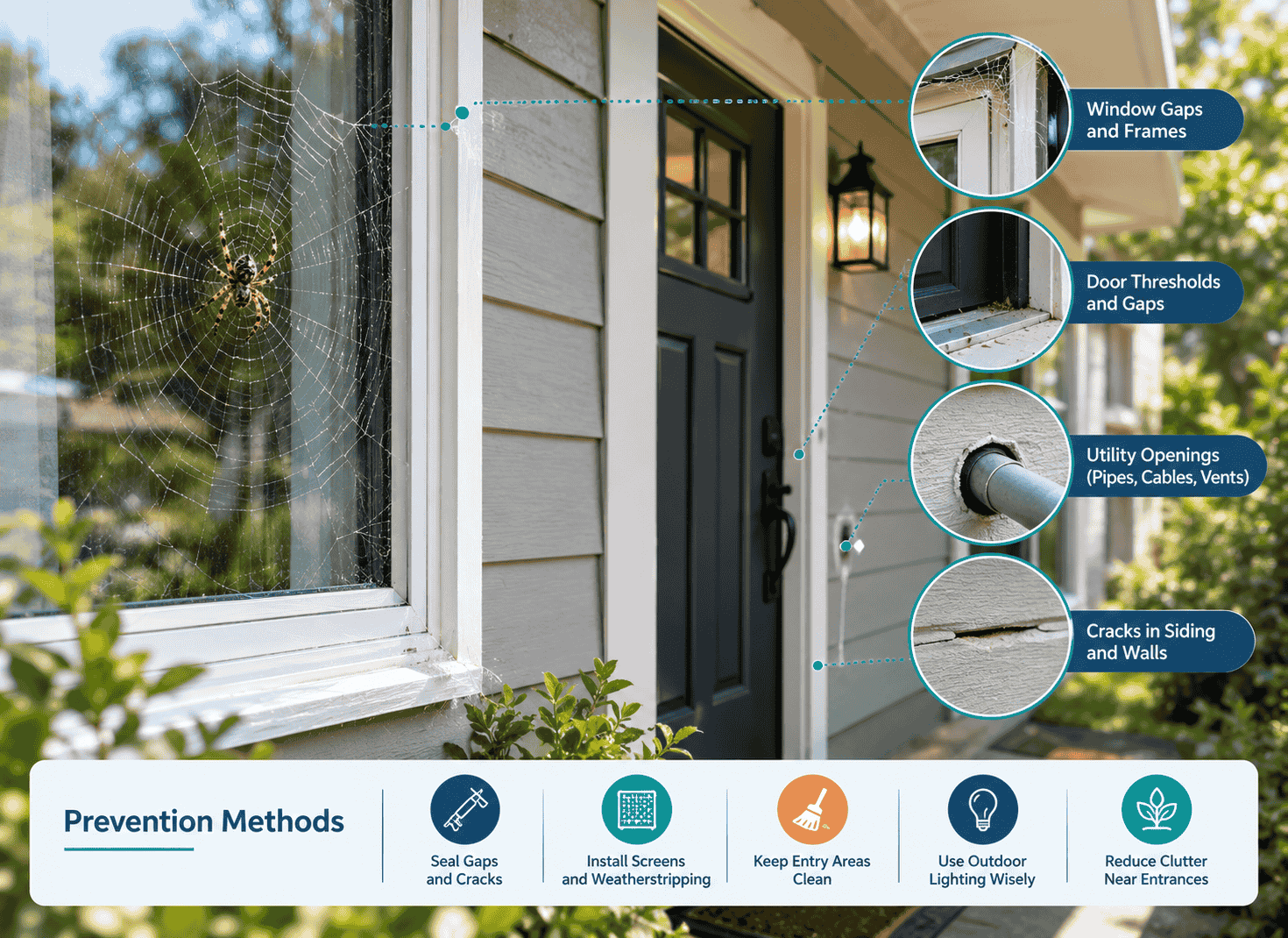
Spiders frequently appear around residential windows and doorways, where insects, lighting, and sheltered spaces create favorable conditions. Homeowners may notice webs near exterior frames, spiders resting beneath porch fixtures, or occasional visitors moving indoors. Understanding these patterns helps residents manage spider activity without treating every sighting as a serious infestation.
Most spiders encountered around homes are not aggressive toward people. They generally seek prey and protected resting locations rather than deliberately entering occupied rooms. However, species identification matters because certain spiders can present medical concerns, particularly when disturbed or handled.
Effective Spider Control begins with understanding why spiders gather near particular building features. Agile Pest Control can assess recurring activity and help identify conditions that may contribute to their presence. Practical prevention combines insect management, building maintenance, appropriate cleaning, and careful observation of areas where spiders repeatedly appear.
Why Spiders Gather Near Residential Openings
Windows and doorways connect indoor environments with outdoor insect activity. These locations may provide hunting opportunities and protected surfaces suitable for web construction.
Insects Create Reliable Feeding Opportunities
Many spiders feed on insects that gather around buildings. Flying insects attracted to lighting may provide food near entrances and windows.
Spiders often remain where prey is consistently available. Reducing unnecessary insect attraction can therefore influence spider activity without directly disturbing every individual spider.
Sheltered Corners Offer Protection
Door frames, window recesses, and covered porches provide protection from wind and rainfall. These structural features may offer suitable locations for resting or web construction.
Their presence does not necessarily indicate a hidden infestation. Repeated observations help determine whether particular areas consistently support activity.
Understanding the Influence of Exterior Lighting
Outdoor lighting improves visibility and security, but it can also influence insect movement. Certain insects gather around illuminated surfaces during nighttime hours.
How Lights Affect Insect Activity
Different light wavelengths attract insects at varying levels. Fixtures near entrances may concentrate flying insects in areas where spiders can capture them.
Homeowners should evaluate lighting placement rather than eliminating necessary illumination. Adjustments can preserve safety while reducing unnecessary attraction.
Choosing Practical Lighting Arrangements
Shielded fixtures can direct light toward intended surfaces instead of surrounding walls. Appropriate placement may reduce insect concentrations around vulnerable openings.
Lighting changes cannot guarantee complete spider prevention. They simply address one environmental factor that may contribute to repeated activity.
Inspecting Windows for Spider Activity
Windows contain several structural features where spiders may rest or construct webs. Routine inspection can reveal patterns that ordinary household cleaning overlooks.
Window Screens and Frame Gaps
Damaged screens may allow insects and spiders to enter occupied rooms. Loose frames and deteriorated seals can create additional access opportunities.
Homeowners should inspect accessible screens for tears and poor fitting sections. Repairs should maintain ventilation while correcting identifiable openings.
Window Wells and Exterior Ledges
Basement window wells and exterior ledges may collect leaves, debris, and moisture. These conditions can attract insects and provide sheltered locations.
Routine cleaning improves visibility and reduces unnecessary clutter. Drainage problems should receive appropriate maintenance attention when water accumulates.
Recognizing Doorway Conditions That Encourage Spiders
Doorways experience frequent movement and changing environmental conditions. Their surrounding structures can influence insect access and spider activity.
Weatherstripping and Door Seals
Worn weatherstripping may leave openings around exterior doors. Small gaps can permit insect movement and occasionally provide access for spiders.
Residents should examine seals when doors are closed. Appropriate repairs can improve building performance while reducing unwanted entry opportunities.
Porch Ceilings and Covered Entrances
Covered entrances often contain corners, beams, and decorative features suitable for webs. Nearby lighting may also attract flying insects.
Agile Pest Control may evaluate recurring spider activity around these locations when homeowners need professional guidance. Inspection should consider surrounding insect populations alongside structural conditions.
Identifying Common Spider Web Patterns
Spider webs vary considerably between species. Their appearance and placement can provide clues, although webs alone may not support reliable identification.
Orb Webs Around Outdoor Openings
Some spiders construct circular webs between shrubs, railings, and building features. These structures commonly appear where flying insects travel.
Orb weaving spiders generally capture prey using their webs. Their presence outdoors does not automatically justify chemical treatment.
Irregular Webs in Protected Corners
Other spiders produce irregular webs beneath ledges, inside recesses, or around sheltered structural features. Dust and abandoned webbing can accumulate over time.
Removing unused webs during routine cleaning improves appearance. However, web removal alone does not address conditions supporting recurring spider activity.
Distinguishing Occasional Sightings From Recurring Problems
A spider entering through an open door may represent an isolated event. Frequent sightings in the same location deserve closer observation.
Recording Activity Patterns
Homeowners can note where spiders appear and whether sightings occur repeatedly. Photographs may help professionals identify species when sufficient detail is visible.
Records should include nearby webs, insects, and structural conditions. This information provides context beyond the number of spiders observed.
Understanding When Identification Matters
Different spider species have different behaviors and habitat preferences. Some remain outdoors, while others may occupy protected indoor locations.
Spider Control recommendations should reflect actual species and circumstances. Treating every spider identically can lead to unnecessary interventions.
Managing Vegetation Near Doors and Windows
Landscaping contributes to the appearance and comfort of residential properties. However, dense vegetation can create sheltered areas near building openings.
Trimming Overgrown Shrubs
Branches touching windows or exterior walls may provide convenient routes for insects and spiders. Overgrown plants can also obstruct routine building inspections.
Selective trimming improves access without removing healthy landscaping. Homeowners should consider mature plant growth when maintaining surrounding vegetation.
Managing Planters and Decorative Features
Planters, hanging baskets, and outdoor decorations can provide sheltered surfaces. Insects may also gather around flowers, moisture, or accumulated debris.
Periodic cleaning makes these areas easier to observe. Decorative landscaping can remain attractive while avoiding unnecessary clutter.
Cleaning Spider Webs Without Unnecessary Risk
Routine cleaning can reduce visible web accumulation around accessible areas. The appropriate method depends on location and potential species concerns.
Safe Cleaning Around Exterior Frames
Long handled cleaning tools may help remove abandoned webs from reachable surfaces. Homeowners should avoid climbing unstable ladders or reaching near electrical fixtures.
Unknown spiders should not be handled directly. Professional identification is preferable when potentially dangerous species are suspected.
Avoiding Unplanned Chemical Applications
Spraying unidentified spiders or webs with unsuitable products can create unnecessary exposure. Pesticides have specific approved uses and application requirements.
Homeowners should follow product labels and avoid combining treatments without guidance. Chemical applications should respond to actual needs rather than ordinary outdoor spider presence.
Building a Practical Prevention Routine
Consistent maintenance makes recurring spider activity easier to manage. Prevention should focus on identifiable environmental conditions rather than unrealistic expectations of eliminating every spider.
Maintain Exterior Openings
Regular checks of screens, seals, and accessible frames can reveal deterioration. Correcting genuine openings helps reduce unwanted insect movement indoors.
Homeowners should also keep nearby storage organized. Clear surfaces improve observation and cleaning.
Address Insect Activity Around Entrances
Spider populations often reflect the availability of suitable prey. Managing exterior lighting, waste, and other insect attracting conditions can support broader prevention.
Spider control in Middletown, NJ works best when these factors are considered together. Species identification remains important whenever activity becomes persistent.
Creating a Balanced Approach to Spider Prevention
Spiders around windows and doorways are often responding to shelter and available insects. Their presence should be evaluated according to species, frequency, and surrounding property conditions.
Homeowners considering Agile Pest Control can discuss recurring sightings and relevant environmental factors. Professional assessment may help distinguish routine outdoor activity from situations requiring targeted management.
A sensible prevention plan combines building maintenance, vegetation management, appropriate lighting, and regular cleaning. By addressing actual conditions and avoiding unnecessary treatments, homeowners can maintain comfortable entrances while responding responsibly to spider activity.