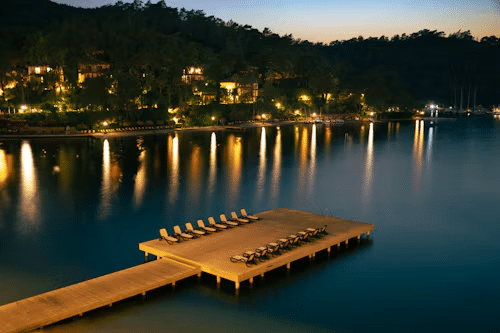
Commercial marina operators, luxury resort developers, and urban port authorities in 2026 face complex waterfront development challenges. Climate volatility, severe storm surges, and changing water levels are exposing the physical vulnerabilities of legacy fixed concrete piers and steel maritime structures.
Designing resilient commercial waterfronts requires adopting scalable, low-maintenance marine infrastructure. Modern engineers and developers are increasingly deploying modular High-Density Polyethylene (HDPE) floating pontoon systems to achieve long-term hydrodynamic stability, operational safety, and high capital investment returns.
The Commercial Demand for Scalable Marine Infrastructure
Challenges in Modern Marina and Commercial Waterfront Planning
Traditional commercial marina construction relies heavily on reinforced concrete pontoons and heavy steel-pile jetties. In aggressive saltwater micro-environments, these fixed structures suffer from severe material degradation:
- Corrosion and Spalling: Marine chlorides penetrate concrete structures, rusting internal rebar and causing structural spalling.
- Rigid Freeboard Heights: Fixed piers maintain immutable elevations relative to the seabed, creating hazardous height gaps during low tides or severe tidal surges.
- Exorbitant Maintenance Overhead: Steel barges and timber walkways require continuous painting, sandblasting, and board replacements, swelling long-term OpEx.
Scalability of Modular Floating Pontoon Architecture
Modular floating pontoon systems eliminate structural rigidity by riding dynamically on the water surface. Platforms automatically adjust alongside tidal shifts, preserving constant freeboard height for commercial passenger ferries, luxury yachts, and resort amenities.
Furthermore, modular pontoon architecture enables rapid, non-destructive expansion. Commercial facilities—such as floating restaurants, jet-ski platforms, and floating walkways—can scale their operational footprints without costly underwater dredging or seabed pile driving.
Material Standards and Hydrodynamic Stability in Floating Pontoons
Polymer Blow-Molding Engineering and UV Stabilization
Commercial-grade floating pontoons are manufactured from High-Density Polyethylene (HDPE) using automated blow-molding technology. This process produces hollow, seamless modular blocks with uniform wall thickness, exceptional impact resistance, and structural integrity.
Advanced polymer formulations incorporate specialized UV stabilizers to prevent thermal degradation and micro-cracking under intense sunlight. Smooth, anti-skid grid patterns molded directly into the top surfaces guarantee firm footing for public walkways and commercial docks.
Load-Bearing Mechanics and Multi-Point Connection Systems
Commercial floating platforms require precise structural engineering to ensure multi-directional stability under tidal flux and dynamic heavy loads. By utilizing high-density polyethylene modules with multi-lug locking mechanisms, engineers can achieve load ratings exceeding 350 kg per square meter. Commercial developers frequently deploy specialized Hiseadock for floating walkways and jet ski docking due to their anti-corrosive properties and seamless integration into dynamic water environments.
The structural strength of a modular pontoon array depends on its interlocking connection lugs. High-tensile Connection lugs locked together via composite pins distribute dynamic wave forces evenly across the entire matrix, preventing joint fatigue or localized pin failure.
Enterprise developers expanding commercial projects across international markets frequently combine hardware innovations with strategic planning. Aligning infrastructure investments mirrors best practices in commercial real estate development, where standardized assets accelerate project execution and reduce market entry risks.
Regulatory Compliance, Safety Certifications, and ROI
International Quality Benchmarks in Marine Asset Management
Publicly accessible commercial marine installations must satisfy rigorous international safety and quality certifications prior to deployment. Regulatory compliance ensures material reliability, structural load safety, and environmental safety.
For commercial developments open to the public, maritime infrastructure components must strictly adhere to internationally recognized manufacturing and environmental standards. Quality assurance standards maintained by the International Organization for Standardization (ISO) ensure that blow-molded polymer components satisfy long-term structural integrity and salt-spray corrosion resistance tests.
Key commercial compliance standards include:
- ISO 9001 Quality Management: Ensures automated manufacturing process consistency and raw material traceability.
- CE Certification: Confirms conformity with European health, safety, and environmental standards for maritime assets.
- SGS Non-Toxicity Certification: Verifies that polymer materials do not leach toxic microplastics or chemicals into marine ecosystems.
Lifecycle Cost Analysis (LCC) and Operational Long-Term ROI
From a Lifecycle Cost (LCC) perspective, modular HDPE floating platforms deliver substantial financial savings compared to traditional wood or steel-truss docks over a 15-to-20-year operational lifecycle.
15-Year Commercial Asset Maintenance Profile
Traditional Steel & Concrete Docks
HDPE pontoon platforms require zero painting, rustproofing, or structural sealing. Their complete immunity to saltwater oxidation and marine growth allows commercial marina operators to minimize ongoing operational maintenance expenditures (OpEx) and achieve rapid capital payback.
Navigating complex infrastructure investments requires evaluating long-term asset security and commercial viability. Resort directors and port planners often draw insights from research covering luxury real estate and commercial investments to maximize long-term asset performance.
Conclusion
Building resilient, sustainable commercial waterfronts requires adopting marine infrastructure that combines material strength, safety compliance, and long-term cost efficiency. Modular HDPE floating pontoon systems represent an advanced alternative to traditional fixed piers and corrosive metal barges.
With static load capacities exceeding robust interlocking connection lugs, and full ISO/CE quality certifications, modular plastic pontoons allow commercial marina operators to build versatile, resilient, and eco-friendly floating infrastructure for the future.