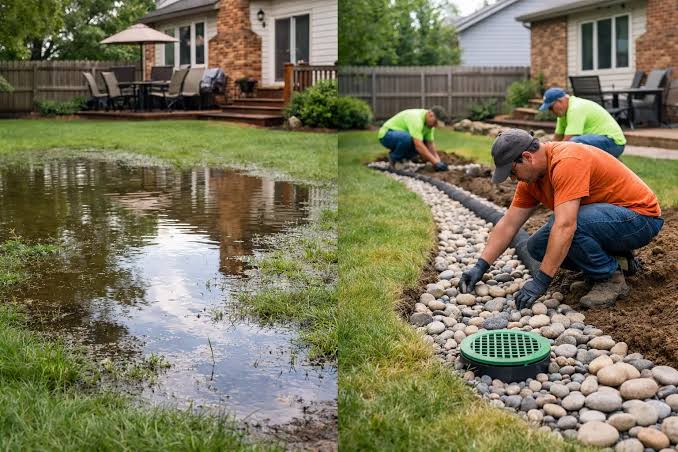
Nothing ruins a weekend faster than stepping outside after a storm to find your yard transformed into a swamp. Puddles pooling near the foundation, soggy patches where grass used to grow, and that sinking feeling that your landscaping investment is slowly washing away. If this sounds familiar, you’re far from alone — standing water is one of the most common headaches homeowners face, and it’s rarely just a cosmetic issue.
Poor drainage doesn’t just make your yard look messy. Over time, it can erode soil, damage your foundation, kill off plants and grass, and even create breeding grounds for mosquitoes. The good news? Most drainage problems are fixable once you understand what’s causing them.
At Harris Home Solutions, we’ve spent years helping homeowners reclaim their yards from standing water and erosion. In this post, we’ll break down why drainage issues happen, the warning signs to watch for, and the proven fixes that actually work.
What Causes Poor Drainage in a Yard?
Before jumping into solutions, it helps to understand the root of the problem. Drainage issues typically stem from one or more of the following:
- Compacted soil: Heavy foot traffic, construction, or clay-heavy soil can prevent water from absorbing properly.
- Improper grading: If your yard slopes toward your home instead of away from it, water will naturally collect near your foundation.
- Gutter and downspout issues: Clogged or poorly positioned gutters can dump excessive water in concentrated areas.
- Low-lying areas: Natural depressions in your landscape can act like bowls, trapping water after every rainfall.
- Overdevelopment: Expanding patios, driveways, or additions reduces the amount of permeable ground available to absorb rainfall.
Identifying which of these factors applies to your property is the first step toward a lasting fix.
Signs Your Yard Has a Drainage Problem
Some drainage issues are obvious — like a literal pond forming in your backyard after every rainstorm. Others are more subtle. Keep an eye out for these red flags:
- Water pooling for more than 24 hours after rain
- Mulch or soil washing away from garden beds
- Cracks forming in your foundation or basement walls
- A musty smell in your basement or crawl space
- Patches of dead or discolored grass
- Visible erosion along slopes or walkways
If you notice even one of these signs, it’s worth addressing sooner rather than later. Left untreated, drainage problems tend to get worse — and more expensive — over time.
The Real Cost of Ignoring Drainage Issues
It’s tempting to write off a soggy yard as a minor inconvenience, but the long-term consequences can be significant. Excess moisture around your home’s foundation can lead to cracking, settling, and even structural damage that costs thousands of dollars to repair. Standing water also attracts pests like mosquitoes, which thrive in stagnant conditions and can turn your backyard into a no-go zone during the warmer months.
Beyond the structural and health concerns, poor drainage simply limits how you can enjoy your outdoor space. A yard that’s constantly wet or muddy isn’t one where you want to host a barbecue, let the kids play, or relax after a long day.
Proven Solutions for Better Yard Drainage
The right fix depends on the specific cause of your drainage issue, but here are some of the most effective and widely used solutions:
French Drains
A French drain is a trench filled with gravel and a perforated pipe that redirects water away from problem areas. It’s one of the most reliable ways to manage subsurface water and prevent pooling.
Regrading
If your yard’s slope is working against you, regrading can correct the pitch so water flows away from your home instead of toward it. This is often paired with other solutions for maximum effectiveness.
Dry Wells
For yards with persistent low spots, a dry well collects excess water underground and allows it to slowly disperse into the surrounding soil, preventing surface pooling.
Downspout Extensions
Sometimes the fix is as simple as redirecting where your gutters release water. Extending downspouts further from your foundation can make a noticeable difference.
Permeable Hardscaping
Replacing solid concrete surfaces with permeable pavers allows rainwater to seep through rather than run off into already saturated areas.
Why DIY Drainage Fixes Often Fall Short
It’s understandable to want to tackle a soggy yard yourself. Plenty of homeowners start with a shovel and good intentions, digging trenches or adding mulch to problem areas. Unfortunately, without a proper understanding of your yard’s grading, soil composition, and water flow patterns, these fixes tend to be temporary at best. Water has a way of finding the path of least resistance, and a quick patch job often just shifts the problem to a different part of the yard.
Getting a lasting result usually requires a more strategic approach — one that accounts for your entire property, not just the area where water happens to be pooling.
Trust Harris Home Solutions to Keep Your Yard Dry
Reliable, professionally installed yard drainage solutions can mean the difference between a yard you dread dealing with and one you’re proud to show off. At Harris Home Solutions, our team evaluates your property’s unique layout, soil conditions, and water flow before recommending a tailored fix — whether that’s a French drain system, regrading, or a combination of approaches.
We understand that every yard is different, which is why we don’t believe in one-size-fits-all solutions. Our goal is to solve the problem at its source, not just mask the symptoms, so you can enjoy a dry, healthy yard season after season.
A well-draining yard isn’t just about aesthetics — it protects your home’s foundation, supports healthier landscaping, and gives you back the outdoor space you deserve. If standing water has become a recurring frustration, now is the time to address it before the next storm rolls through.
Reach out to Harris Home Solutions today to schedule an assessment and take the first step toward a yard that works with the rain, not against it.