As we progress through 2026, the financial market is witnessing a “Great Re-rating” of precious metals. Gold, which spent years hovering around the $2,000 mark, has shattered expectations this year. With prices pushing toward the $5,000 per ounce milestone. For the average investor, this isn’t just a price hike. It’s a fundamental shift in how we perceive value, stability, and retirement security in an increasingly fragmented global economy.
In this environment, “buying gold” is no longer seen as a fringe strategy for skeptics. It has become a central pillar for institutional funds and individual retirees alike. To navigate this landscape successfully, one must understand the unique drivers of 2026 and how to position a portfolio for the years ahead.
The 2026 Market Pulse: Why the Bull Run Continues
The current surge in gold and silver isn’t a fluke. It is the result of several “structural” forces that have gained massive momentum since 2024:
1. Central Bank Accumulation
In 2026, central banks—led by China, India, and various European nations—continue to be the primary “whales” in the market. Many countries are diversifying their reserves away from the U.S. dollar to protect against sanctions and currency volatility. When the world’s biggest banks are trading their paper for physical gold, it sends a clear signal to individual investors about the long-term direction of the market.
2. The “De-Dollarization” Narrative
The global financial system is becoming “multi-polar.” As more international trade is settled in local currencies rather than the dollar, the demand for a “neutral” asset increases. Gold is the only asset that fits this description—it has no nationality and is accepted in every corner of the globe.
3. Supply-Side Constraints
While demand is soaring, the supply of physical gold remains strictly limited. Mining output in 2026 has struggled to keep pace with the massive inflows into Gold ETFs and physical bar demand. As any student of economics knows, when demand outstrips supply, price discovery moves aggressively upward.
Strategies for the Modern Investor
In a market where gold is trading at historic highs, the strategy changes from “speculation” to “Strategic Balance.” You don’t need to exit the stock market entirely, but the “60/40” portfolio of the past is being replaced by models that include a 10-15% allocation in precious metals.
To understand how these trends integrate into a broader retirement plan, you can visit our home page. For the latest market analysis and real-time price tracking.
The Quiet Rise of Silver in 2026
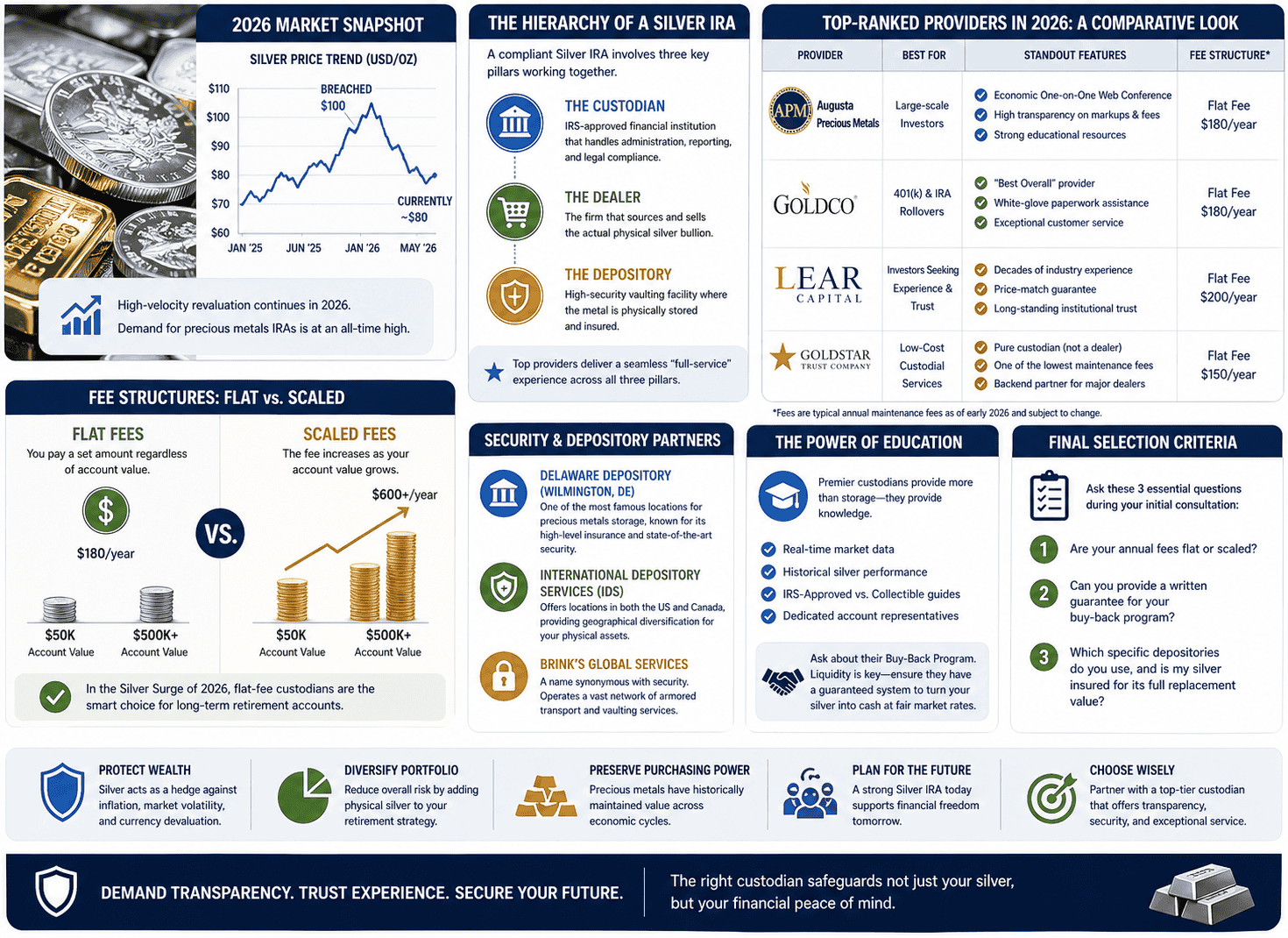
While gold gets the headlines, silver has been the “high-beta” surprise of 2026. Because silver is both an investment asset and a critical industrial metal (used in EVs, AI data centers, and solar panels). It is facing a massive structural deficit, many analysts believe silver is currently “cheap” relative to gold. Offering a unique opportunity for those looking for higher percentage gains.
Risk Management: Avoiding the “Fear of Missing Out” (FOMO)
With gold approaching $5,000, many investors feel they have “missed the boat.” However, professional analysts emphasize that we are in a “structural bull cycle,” not a temporary bubble. The goal of a Gold IRA isn’t to “day trade” the price; it is to ensure that a portion of your wealth is immune to the risks of the banking system.
Key Risks to Watch:
- Unexpected Fed Policy: If the Federal Reserve shifts to an extremely hawkish stance, gold might see temporary pullbacks.
- Geopolitical De-escalation: While unlikely in the current climate, a sudden stabilization of global tensions could lead to short-term profit-taking in the gold market.
Integrating Gold into a 2026 Retirement Plan
For those within 10 years of retirement, the volatility of the stock market in 2026 has been a wake-up call. A “sequence of returns risk”—where a market crash happens just as you start withdrawing funds—can be devastating.
By holding physical gold through a self-directed IRA, you create a “volatility buffer.” Historically, when the S&P 500 experiences a sharp correction, gold often moves in the opposite direction, protecting the total value of your nest egg.
Why 2026 is Different from 1980 or 2011
Skeptics often point to previous gold peaks, but 2026 is fundamentally different:
- In 1980, the spike was driven by a single-year inflation crisis.
- In 2011, it was a reaction to the immediate aftermath of the Great Recession.
- In 2026, the rise is institutional. It is backed by trillion-dollar ETFs, national central banks, and a permanent shift in how the world handles debt.
Conclusion
The “quiet” growth of gold is over; the world has noticed. As we move further into 2026, the question is no longer if you should own gold. But how much and in what form. Whether you prefer the liquidity of an ETF or the ultimate security of physical bullion in a vault. The mandate is clear: Diversify or risk devaluation.
The 2026 market is noisy, inflationary, and structurally fragmented. In such a world, gold remains the only “quiet” asset—a silent guardian that preserves your hard-earned labor for the future.